When you shop for an espresso machine, you will see the terms "semi-automatic," "automatic" and "super-automatic" everywhere. Here I explain:
- What each term means
- How to quickly tell which type a machine is
- Which type suits you
Quick Summary
| Type | Defining feature | How to spot it | Best for | Brand I recommend |
|---|---|---|---|---|
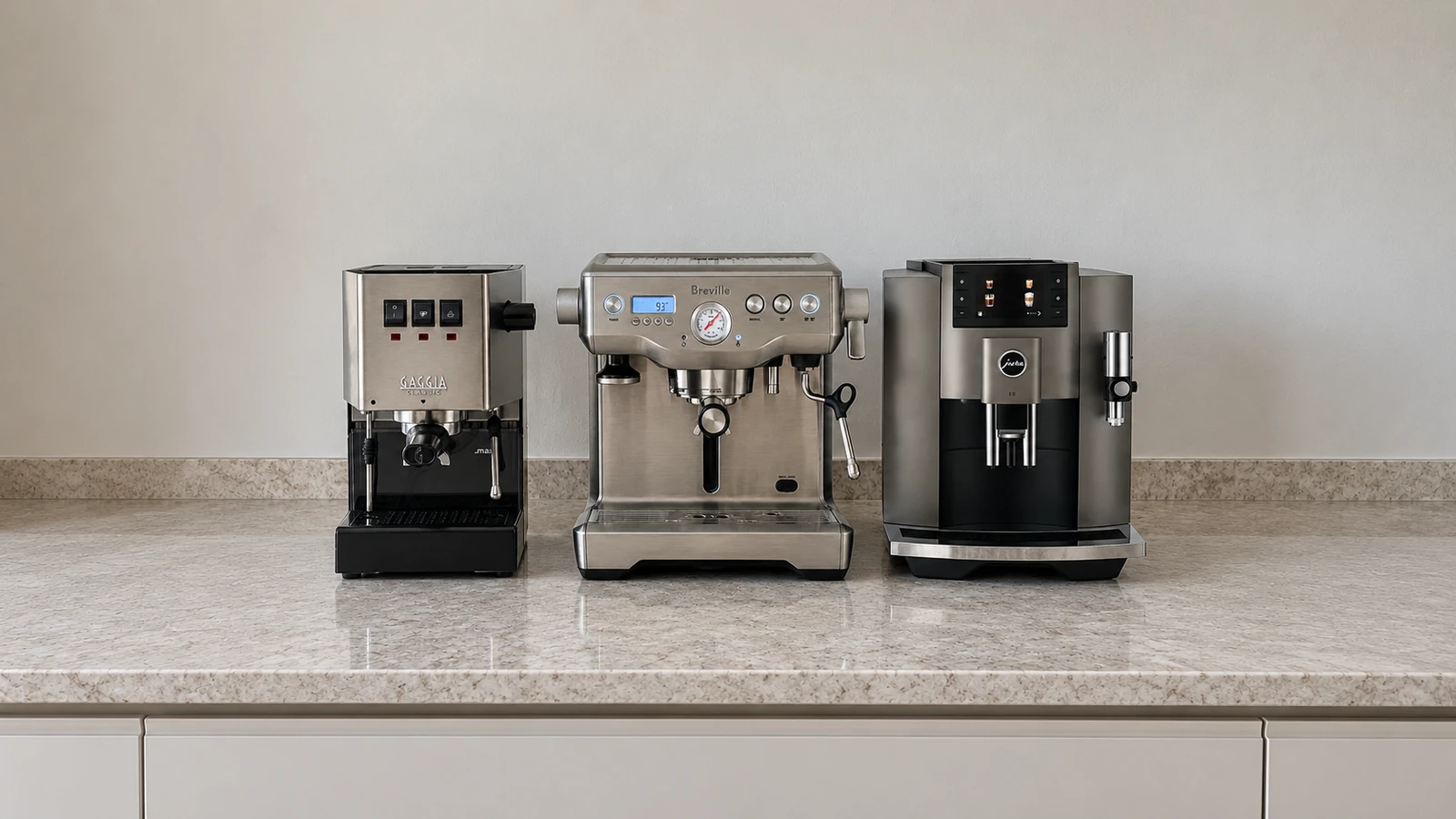
| Semi-automatic | You start and stop every shot yourself | One brew switch or button | Enthusiasts who want total control | Gaggia, Rancilio |
| Automatic | The machine stops the shot at a programmed volume | Separate single and double shot buttons | Most home espresso drinkers | Breville |
| Super-automatic | The machine grinds, doses, tamps and brews | No portafilter | People who value convenience over espresso quality | Jura |
Semi-Automatic Espresso Machines
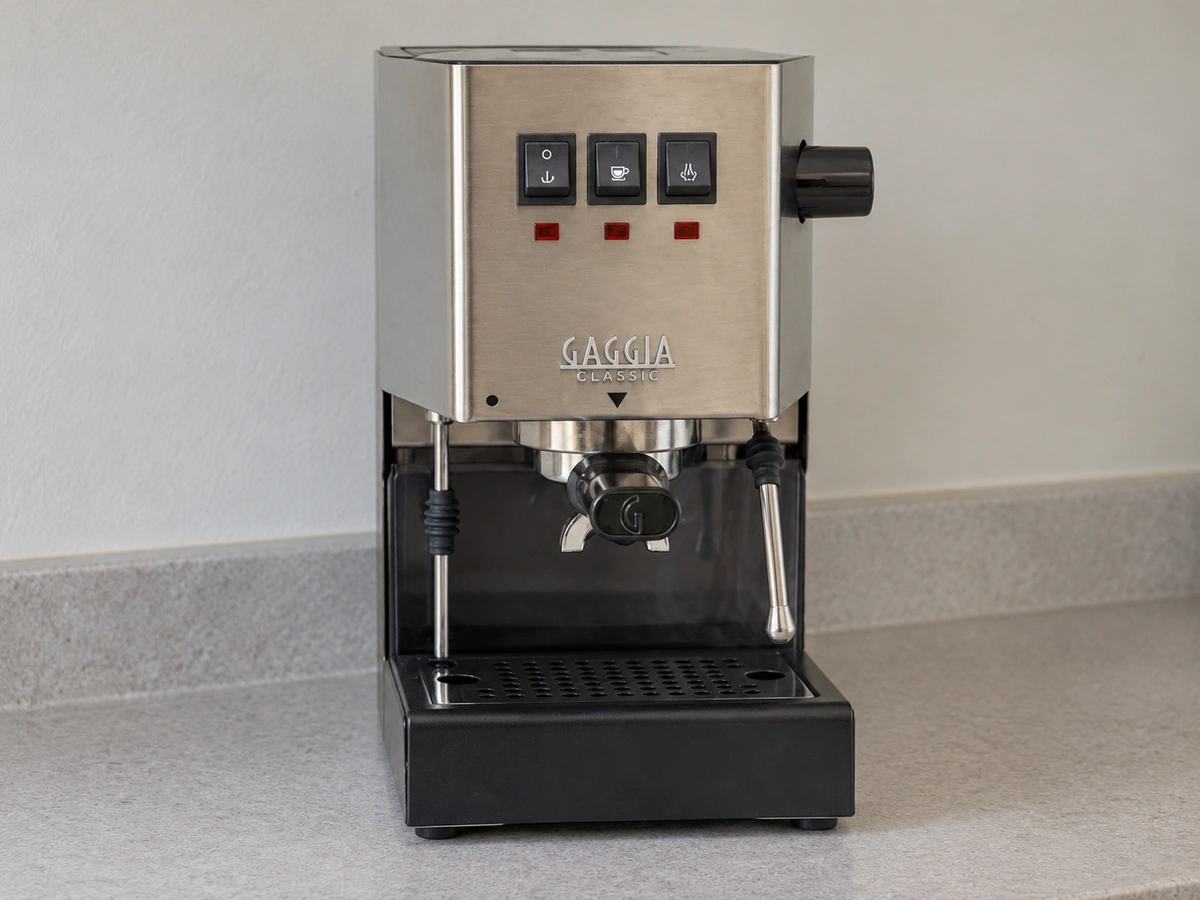
With a semi-automatic, you grind and tamp coffee into a portafilter, then start and stop each shot yourself. The machine controls pressure (and on many models, temperature), but you control how much water goes through.
They usually have just a few controls:
- A power switch
- A brew switch to start and stop the shot
- A steam switch for the steam wand
Why Choose a Semi-Automatic?
Total control. How much water you push through the coffee dramatically changes the flavor. Depending on the ratio, you can make a ristretto, an espresso or a lungo from the same coffee. A semi-automatic lets you stop the shot exactly when you want.
Modding potential. Semi-automatics are mechanically simple, so they are the easiest machines to modify. There are entire communities devoted to upgrading machines like the Gaggia Classic Pro with PIDs, pressure profiling and more. If that appeals, see the best Gaggia espresso machines.
Drawbacks
A bit more work. The same control that lets you nail a shot also lets you over- or under-shoot it. The fix is a small scale that reads to 0.1 gram. Weigh your dose and your shot, and aim for a coffee-to-espresso ratio of roughly 1:1.8 to 1:2.5.
Many budget semi-automatics also lack a PID, so you have to manage temperature yourself.
Best Semi-Automatic Brands
- Budget to mid-range: Gaggia and Rancilio. The Gaggia Classic Pro and Rancilio Silvia are great value, built to last and hugely popular with modders. Compare them in Gaggia Classic Pro vs Rancilio Silvia.
- High end: Italian specialists like Bezzera and Rocket Espresso. Enthusiasts happily pay for their build quality and performance. See the best Italian espresso machines.
Automatic Espresso Machines
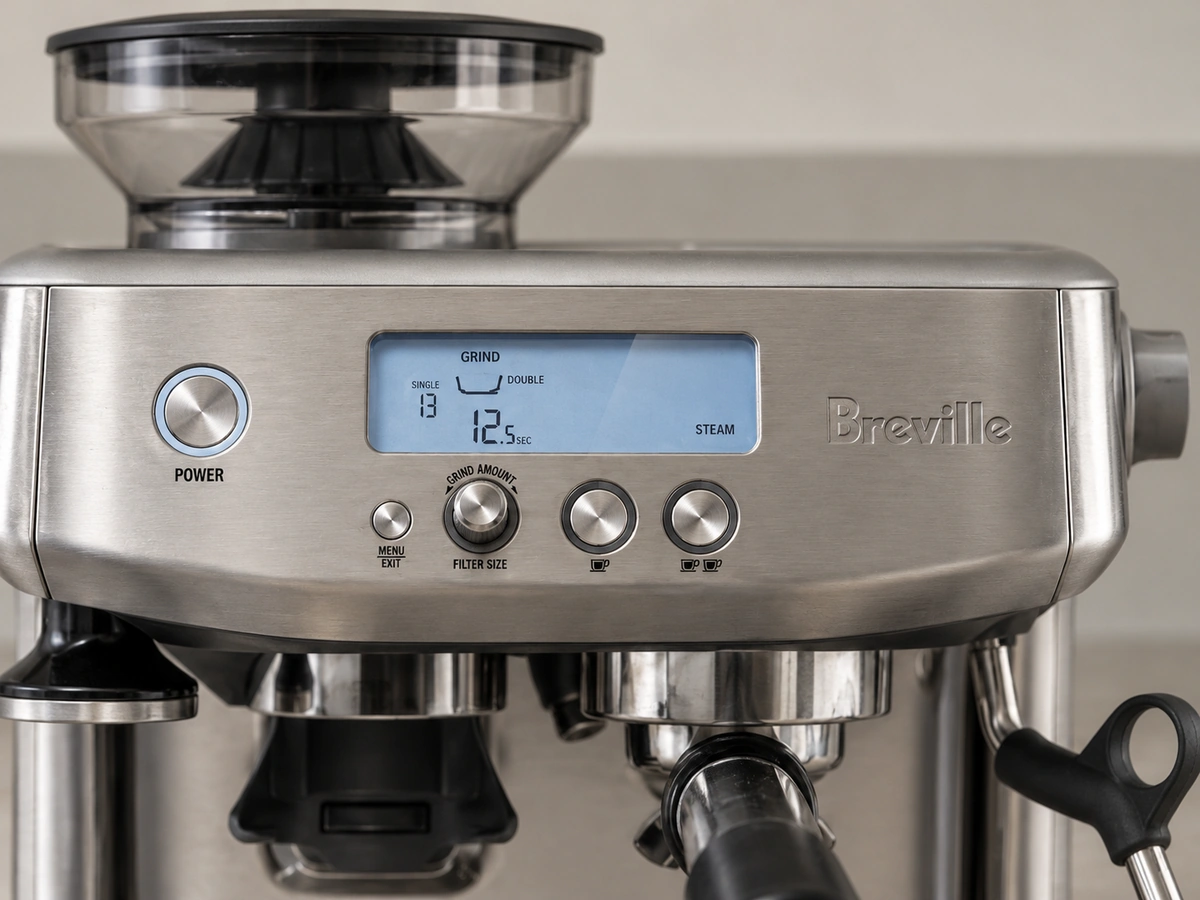
Automatic machines also use a portafilter that you fill and tamp yourself, but they stop the shot automatically at a programmed volume. They have separate single and double shot buttons, and most let you reprogram those volumes. You still steam milk yourself, unless the machine has an automatic steam wand.
Why Choose an Automatic?
In daily use, the difference from a semi-automatic is smaller than it sounds. When I owned a semi-automatic, I quickly learned to stop shots at about the right volume by feel. But automatic shot volumes make consistency much easier, especially for beginners, and many of the best-value home machines happen to be automatic.
Drawbacks
You give up a little control, since you set volumes in advance rather than stopping each shot by eye. Most automatics let you override that by holding the button for a manual shot, though.
Many of the most premium home machines are still semi-automatic, mainly because traditional Italian makers focus on maximum espresso quality, while brands like Breville focus on ease of use and value too.
Best Automatic Brand
Breville. De'Longhi also makes automatic machines, but in my experience Breville's are clearly better. See Breville vs De'Longhi.
From the best Breville espresso machines, my favorites are:
- Breville Bambino: the best budget automatic. See Bambino vs Bambino Plus.
- Breville Barista Pro: my favorite automatic with a built-in grinder. See my Barista Pro review.
Super-Automatic Espresso Machines
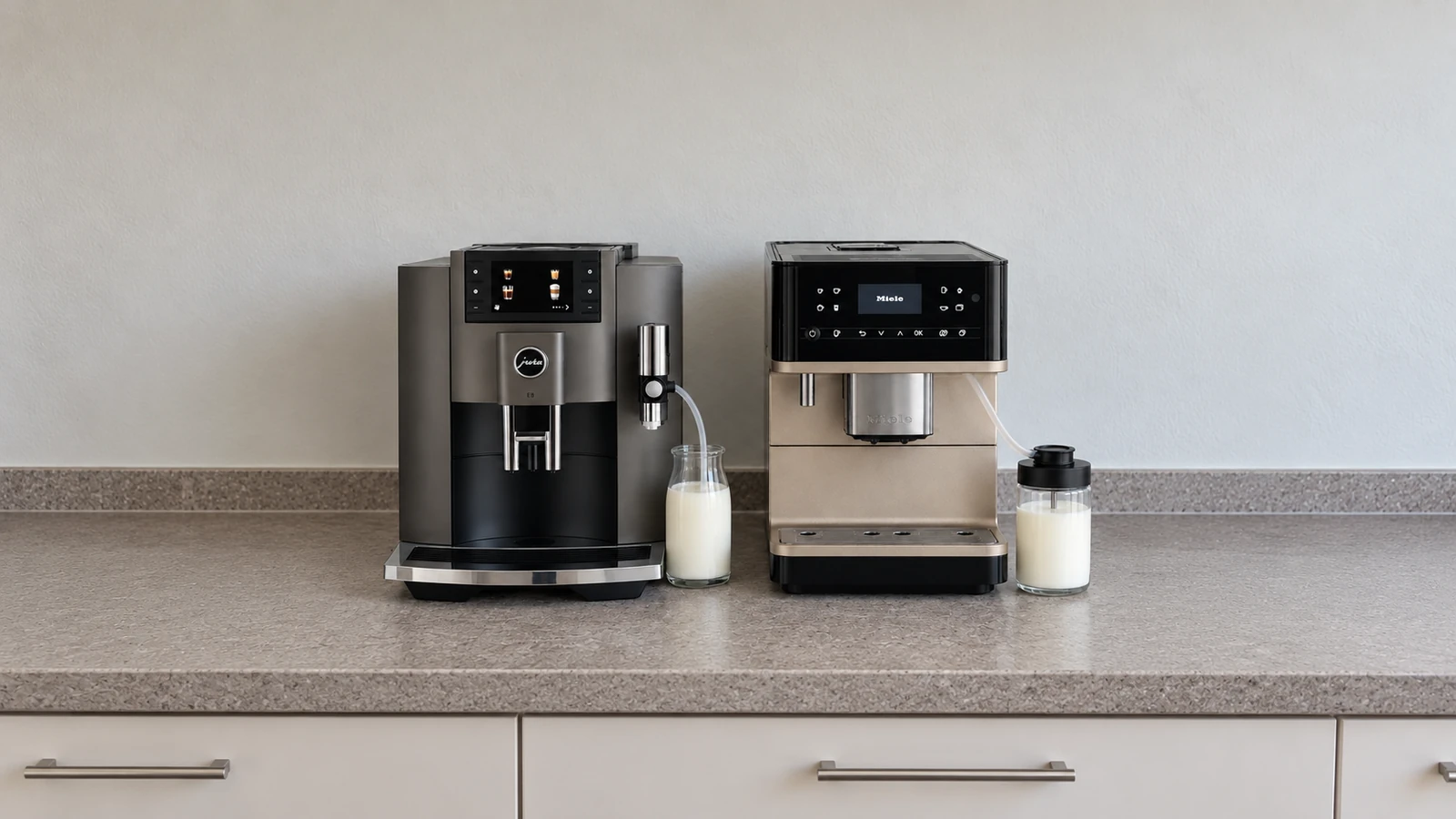
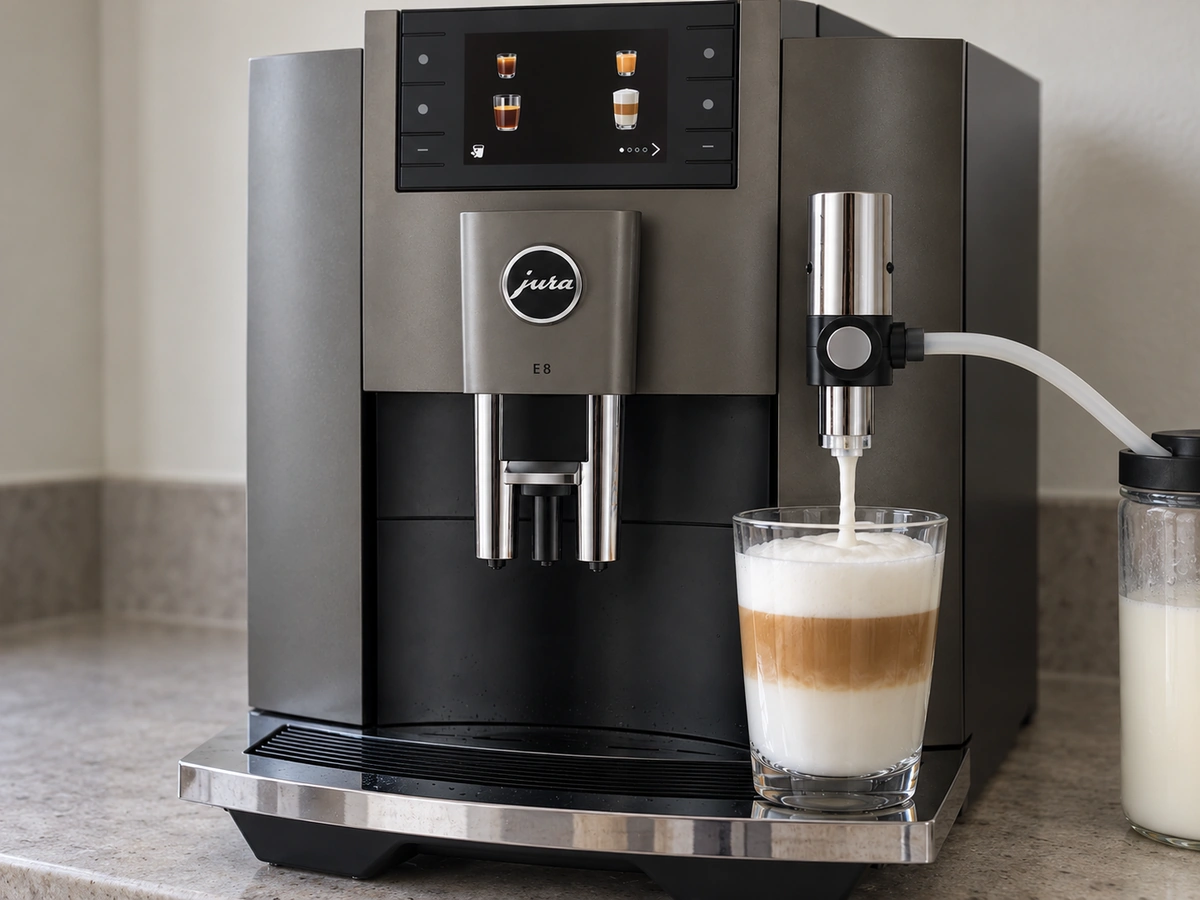
Super-automatics, often called bean-to-cup machines, grind, dose, tamp and brew for you. Fill them with beans and water, then press a button.
Most also have an automatic milk system, so cappuccinos and flat whites are one touch too.
The easiest way to spot one: there is no portafilter.
Why Choose a Super-Automatic?
Unbeatable convenience. No other type of machine makes espresso at the press of a button with no skill required. You do not need to learn dosing or tamping, and there is hardly any mess. That is why they are so popular in offices.
Drawbacks
Weaker espresso. A super-automatic's internal brew unit tamps the coffee, but nowhere near as precisely as a barista. To avoid choking or channeling, it has to use coarser coffee, so water flows through faster and extracts less. The result tends to be a little thinner and sharper.
A useful trick: choose longer drinks like a lungo, or a larger cup size. The extra contact time improves extraction and balance.
Super-automatics also cost more. A mediocre super-automatic often costs as much as an excellent automatic or semi-automatic.
Best Super-Automatic Brand
Jura. Its pulse extraction process pushes water through the coffee in short bursts, which goes a long way toward overcoming super-automatics' limitations. See the best Jura coffee machines, my Jura E8 review and Jura E8 vs S8. For value, De'Longhi is a strong second. See the best super-automatic espresso machines.
What About Manual Espresso Machines?
There are also fully manual (lever) machines, where you create the brewing pressure yourself with a lever. They are less common, and designs vary hugely. Learn more in my roundup of the best manual espresso machines.
Which Type Should You Buy?
- Want the best possible espresso and enjoy tinkering? Semi-automatic.
- Want great espresso with less guesswork? Automatic. This is the best choice for most beginners. See the best espresso machines for beginners.
- Want one-touch drinks and minimal cleanup? Super-automatic.
Frequently Asked Questions
What is the difference between automatic and semi-automatic espresso machines?
Both use a portafilter you fill and tamp. A semi-automatic needs you to stop each shot; an automatic stops it at a programmed volume.
Is a super-automatic the same as a bean-to-cup machine?
Yes. Bean-to-cup is another name for a super-automatic.
Do super-automatic espresso machines make good espresso?
Good, but not as good as a well-used semi-automatic or automatic. Jura and De'Longhi make the best super-automatic espresso.
Written by · reviewed by the Cicada Coffee Bar team
Daniel Voss
Lead Equipment Reviewer, Cicada Coffee Bar
Daniel leads the equipment-testing side of Cicada Coffee Bar. Every super-automatic, semi-automatic, and grinder featured on this site is bought or sourced independently, set up on the test bench, and brewed with daily for at least two weeks before a single word is written — tracking espresso quality, milk texture, ease of cleaning, and long-term reliability. Reviews are updated whenever pricing or firmware changes.