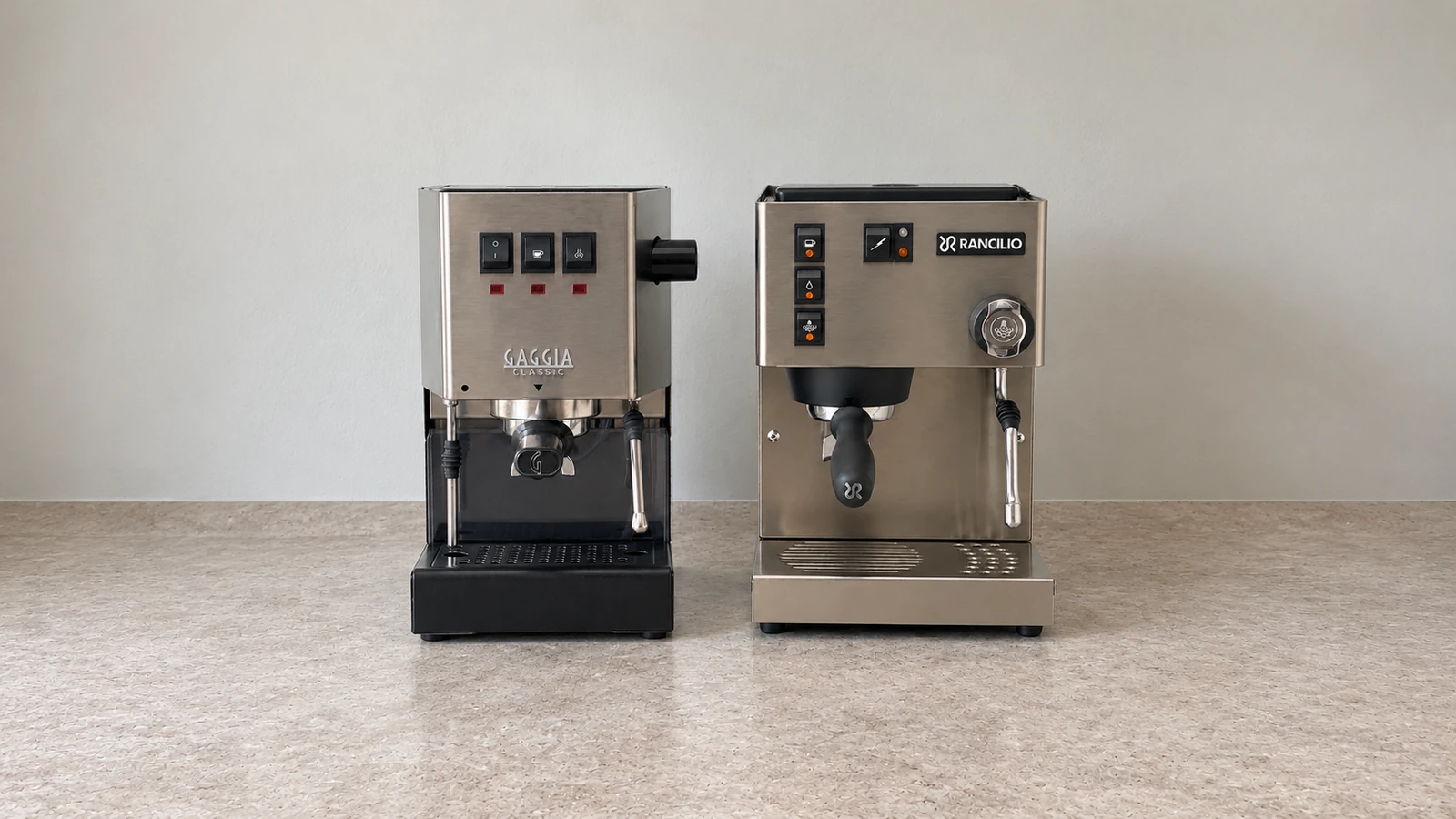
Quick verdict: for most people, the Gaggia Classic Pro is better value. The Rancilio Silvia is the slightly better machine, so buy it if you want the best machine rather than the best value.
These two Italian classics look alike and do the same things, but the Silvia usually costs several hundred dollars more. Here I look at whether it justifies that, and how.
Which Should You Buy?
Most people should get the Gaggia Classic Pro. The Silvia simply does not do enough to justify its much higher price.
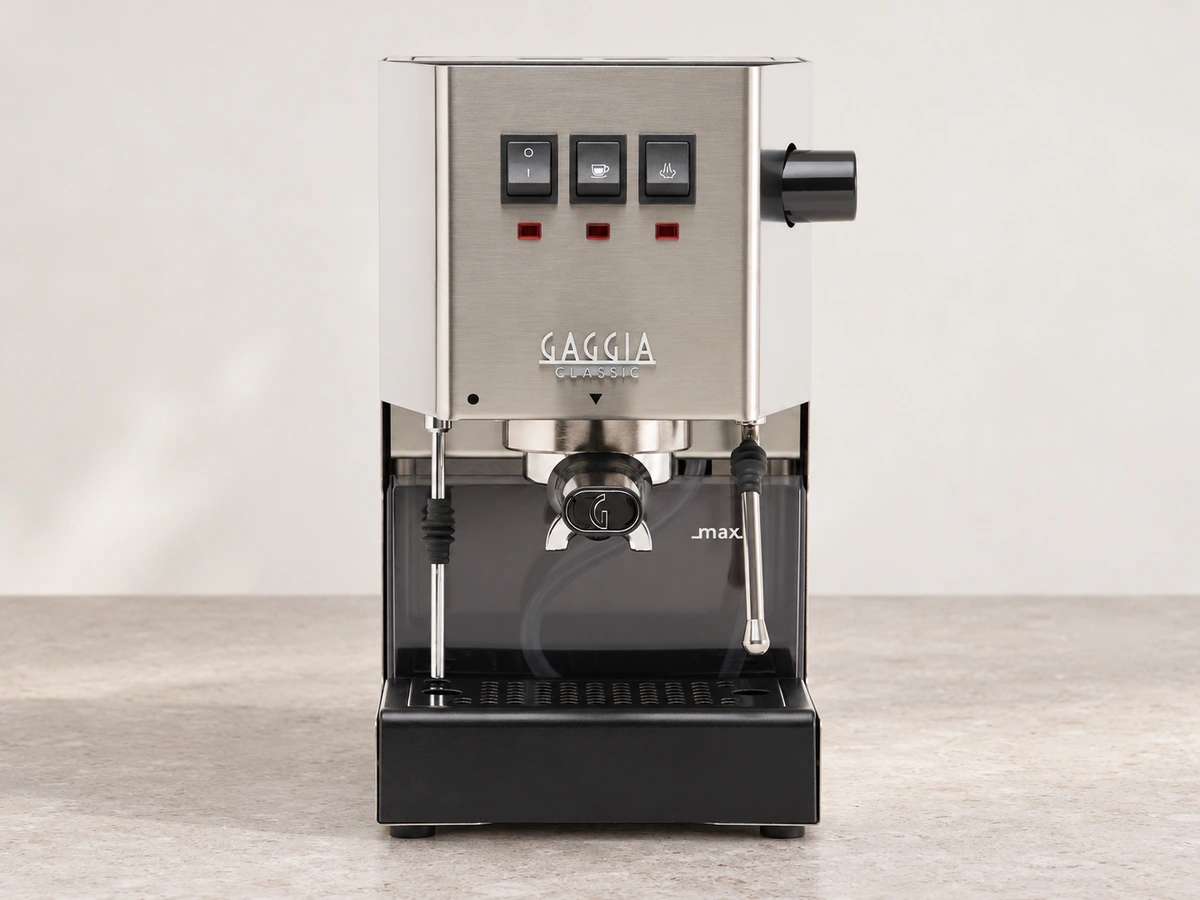
Gaggia Classic Pro
Low cost, durability and huge modding potential.
I would only recommend the Silvia if you know you want a more substantial machine, especially if you plan to modify it and want the best foundation regardless of price. I do not think it is several hundred dollars better, but it is the better machine.
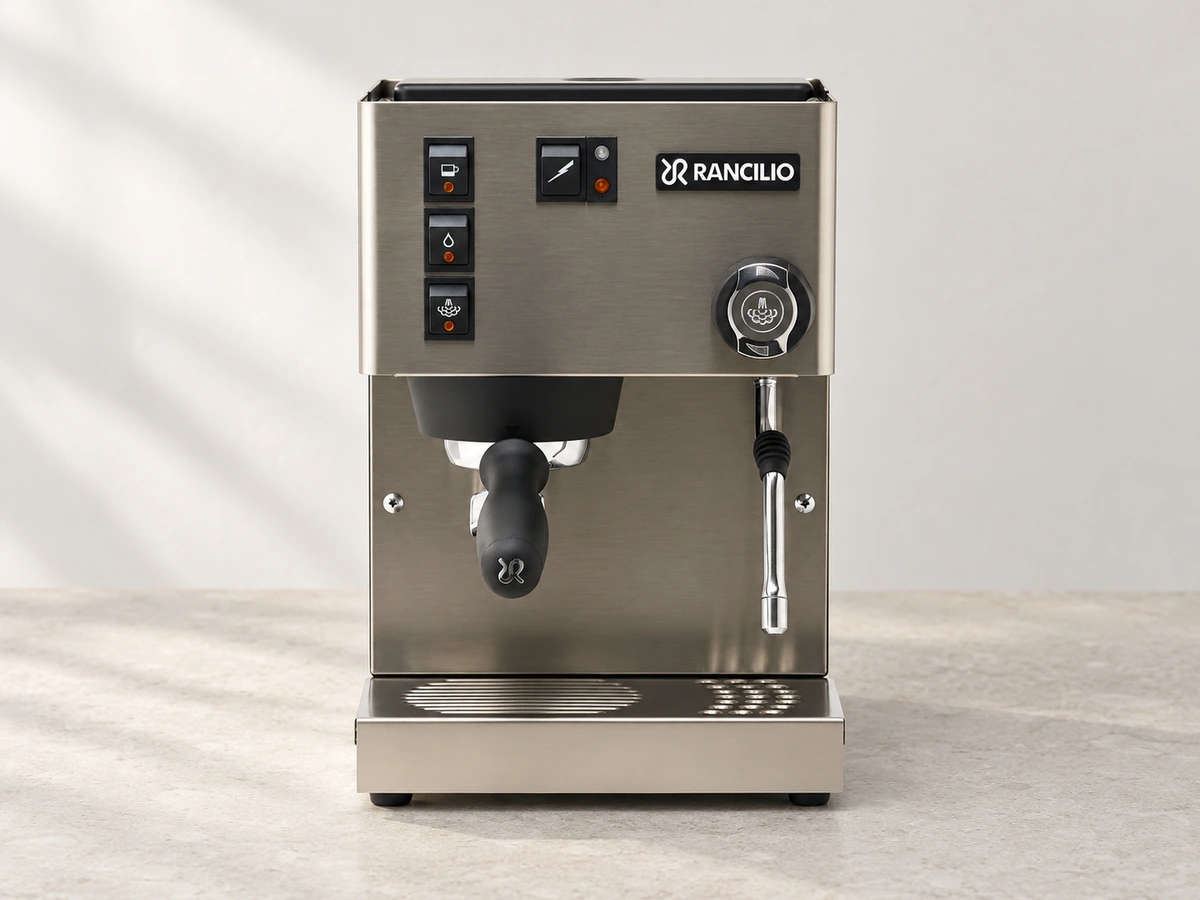
Rancilio Silvia
A more powerful steam wand and a heavier-duty build.
Gaggia Classic Pro vs Rancilio Silvia Overview
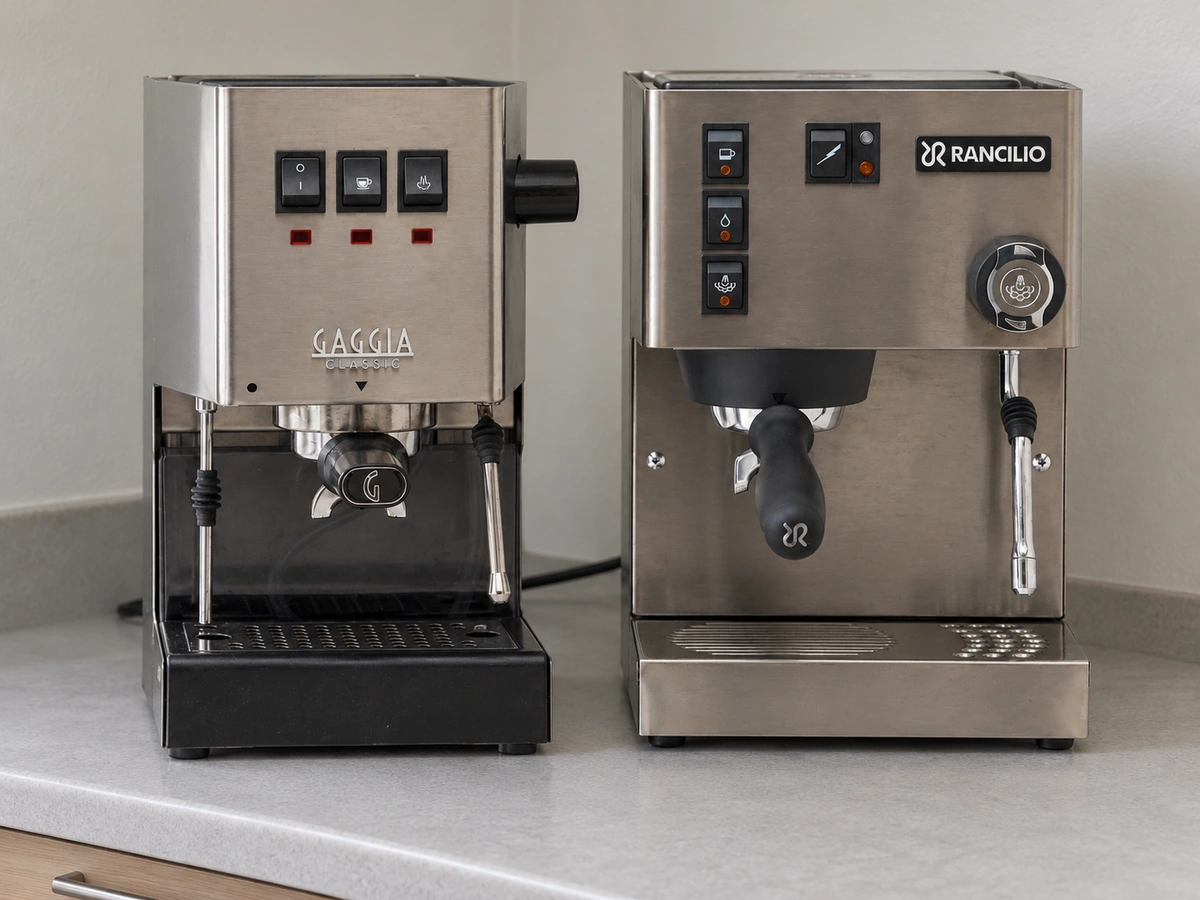
The two have far more in common than not. Both are semi-automatic machines, so you start and stop each shot yourself. Both have commercial-style steam wands for anything from thick foam to latte-art microfoam. And both use a single boiler without a PID in stock form, so you need a temperature surfing routine for consistent shots.
The latest Gaggia, sold in many markets as the Classic Evo Pro, ships with a 9-bar over-pressure valve, which fixes the older model's high brewing pressure. Rancilio also sells PID-equipped versions and the dual-boiler Silvia Pro X, at higher prices.
| Gaggia Classic Pro | Rancilio Silvia | |
|---|---|---|
| Type | Semi-automatic | Semi-automatic |
| Controls | Switches | Switches |
| Heating | Single boiler | Single boiler |
| Boiler size | ~3.5 oz | ~10-12 oz |
| Heat-up time | Fast (minutes) | Slower (several minutes) |
| PID | No (kits available) | No (PID versions and kits available) |
| Steam wand | Commercial-style | Commercial-style |
| Time to steam 4 oz of milk | ~42 s | ~21 s |
| Cup clearance | Lower | Higher |
| Dimensions (W x D x H) | ~9.5" x 8" x 14.2" | ~9.2" x 11.4" x 13.4" |
| Price | Lower | Several hundred dollars more |
The Differences
Cup Clearance
The Silvia has noticeably more room under the portafilter. That lets you:
- Brew onto a scale without removing the drip tray. Weighing your shots is key to consistency on a semi-automatic.
- Fit a regular mug, not just an espresso or cappuccino cup.
The Classic Pro's limited clearance is one of its few flaws that is hard to mod away. The usual workaround is removing the drip tray, which is not elegant.
Winner: Rancilio Silvia
Boiler Size
The Silvia's boiler is around three times bigger. That gives it two advantages:
- 1Back-to-back shots with less temperature swing
- 2More steam power, for longer
Winner: Rancilio Silvia
Modding
Both are excellent for modding, but the Silvia has a slightly bigger ecosystem. Both open up easily, and both have kits like PID controllers, with plenty of guides and videos. Both have active communities, such as r/gaggiaclassic and r/ranciliosilvia.
Winner: Rancilio Silvia, narrowly
Size and Weight
The Silvia has a wider drip tray and is much heavier. The extra room is nice when using a scale. The weight means it does not budge when you lock in the portafilter; with the Classic Pro, you often need to steady the machine.
Winner: Rancilio Silvia
Espresso
The Silvia can make slightly better espresso.
Both can handle very fine coffee without channeling, so both can make rich, full-bodied espresso.
In James Hoffmann's comparison, the Silvia made the better espresso, but less consistently. He put the Gaggia's slightly harsher shots down to its brewing pressure being set too high (on older models), and the Silvia's inconsistency down to its brew temperature running hot.
Temperature is easier to manage with practice than pressure, so with experience you can tame the Silvia's inconsistency more easily. On older Gaggias, fixing the pressure means an OPV mod, which newer Evo Pro models no longer need.
Winner: Rancilio Silvia, narrowly
Milk
Both make the same milk in the end, but the Silvia steams about twice as fast. In Hoffmann's tests, the Gaggia steamed 4 oz of milk in about 42 seconds and the Silvia in about 21.
The Gaggia's gentler steam is easier for beginners, but you may find it slow as your skills improve. Upgrading the Gaggia's steam wand is a popular mod, though it still will not match the Silvia's bigger boiler.
Winner: Rancilio Silvia
Functions and Settings
Identical. Both pull shots, steam milk and dispense hot water through the steam wand. Both are basic compared with a Breville.
Winner: tie
Ease of Use and Cleaning
The Silvia is easier to brew with, thanks to its cup clearance and wider drip tray.
Not being able to fit a scale under your cup on the Classic Pro is a real frustration, since weighing shots matters so much on a semi-automatic.
Honestly, I would not recommend either to a beginner unless they are happy with some trial and error. Without PIDs or automatic shot volumes, you need to master brew ratios and temperature surfing. If you are new to espresso, see the best espresso machines for beginners.
For cleaning, they are about equal, though the Silvia's drip tray is shallow and easy to spill when you remove it.
Winner: Rancilio Silvia
Build Quality
Both are very well built and can last decades. The Silvia is slightly better designed.
- More cup clearance for a scale
- A sturdier portafilter; the Gaggia's feels flimsier when you lock it in
- Heavy enough to stay put when locking in the portafilter
That said, the Classic Pro is still very durable. There are plenty of reports of both machines lasting decades, often with only a portafilter upgrade.
Winner: Rancilio Silvia, narrowly
Price and Value
The Classic Pro is better value. It costs several hundred dollars less, and the Silvia's main practical advantages are more clearance, a bigger boiler and faster steaming. Is that worth the extra money? For most people, probably not.
Winner: Gaggia Classic Pro
Final Verdict
Most people will get better value from the Gaggia Classic Pro. The Rancilio Silvia is the better machine, but not by enough to justify the price gap for most. If you want the best classic semi-automatic and cost does not matter, go Silvia.
For more, see my Gaggia Classic Pro review, Rancilio Silvia review, and Gaggia Classic Pro vs Breville Barista Express.
Questions People Ask
Is the Rancilio Silvia better than the Gaggia Classic Pro?
Slightly. It steams faster, has a bigger boiler, more cup clearance and a heavier build. But it costs much more, so the Gaggia is better value.
Do the Gaggia Classic Pro and Rancilio Silvia have a PID?
Not in standard form. PID kits are popular mods for both, and Rancilio also sells PID-equipped versions.
Which is better for beginners?
Neither is ideal for complete beginners, because both need temperature surfing. A Breville Bambino or Bambino Plus is easier to learn on.

Written by · reviewed by the Cicada Coffee Bar team
Daniel Voss
Lead Equipment Reviewer, Cicada Coffee Bar
Daniel leads the equipment-testing side of Cicada Coffee Bar. Every super-automatic, semi-automatic, and grinder featured on this site is bought or sourced independently, set up on the test bench, and brewed with daily for at least two weeks before a single word is written — tracking espresso quality, milk texture, ease of cleaning, and long-term reliability. Reviews are updated whenever pricing or firmware changes.