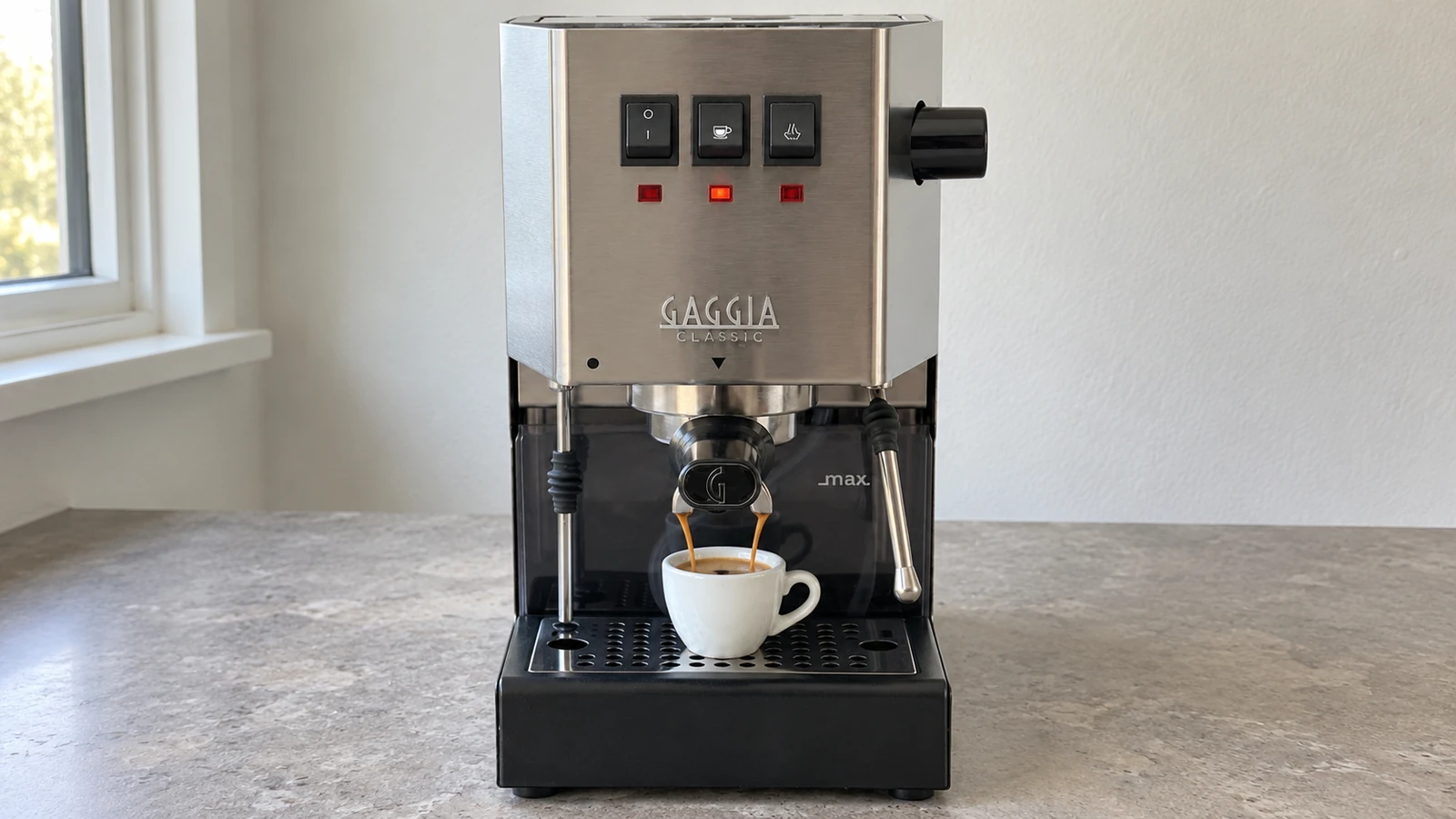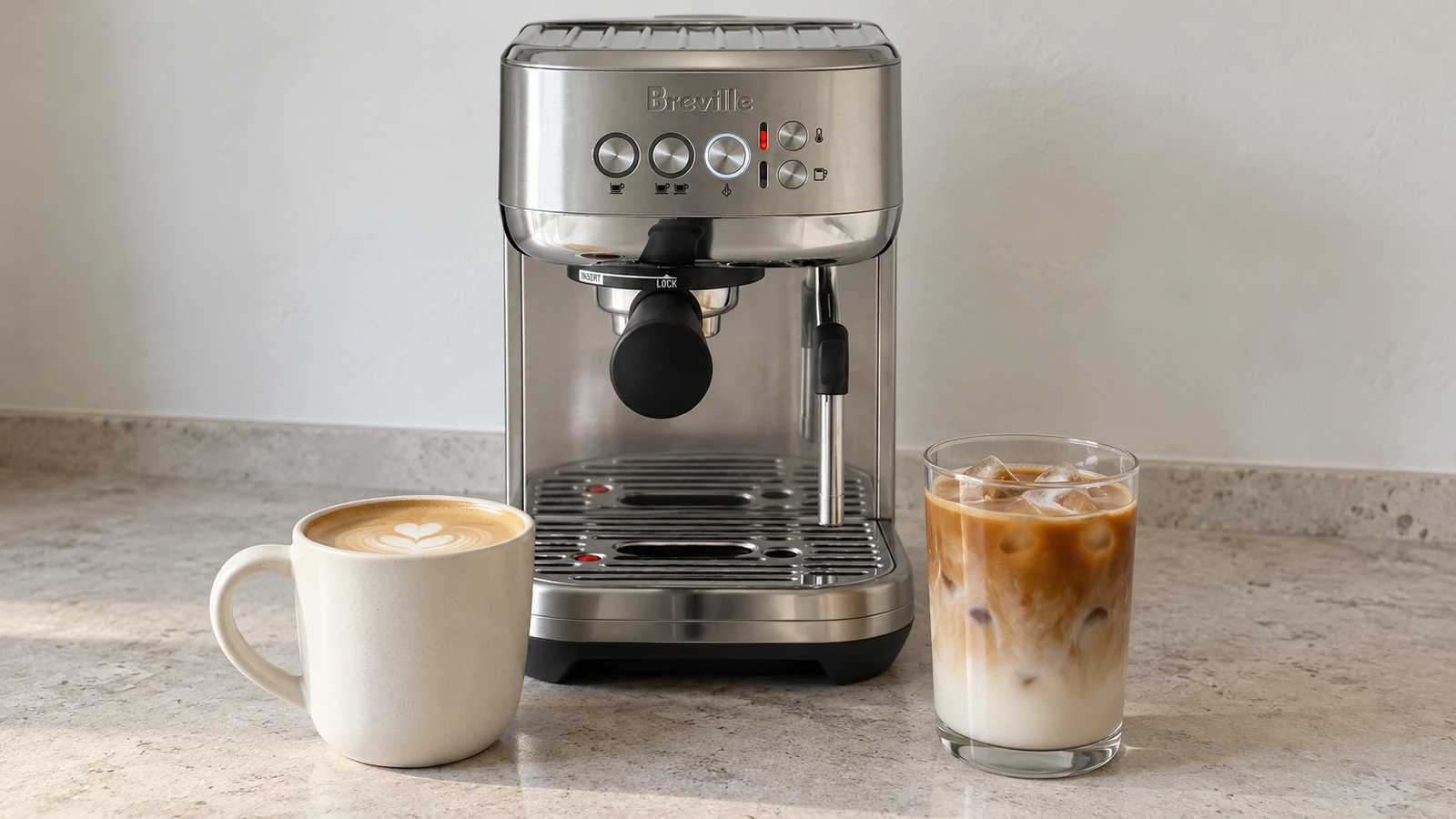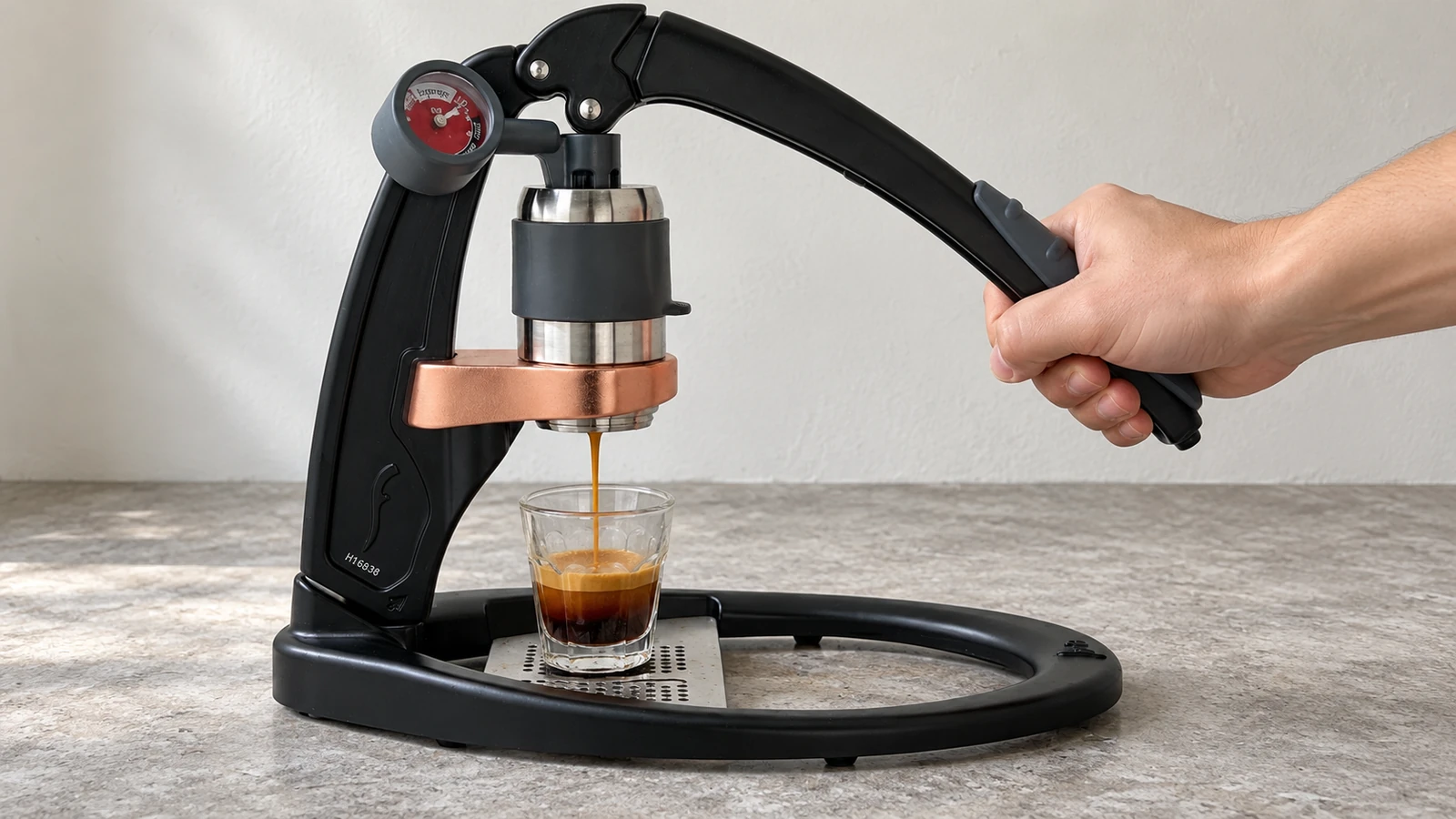
Manual (lever) espresso machines let you pull shots by hand, with no pump. They are beautiful, quiet and, in the right hands, capable of superb espresso.
I own a ROK Espresso GC, and for this guide I spent a full day watching demos, reading owner experiences on r/espresso and going through Amazon reviews.
My Top Picks
- Best overall: Elektra Micro Casa a Leva
- Best for beginners: Cafelat Robot
- Best budget: ROK Espresso GC
- Best for milk drinks: La Pavoni PC-16 Professional
Best Overall: Elektra Micro Casa a Leva
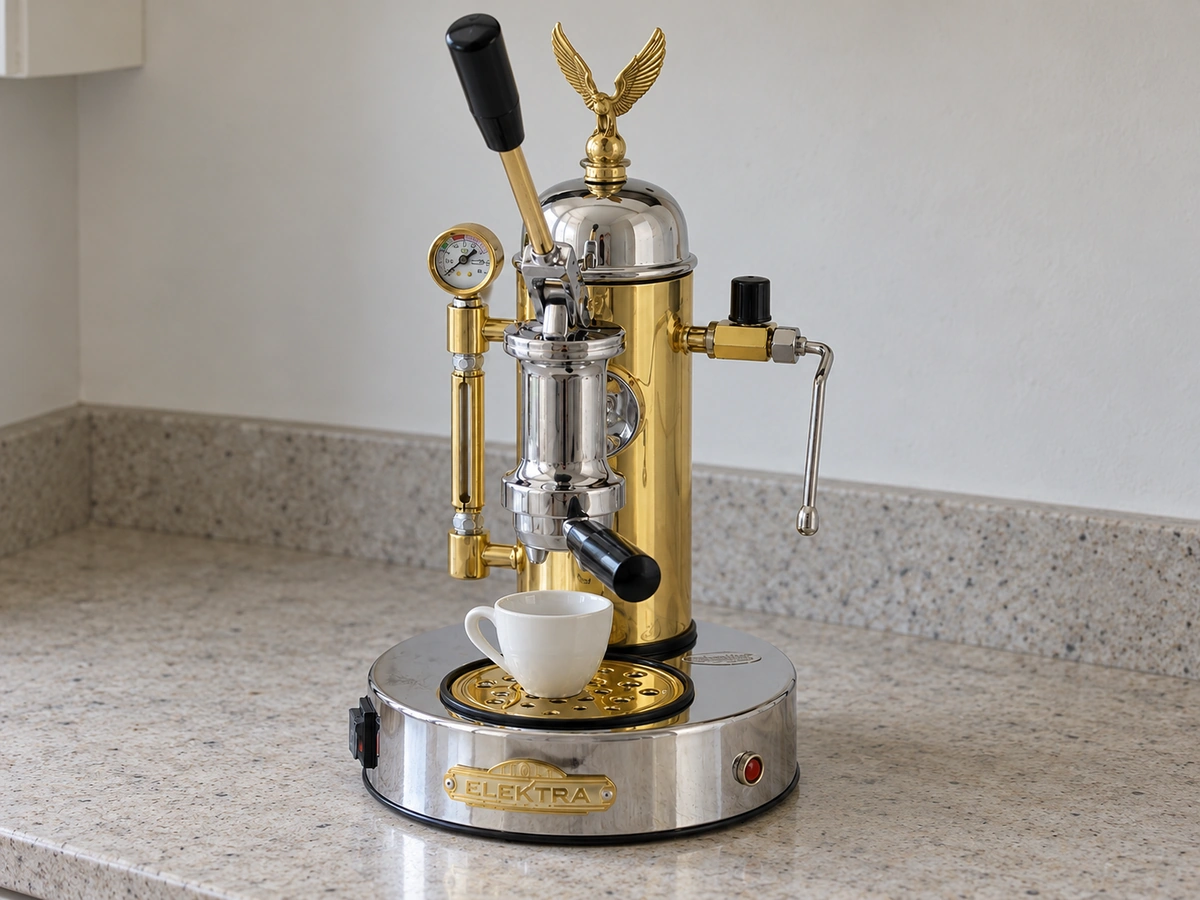
It looks like it came straight from a 1940s espresso bar, and its spring lever pulls consistently excellent shots. It can steam milk too.
Espresso Quality
It does not give you as much control as a direct lever machine, but it is precisely engineered to pull excellent shots once you get your grind and dose right.
Pressure
The Elektra uses a spring lever, so the spring sets the brewing pressure for you. That removes one of the hardest variables to get right. Most owners say they can pull café-quality shots once their grind and dose are dialed in.
It also has a pressure gauge and a pressure-release valve for the boiler, so steam pressure does not over-pressurize your shots.
Temperature
Many machines brew too cool. The Elektra has the opposite tendency. It gets very hot, so the first couple of shots are spot on, but after two or three shots in a row the group head can overheat. A cold, damp cloth on the group head cools it down.
Shot Volume
How far you pull the lever down sets the water volume, so you can pull a single or a double. Traditional volumes are about 25 ml and 50 ml.
That leaves only grind and dose for you to manage. There is room under the spout for a scale, so you can weigh your shots and adjust.
Espresso quality: 9/10
Ease of Use
The spring lever makes good shots much easier than on direct lever machines, where pressure depends on how hard you push.
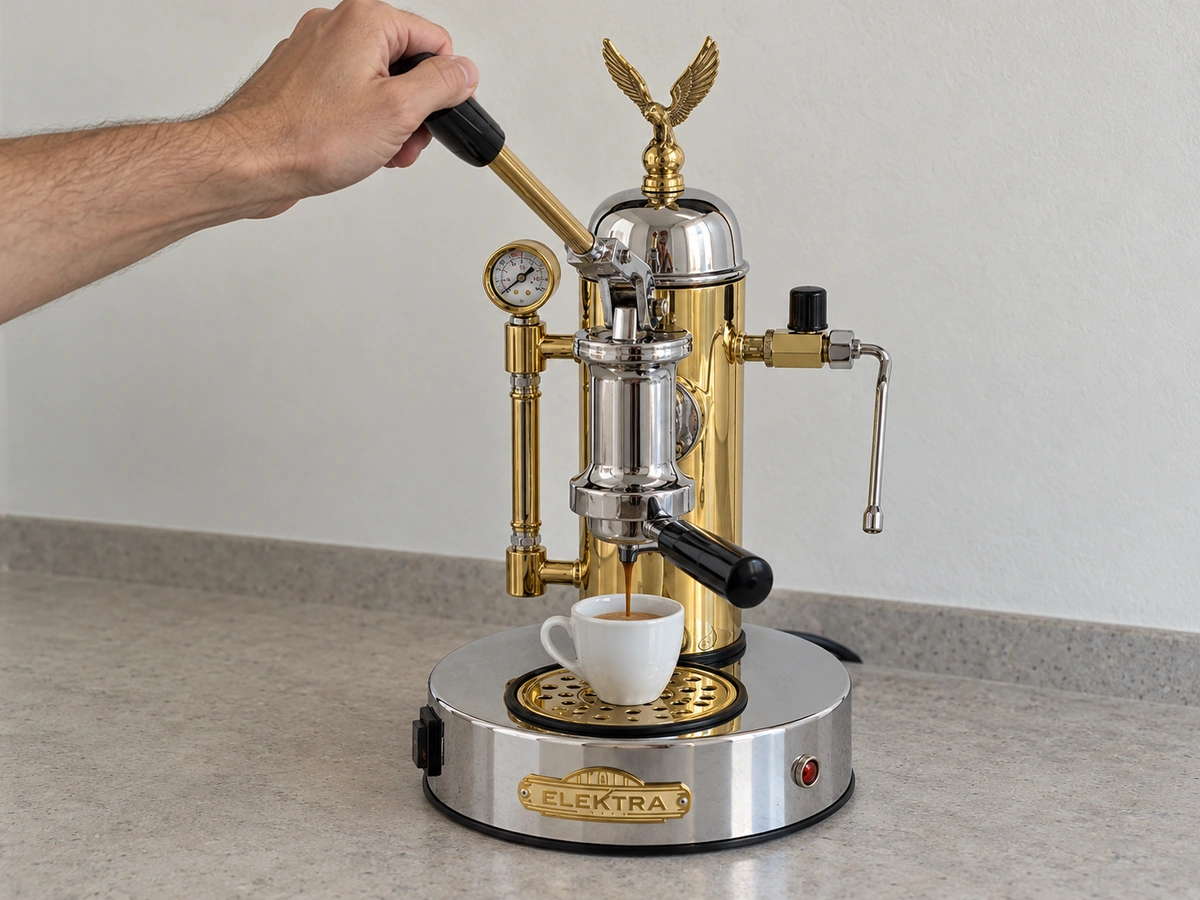
Two drawbacks:
- It gets very hot. Use an oven glove on any metal part except the portafilter handle.
- It is slow to heat. Expect 10 to 15 minutes, depending on how full the boiler is. If you forget to switch it on early and you are in a hurry, you will be skipping espresso.
Even so, its old-school feel and how easily it makes great espresso make it a joy to use.
Ease of use: 7/10
Design
This machine is stunning.
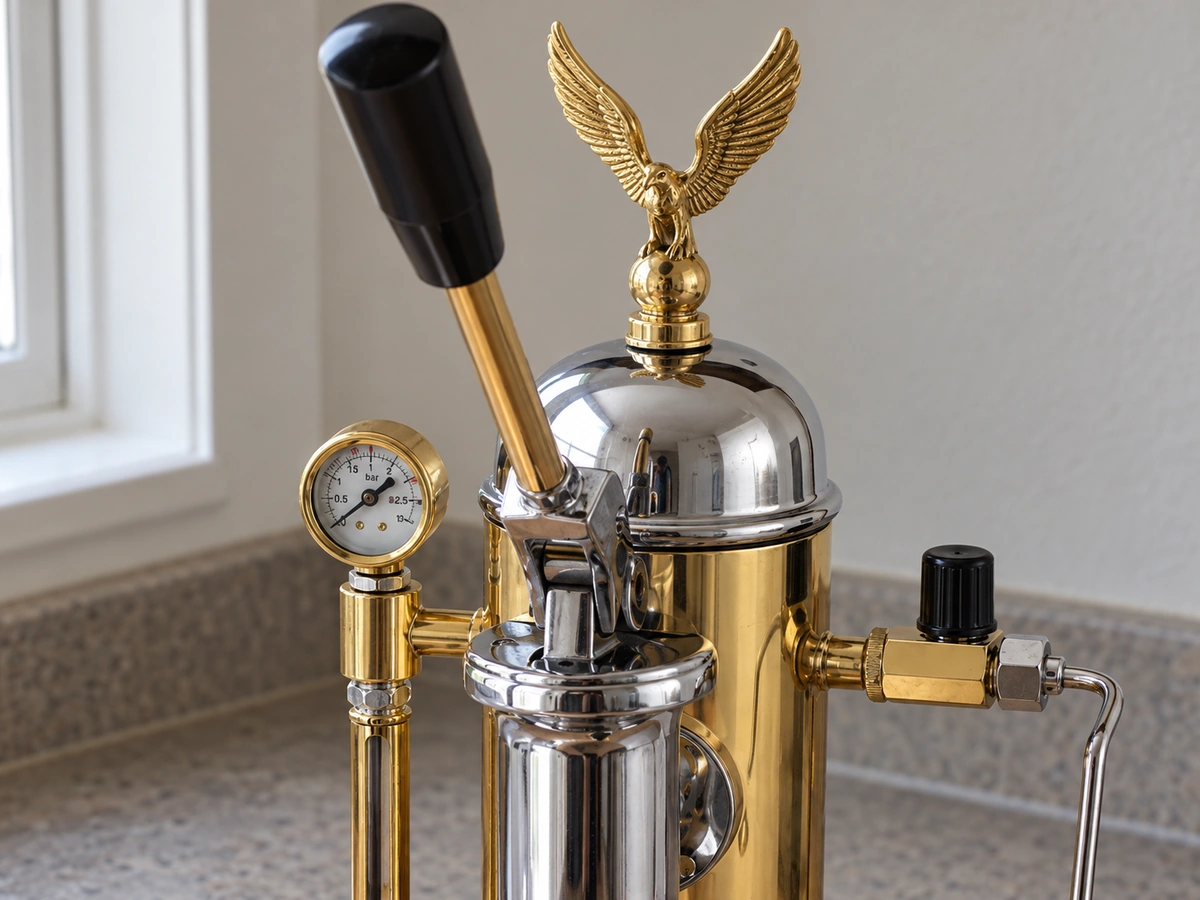
It will make your kitchen feel like 1940s Milan. It is beautifully made, with lots of chrome and brass, and heavy enough that it never moves when you work the lever.
The one weak spot is the plastic tamper. Buy a heavy metal one that fits its 49 mm basket.
Design: 10/10
Value
It is the most expensive machine here, but the craftsmanship and build quality justify it. You feel the quality every time you use it.
Value: 7/10
Best for Beginners: Cafelat Robot
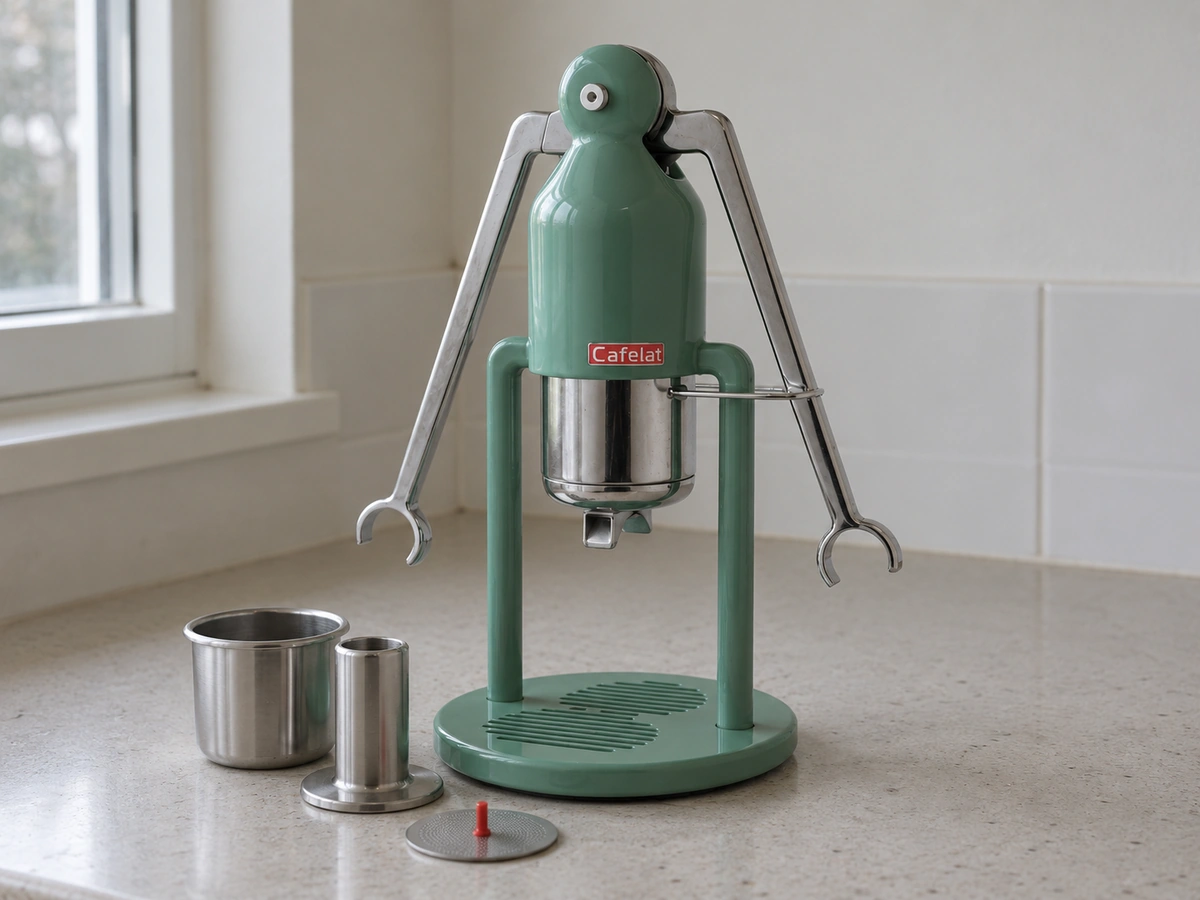
One of the easiest direct lever machines to use, with a good balance of ease, espresso quality and price. A perfect first manual machine.
Espresso Quality
The Robot is cleverly designed to make temperature and pressure as manageable as possible for a direct lever machine.
Pressure
Most versions come with a pressure gauge, so you can see how much pressure you are applying. That is a big help, and many manual machines at this price do not have one. The downside is that it faces forward, so you have to crouch to read it while brewing.
Temperature
You pour hot water straight into the basket over the coffee, with a metal screen spreading it evenly. Because the water does not travel through a cold machine first, very little heat is lost on the way to the coffee.
Shot Volume
There are no water level markings, and the base is narrow, so you will need a slim scale to weigh your shots.
Espresso quality: 7/10
Ease of Use
Because water does not run through the machine, you do not need to preheat anything. That solves the biggest headache with most manual machines.
The deep basket also gives plenty of room for error, so overfilling and spilling is unlikely.
The only real gripe is the forward-facing gauge.
Ease of use: 9/10
Design
It looks great. Where the Elektra is classic, the Robot is retro-futuristic. Cafelat worked with a designer on its look, and it shows. It comes in several colors.
Design: 9/10
Value
It usually sells for around $400 to $450. That is not cheap, but it is on the lower end for a quality manual machine, and it makes good espresso easy.
Value: 8/10
Best Budget: ROK Espresso GC
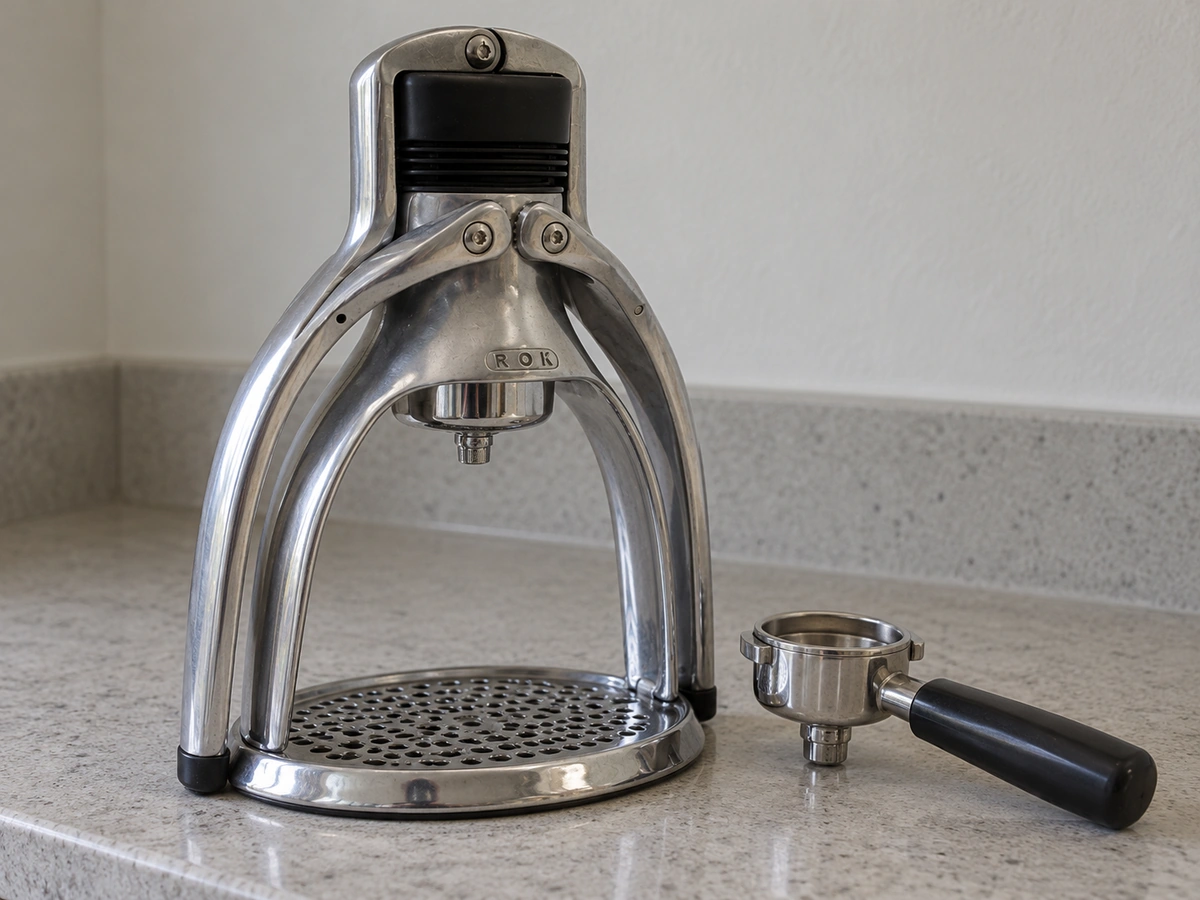
Harder to master, but affordable and very well built. If you know what you are doing, it is outstanding value.
Espresso Quality
The ROK's stripped-back design gives you few aids for consistency. You can absolutely make excellent espresso with it, but it takes knowledge and experimenting.
Pressure
It is a direct lever machine with no pressure gauge, so you have to judge pressure by feel. It is well designed: if your grind and dose are right, pressing steadily for a 25 to 30 second shot gets you about the right pressure. But that is a lot to ask of a beginner.
Temperature
The water passes through the cold machine before reaching the coffee, so getting the right temperature is tricky. Run a couple of blank shots (no coffee) first to warm the machine and portafilter.
Shot Volume
There is no water measurement, and it uses all the water you add. The base is wide enough for a scale, though, so you can weigh your shots.
Espresso quality: 5/10
Ease of Use
Easy to use, hard to master.
Pour boiling water into the top, attach the portafilter, raise the arms, wait 15 to 20 seconds, then press down. That gets you an average shot. For a great one, you need to preheat with blank shots and time your press, which adds effort.
Its simple design makes it easy to clean, and there is very little that can break.
Ease of use: 7/10
Design
It is clean and simple, a bit like a high-end corkscrew.
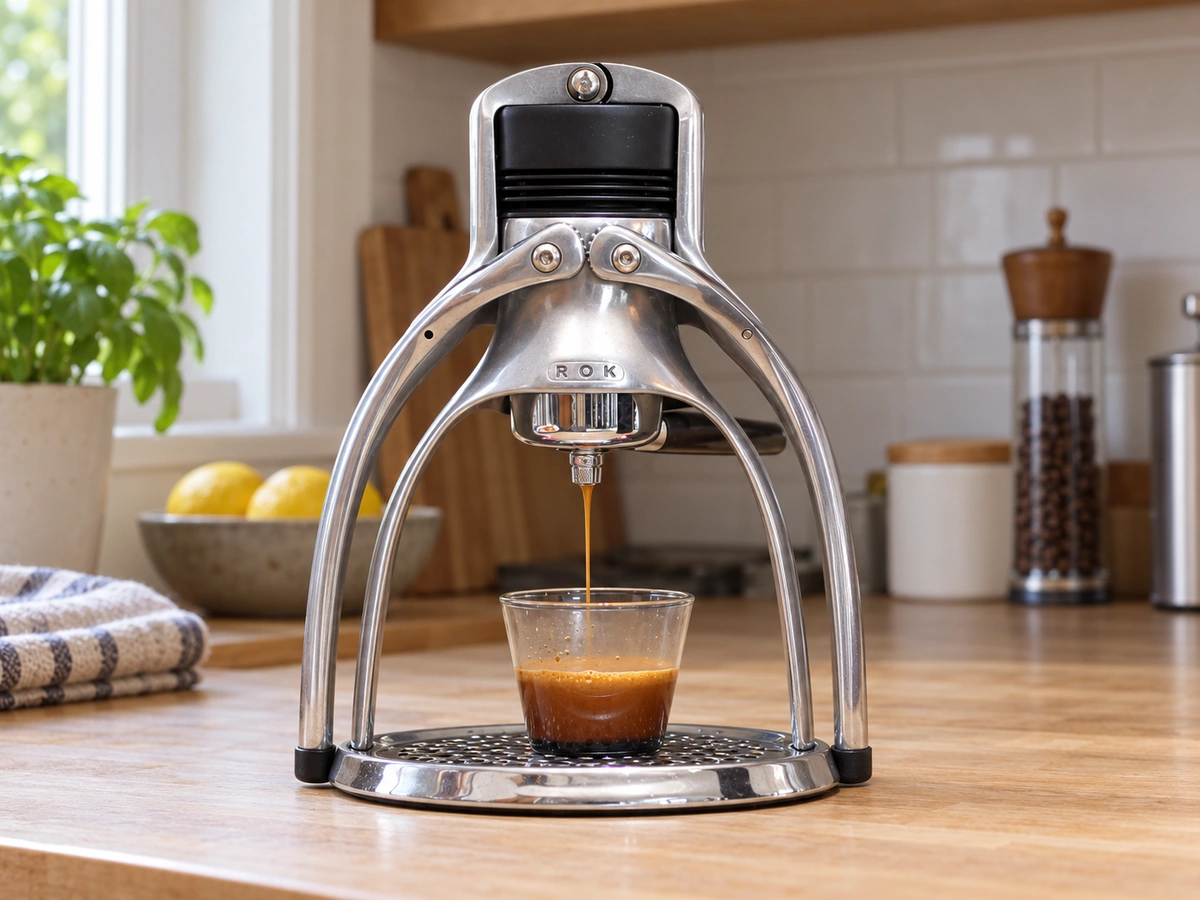
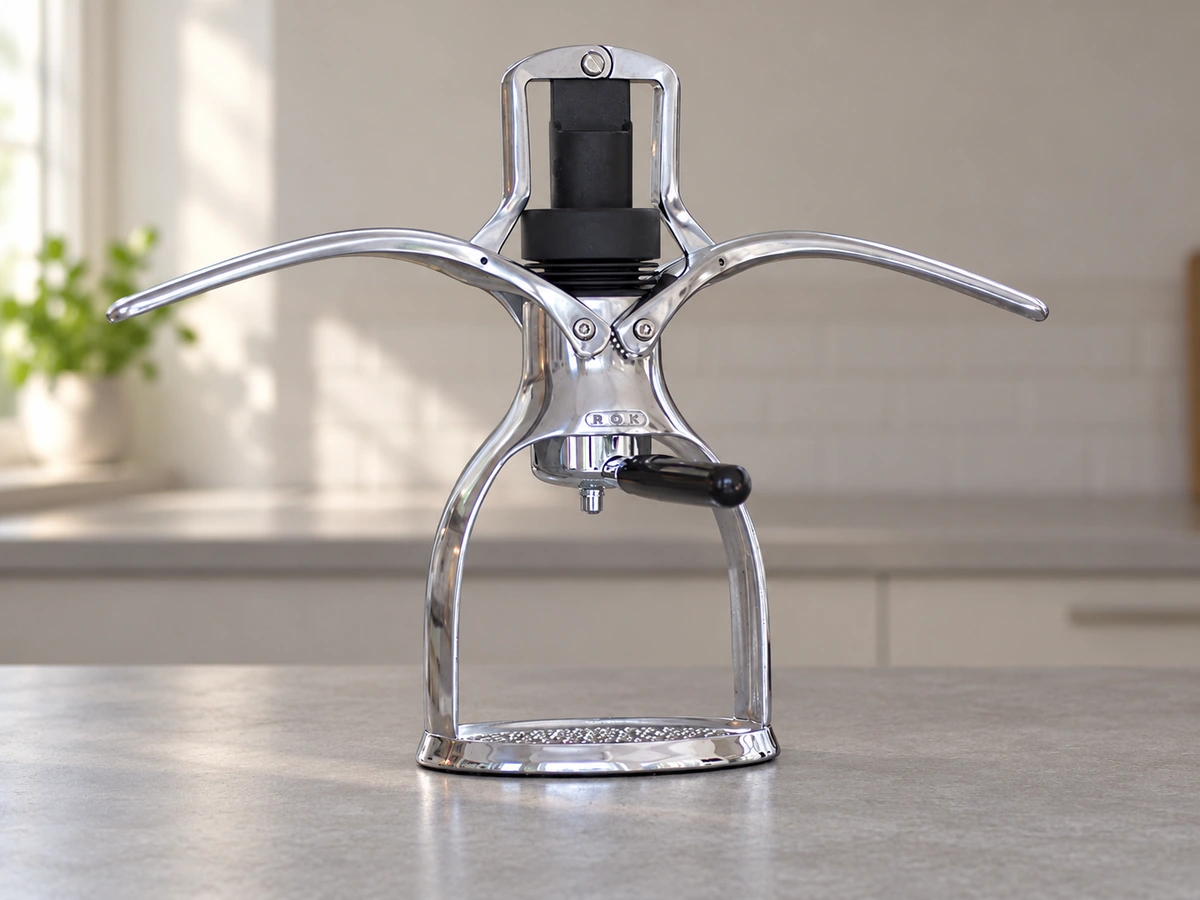
It is compact enough to travel with, and heavy enough that it does not wobble when you press it.
Design: 8/10
Value
It is one of the most affordable quality manual machines, at about a third of the Robot's price. In skilled hands, its espresso comes close.
Value: 10/10
Best for Milk Drinks: La Pavoni PC-16 Professional
Excellent espresso plus a proper steam wand, making it the best manual machine for cappuccinos and lattes.
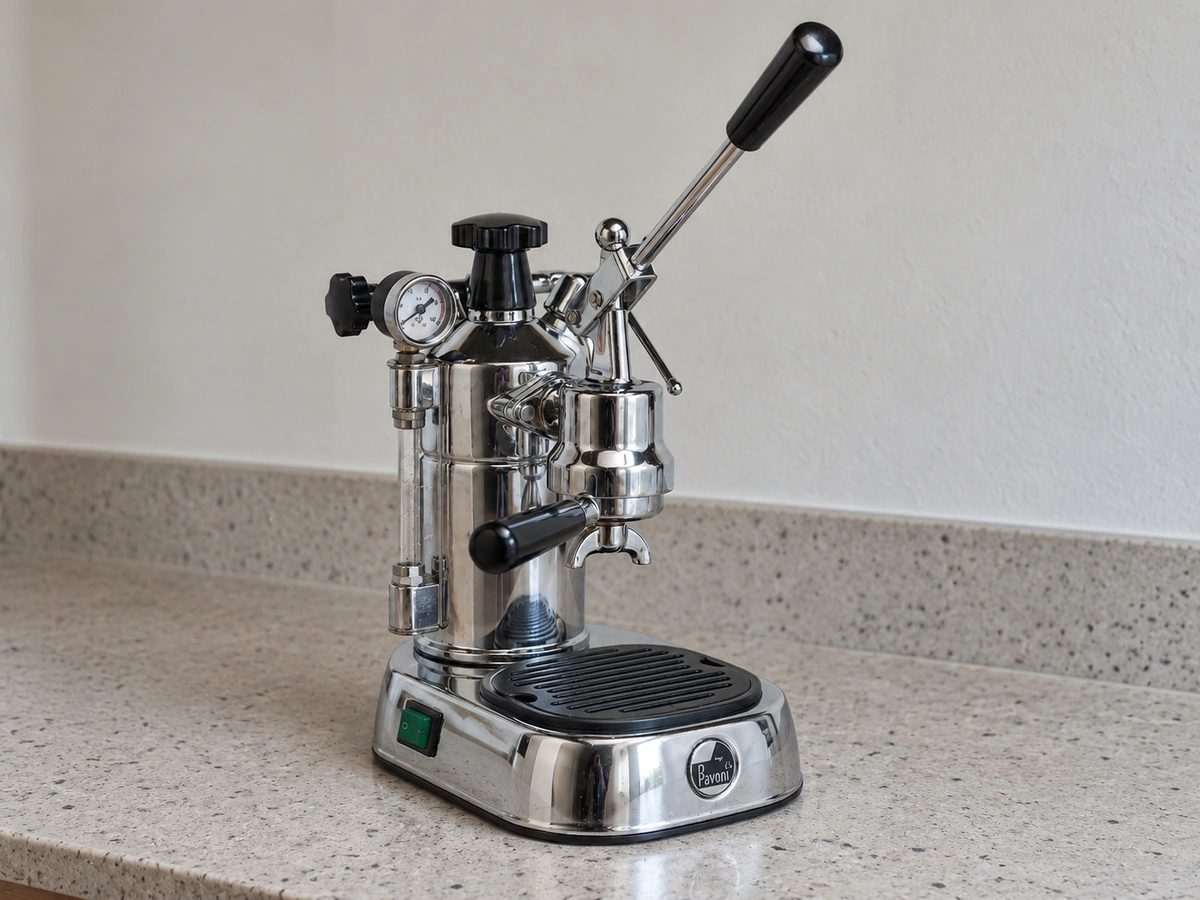
Espresso Quality
It gives you control over most, though not all, of the variables.
Pressure
It heats its own water and has a boiler pressure gauge and safety valve, so boiler steam will not over-pressurize your shots.
But the gauge shows boiler pressure, not the pressure you apply when pulling the lever. Getting brewing pressure right is down to practice. Its lever is very well made, so the same force gives consistent pressure shot after shot.
Temperature
Because it heats its own water, the group comes up to temperature on its own. No blank shots needed.
After a couple of shots, though, the group can get too hot, so you may need to pause between shots. A stick-on temperature strip for the group head is a cheap, useful add-on.
Shot Volume
There is a sight glass showing the boiler water level, but one shot barely moves it. Instead, put a scale under your cup and weigh your shots.
Espresso quality: 7/10
Ease of Use
It makes old-school espresso about as easy as it gets.
It heats in about six minutes, quick for a manual machine with its own boiler. The portafilter locks in easily and the lever action is smooth.
The highlight is the steam wand. It steams gently, which suits beginners, and comes with a frothing attachment that makes cappuccino foam easy even without barista skills.
Two small gripes:
- It gets very hot. Use an oven glove on the metal parts.
- The drip tray is shallow, and you flush the group after each shot, so you will empty it often.
Ease of use: 8/10
Design
La Pavoni's design has barely changed since the mid-20th century, and it is an icon among espresso fans.
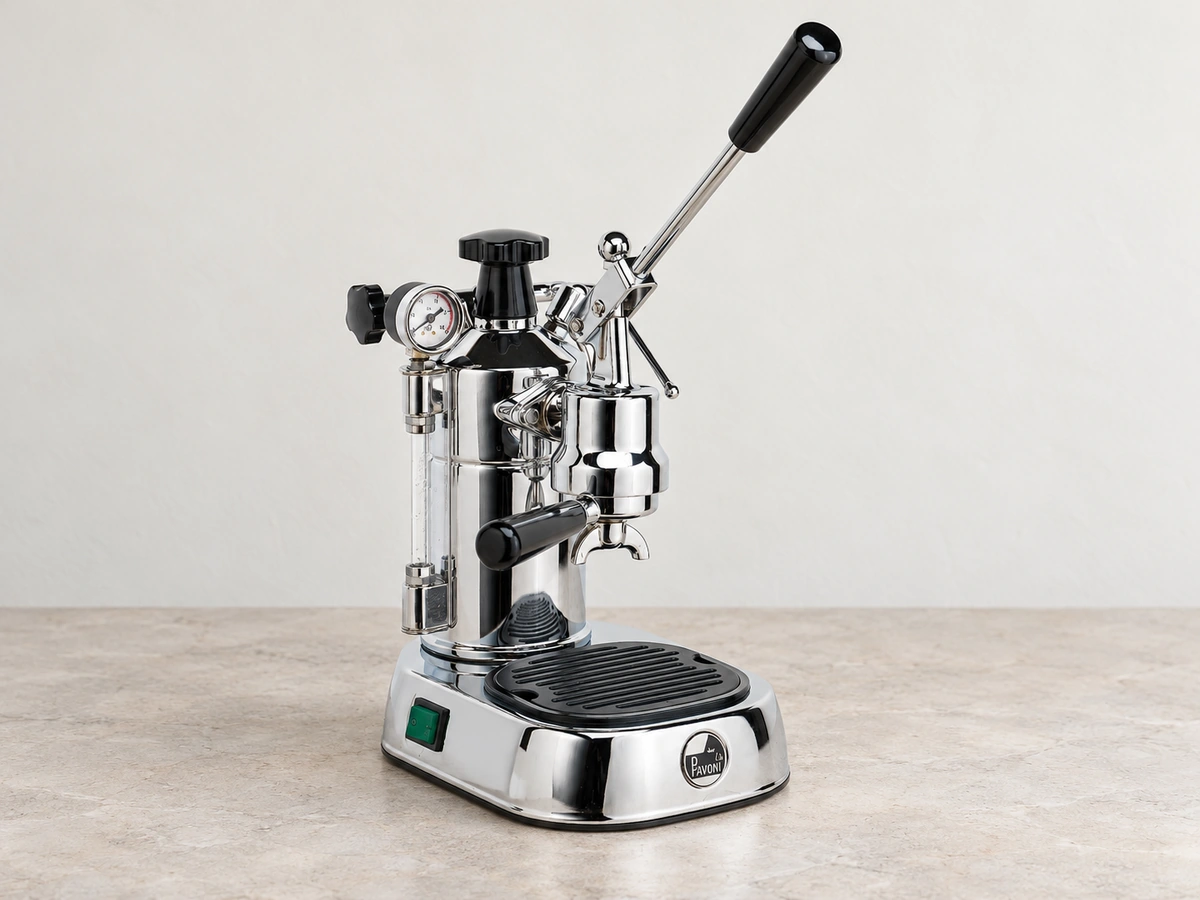
It is not quite as elegant as the Elektra, but it is much more compact. Some La Pavonis are still working after 50 years.
Design: 9/10
Value
It is not cheap, and the name probably adds to the price. But the build quality and attention to detail mean you mostly get what you pay for.
Value: 7/10
Also Worth a Look
Since this guide was first written, Flair has become one of the most popular names in manual espresso. Its direct lever models, like the Flair 58 and Flair Pro 3, include pressure gauges and are a strong alternative to the Robot, especially if you want more control.
How to Choose a Manual Espresso Machine
Does It Heat Its Own Water?
Some machines have a built-in boiler. With others, you pour in water from a kettle.
Machines with a boiler heat up the whole machine as they heat the water, so your water does not cool on the way to the coffee. Brewing below about 194°F (90°C) extracts less flavor.
Machines without a boiler need a few blank shots to warm up, unless, like the Robot, the water goes straight onto the coffee.
The downside of boiler machines is that they get very hot, especially after several shots.
| Machine | Heats its own water? |
|---|---|
| Elektra Micro Casa a Leva | Yes |
| Cafelat Robot | No |
| ROK Espresso GC | No |
| La Pavoni PC-16 Professional | Yes |
Machines with boilers tend to cost more.
Spring Lever or Direct Lever?
Spring levers are easier to get consistent results from. Direct levers give you more control but are harder to master.
Spring Lever
You pull the lever down to load a spring, then let it go. The spring pushes the water through the coffee at a consistent pressure every time.
The main advantage is consistency. Good spring lever machines brew at roughly 6 to 9 bar, with a natural pressure decline through the shot that many people love.
The main disadvantage is less control over pressure. You can still adjust your dose, grind and pre-infusion time.
Direct Lever
Your own force creates the pressure. That gives you complete control, but small changes in how hard you press make a big difference, so consistency takes practice. With experience, you can fine-tune shots in ways a spring lever cannot.
| Machine | Lever type |
|---|---|
| Elektra Micro Casa a Leva | Spring lever |
| Cafelat Robot | Direct lever |
| ROK Espresso GC | Direct lever |
| La Pavoni PC-16 Professional | Direct lever |
Spring lever machines are more complex, so they usually cost more.
Does It Have a Pressure Gauge?
Ideally, yes.
On a direct lever machine, a gauge on the brew path shows how your force translates into pressure, which is essential for consistent shots.
On a boiler machine, a gauge shows how much pressure steam has built up in the boiler, which you may want to release before brewing.
| Machine | Pressure gauge? |
|---|---|
| Elektra Micro Casa a Leva | Yes (boiler) |
| Cafelat Robot | Yes (most versions) |
| ROK Espresso GC | No (available as an add-on) |
| La Pavoni PC-16 Professional | Yes (boiler) |
How Tall Is It?
Lever machines can be very tall when the lever is up. Check the maximum height if you have low cabinets.
| Machine | Maximum height |
|---|---|
| Elektra Micro Casa a Leva | ~19.3" (49 cm) |
| Cafelat Robot | ~19" (48 cm) |
| ROK Espresso GC | ~11.5" (29 cm) |
| La Pavoni PC-16 Professional | Lever raises it well above its ~12" body height |
Do You Love How It Looks?
With so many push-button machines that make great espresso, part of the appeal of a manual machine is how it looks and feels to use. It will be a centerpiece in your kitchen, so watch some videos and make sure you love it. My favorites to look at are the Elektra and the Robot.
Final Thoughts: The Elektra Micro Casa a Leva Is the Best Manual Espresso Machine
It is gorgeous, it nails that old-school look, and once it is warm, its spring lever pulls excellent shot after excellent shot with little trial and error. It is slow to heat and not ideal for a tiny kitchen, but for world-class espresso from a machine that looks like it came from the 1940s, it is the one to get.
Not sure manual is for you? See the best espresso machines for beginners, the best Italian espresso machines, or our explainer on semi-automatic vs automatic vs super-automatic machines. Whatever you choose, a good grinder matters more than anything. See the best espresso grinders.
Your Questions Answered
Are manual espresso machines worth it?
Yes, if you enjoy the process. They can make excellent espresso, are quiet and last for decades, but they take more practice than pump machines.
Do manual espresso machines need a grinder?
Yes. Like any espresso machine, they need fresh coffee ground finely and consistently, so a good espresso grinder is essential.
What is the easiest manual espresso machine to use?
The Cafelat Robot is the easiest direct lever machine. For the most consistent shots with the least effort, a spring lever machine like the Elektra is easiest.

Written by · reviewed by the Cicada Coffee Bar team
Daniel Voss
Lead Equipment Reviewer, Cicada Coffee Bar
Daniel leads the equipment-testing side of Cicada Coffee Bar. Every super-automatic, semi-automatic, and grinder featured on this site is bought or sourced independently, set up on the test bench, and brewed with daily for at least two weeks before a single word is written — tracking espresso quality, milk texture, ease of cleaning, and long-term reliability. Reviews are updated whenever pricing or firmware changes.