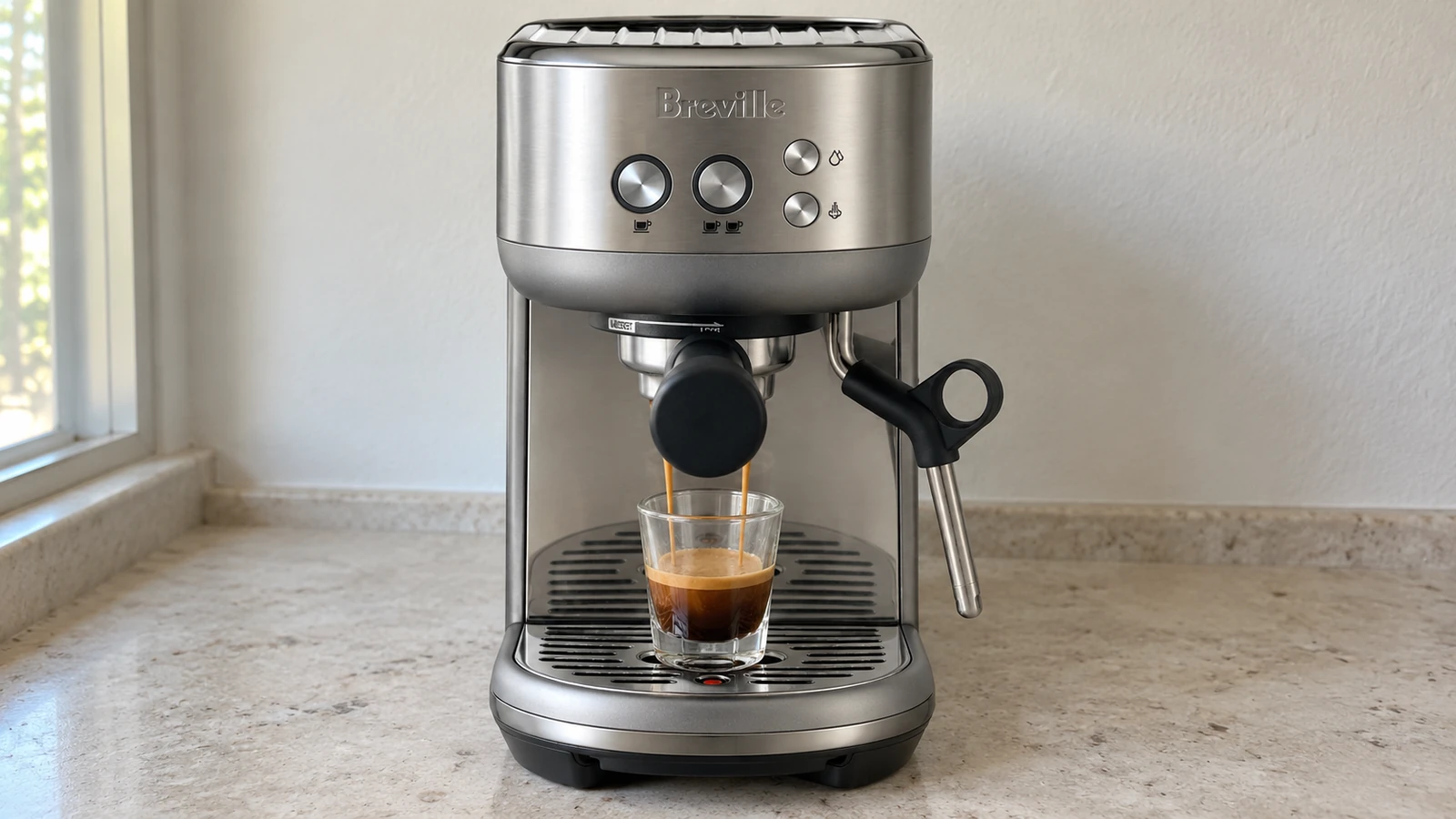
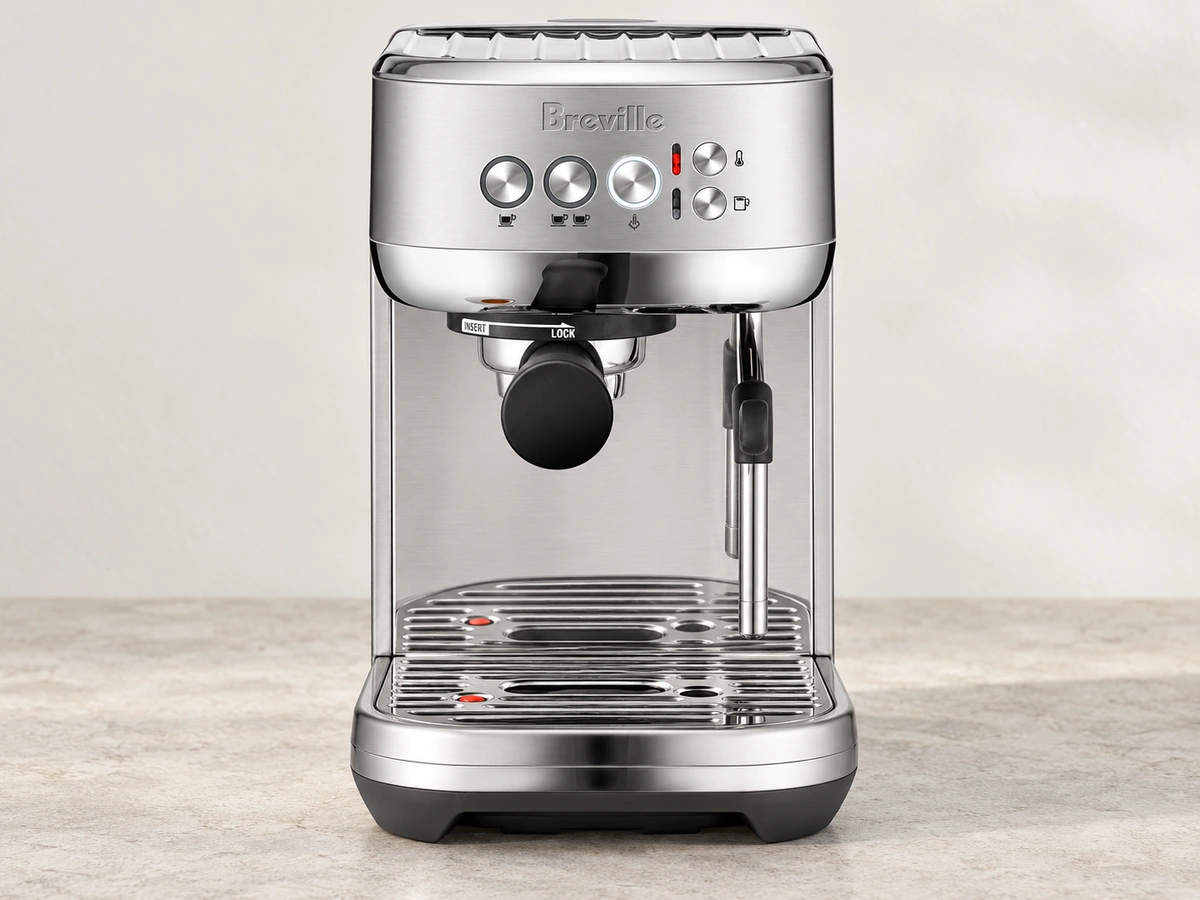
Quick answer: the best espresso machine for beginners is the Breville Bambino Plus. It makes good espresso and steams milk beautifully with very little learning curve. Pair it with an entry-level espresso grinder and the whole setup costs well under $1,000.
After years of using more than a dozen entry-level (under $1,000) espresso machines, my advice for first-time buyers is simple:
- Get a Breville if you want a traditional portafilter machine. Better espresso, with a bit of a learning curve.
- Get a Philips super-automatic if you want espresso and milk drinks at the press of a button. Weaker espresso, but no learning curve.
The other machines I tested either:
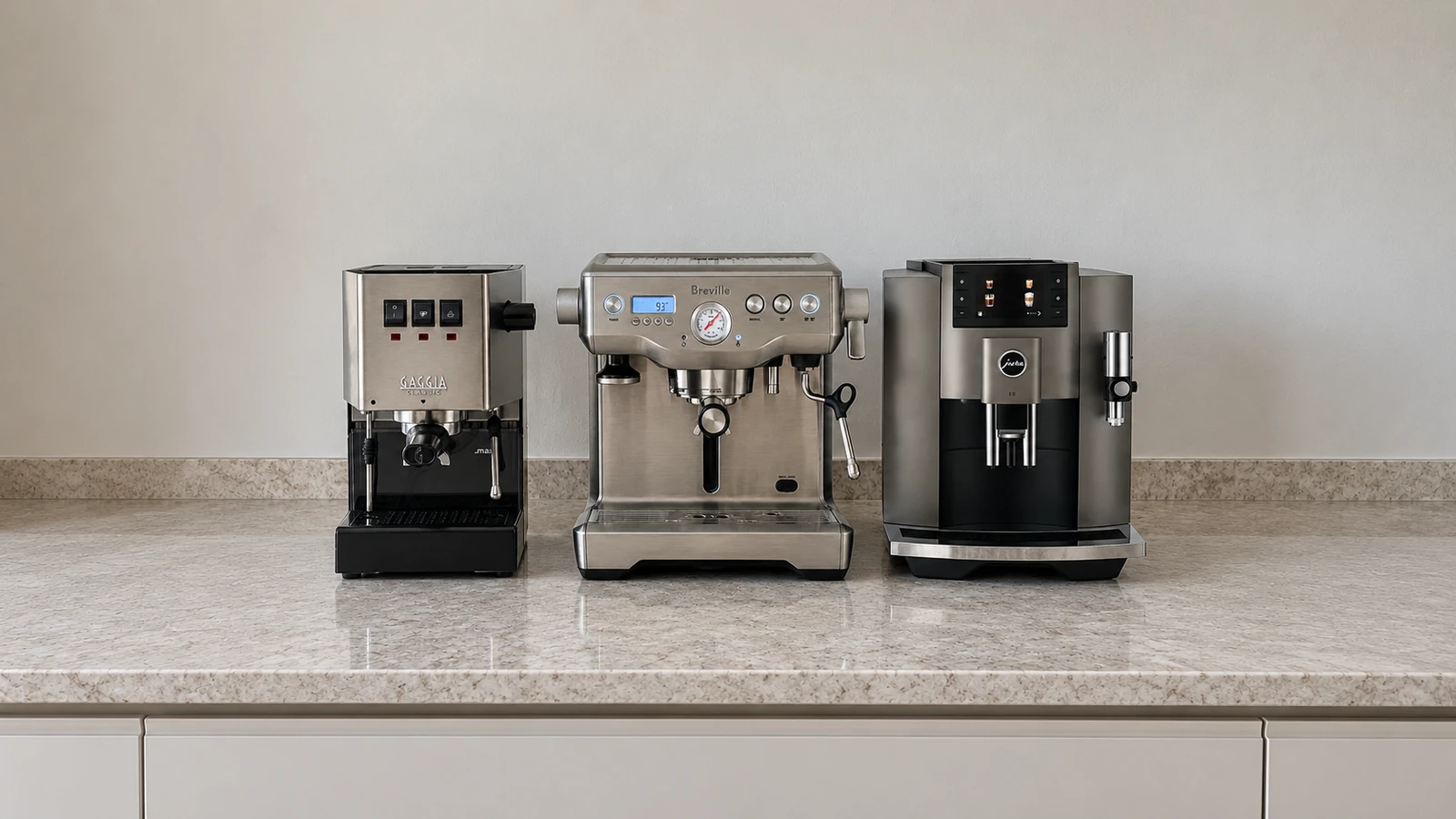
- Need modifying before they pull consistent shots. The Gaggia Classic Pro is the classic example. As a beginner, you want consistent shots before you start modding.
- Cost too much. If you are spending more than about $1,200 on an espresso setup, you should already know what you want, so I have left those out.
Here are the four best espresso machines for beginners, depending on your budget, the drinks you make and how much effort you want to put in.
Picks at a Glance
 1
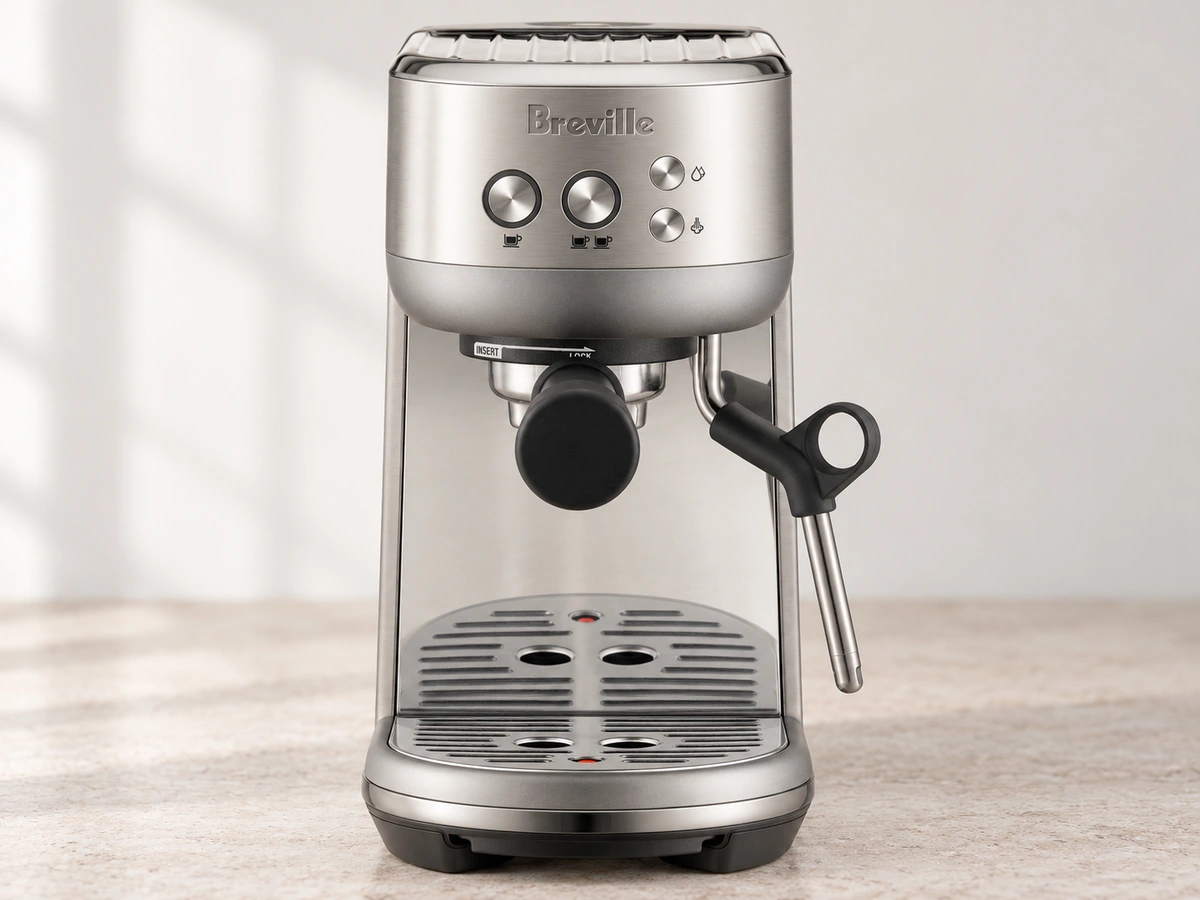
Breville Bambino Plus
- Automatic shot volumes
- Automatic steam wand for hands-free milk
- Switches from brewing to steaming in seconds
 2
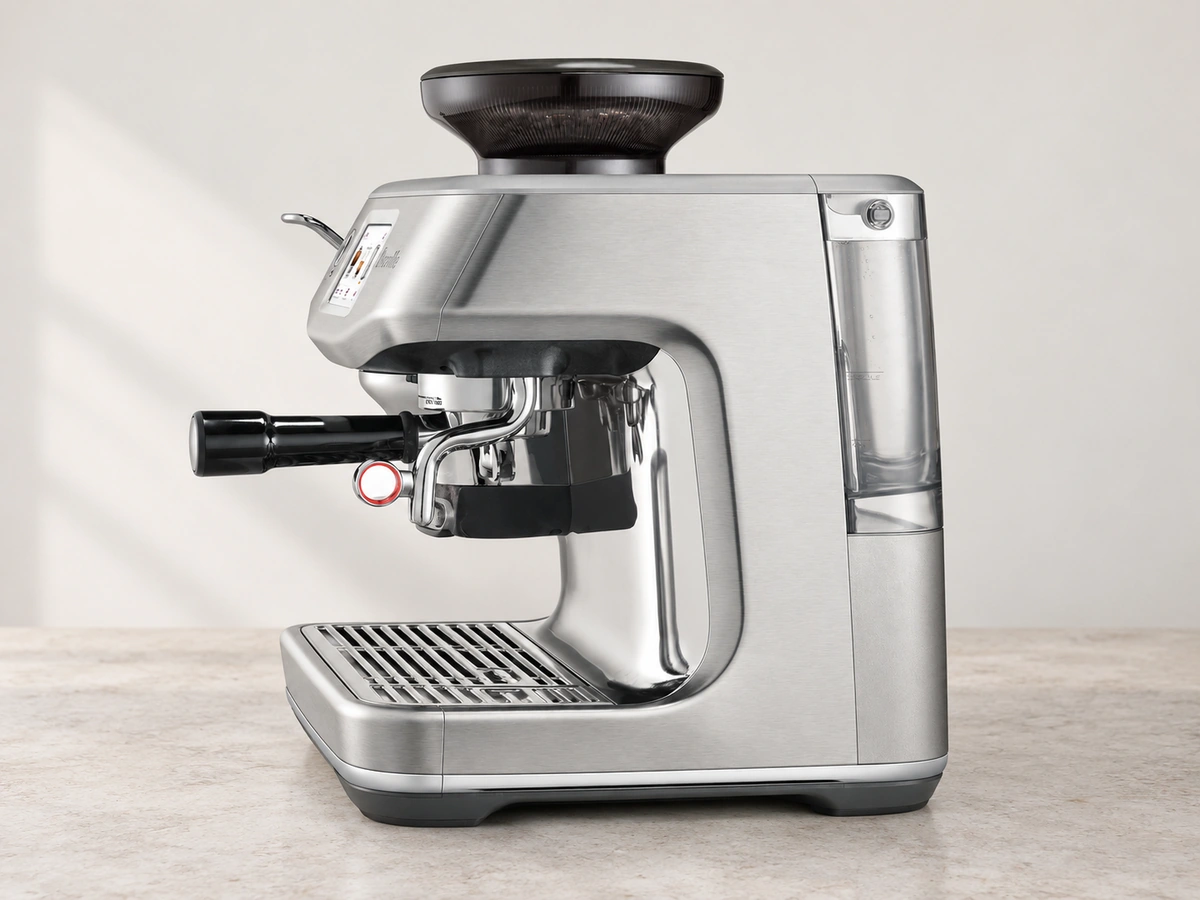
Breville Bambino
- Pairs with a decent grinder for around $500
- Works with pre-ground or freshly ground coffee
- Ready in about three seconds
 3
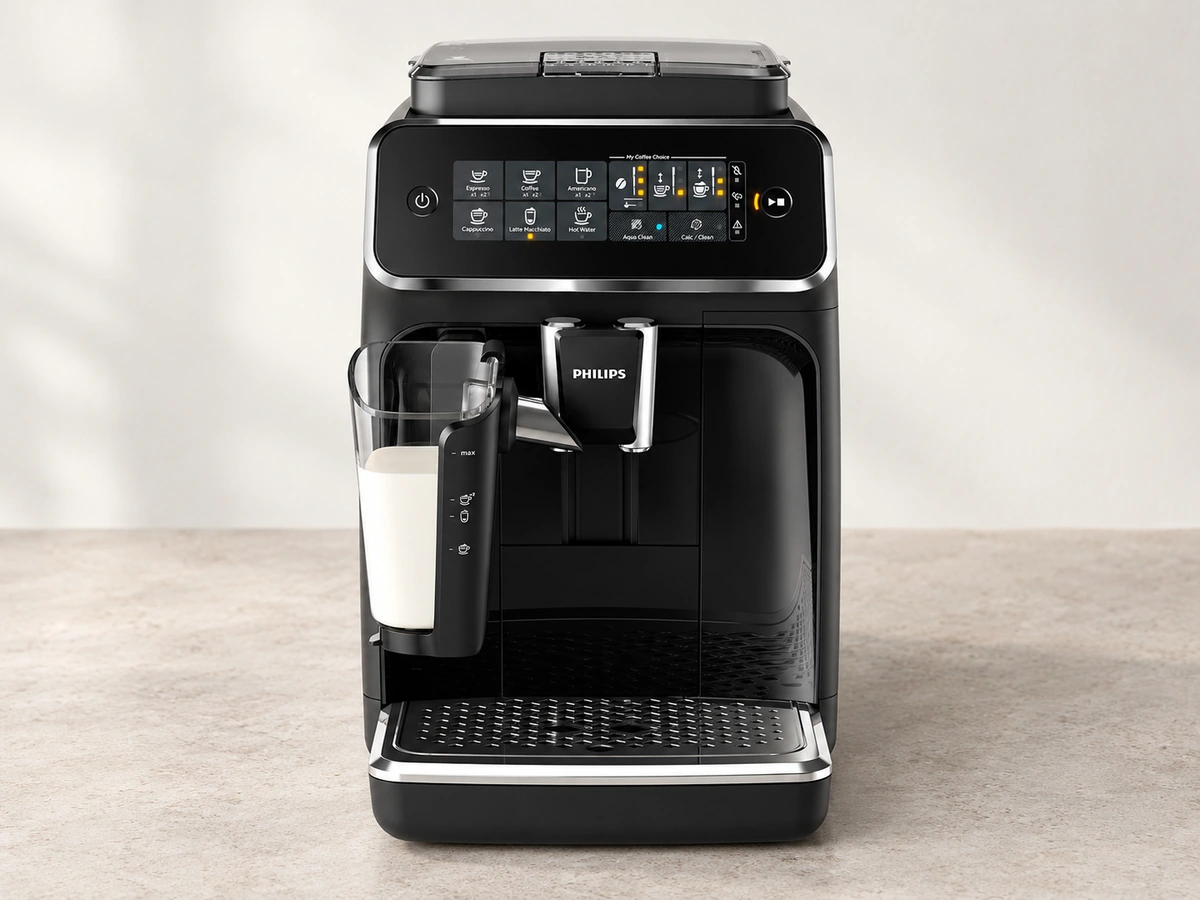
Breville Barista Touch Impress
- Touchscreen with saved drinks
- Built-in grinder with guided dosing and assisted tamping
- Automatic steam wand
 4
Philips 3200 LatteGo
- Espresso and milk drinks at one touch
- Easy-clean milk system
- Grinds beans for you
The Best Beginner Setup for Your Budget
Choosing a budget for your first espresso machine is tricky, for two reasons:
- You will also want a grinder, and good espresso grinders are not cheap. As a rule of thumb, if you drink straight espresso, your grinder matters more than your machine. If you drink milk drinks, the machine matters more.
- Cheaper machines are usually harder to use. The features that make a machine beginner-friendly tend to raise the price.
Under $200: Stick With a Moka Pot
Unfortunately, I have not found an espresso machine under $200 that is consistent enough for a beginner.
At minimum, a beginner's machine should give you consistent shots once you get the basics right: grind size, coffee dose and shot weight. Machines like the De'Longhi ECP3420 and the Flair Neo are often recommended to beginners, but they are better for people who already know espresso and are on a tight budget. Until then, a moka pot makes strong, espresso-like coffee for very little money.
Under $350: Breville Bambino and Pre-Ground Coffee
Get the Breville Bambino and use good pre-ground espresso coffee.
The Bambino comes with pressurized baskets, which make a good, though not great, espresso from pre-ground coffee. Many specialty roasters sell coffee pre-ground for espresso. The shots will taste a little duller than with fresh ground coffee, but they will be decent and, more importantly, consistent while you learn and save up for a grinder.
Around $500: Breville Bambino and an Entry-Level Espresso Grinder
At this budget, you should be buying a machine and a grinder. The Bambino with an entry-level espresso grinder like the Baratza Encore ESP is the best combination.
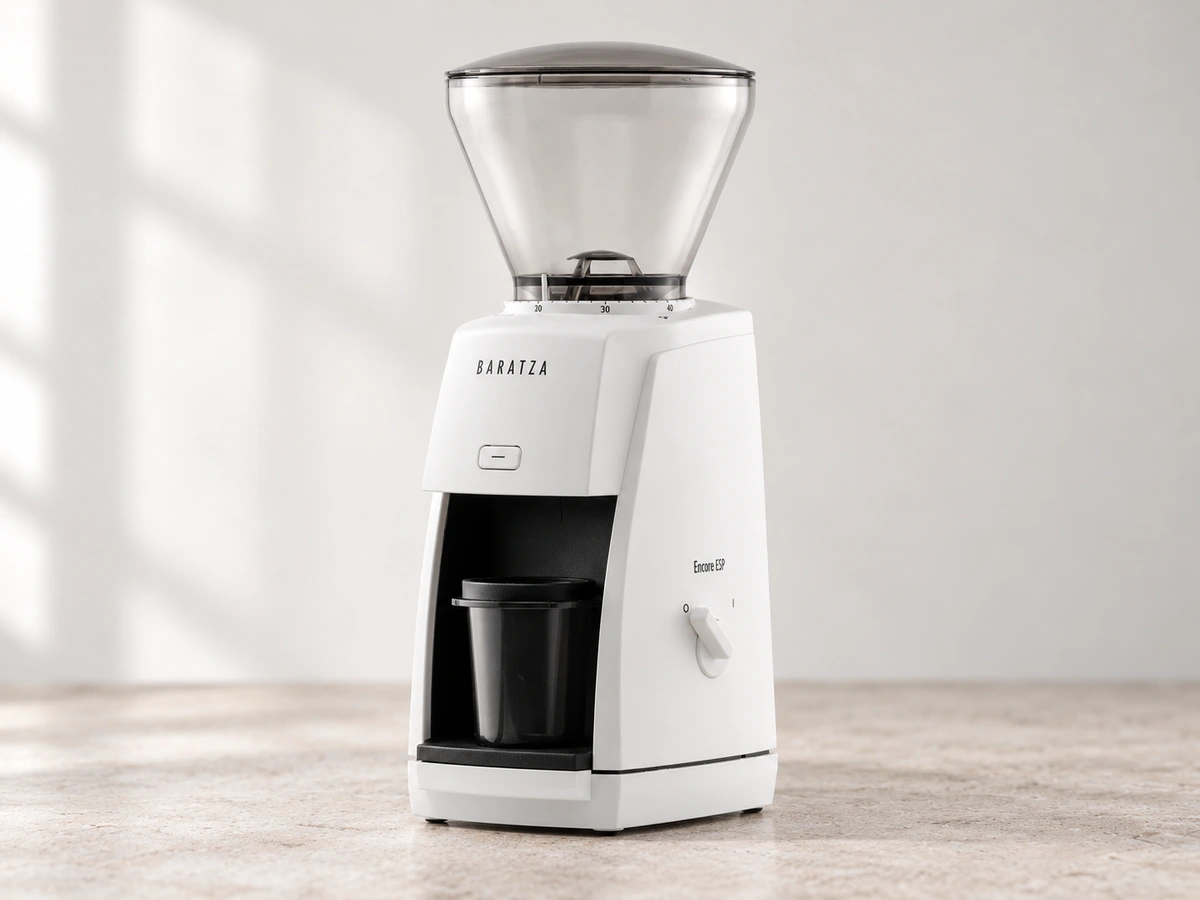
Baratza Encore ESP
Grinds finely and evenly enough for espresso, and pairs with the Bambino for around $500.
Affiliate link — we may earn a commission at no cost to you.
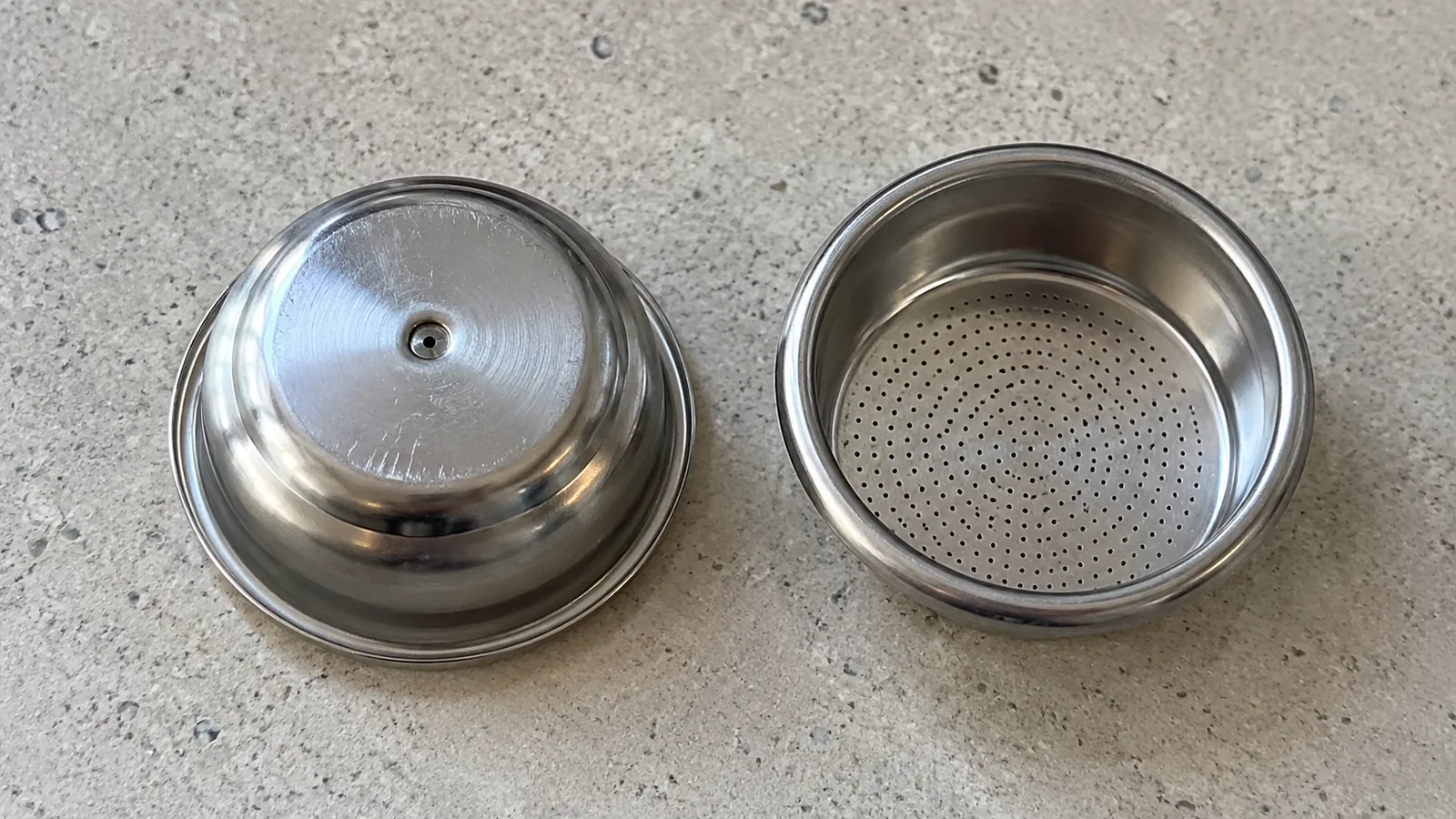
Also buy a 54 mm non-pressurized basket for when you grind your own beans. Non-pressurized baskets raise the quality ceiling with fresh coffee (they do not work well with pre-ground). They are inexpensive. Just make sure you get 54 mm, not 51 or 58 mm. More in pressurized vs non-pressurized portafilter baskets.
Around $800: A Better Grinder, or the Bambino Plus
Now your options open up.
- Mostly straight espresso and Americanos? Keep the Bambino and spend the difference on a better grinder. The grinder will improve your espresso more than the machine.
- Mostly milk drinks? Get the Bambino Plus with an entry-level espresso grinder. Your shots will not be quite as good, but its automatic steam wand makes superb milk drinks with no learning curve.
See our pick of the best espresso grinders.
If you would rather skip dosing and tamping entirely, you can also get a good super-automatic at this price. My pick would be the Philips 3200 LatteGo.
Around $1,000+: Bambino Plus With a Premium Grinder, or the Barista Touch Impress
- Mostly straight espresso: pair the Bambino Plus with a high-quality espresso grinder. It is easy to start with but has a seriously high ceiling if your espresso hobby takes off.
- Mostly milk drinks, and you do not want to get technical: get the Breville Barista Touch Impress. It makes good espresso and fantastic milk drinks, with much less trial and error than the Bambino Plus.
I would not spend much more than this on your first machine. You do not really know what you want until you have tried it, and it is better to start small and upgrade than to splurge on something that ends up gathering dust.
Best Overall: Breville Bambino Plus
Breville Bambino Plus
Consistent shots, plus an automatic steam wand for hands-free milk.
Affiliate link — we may earn a commission at no cost to you.
| Specification | Breville Bambino Plus |
|---|---|
| Type | Automatic (programmable shots) |
| Controls | Buttons |
| Milk | Automatic steam wand (can be used manually) |
| Heat-up time | ~3 s |
| Steam ready in | Under 10 s |
| Dimensions (W x D x H) | 7.7" x 12.6" x 12.2" |
| Cup clearance | ~4.5" |
Espresso
Very good, with a non-pressurized basket.
Its temperature stability is excellent, so if you keep your dose, shot volume and grind consistent, your shots will be consistent too. For fresh ground coffee, use a non-pressurized basket. Check what is in the box, because you may need to buy one separately.
Its brewing pressure is set a little low, which makes it more forgiving for beginners but limits how well it handles very light roasts. That is not something most beginners need to worry about.
Espresso: 9/10
Milk
Good in automatic mode, really good in manual mode. Hands-free, it makes good if not amazing foam. For café-quality microfoam and latte art, steam manually. The wand is more than capable.
Milk: 9/10
Ease of Use
Automatic shot volumes and an automatic steam wand make it easier than anything else at its price.
The only way to go wrong with the auto wand is not sitting the jug properly on its temperature sensor. The next cheapest machine with a similar automatic wand costs about twice as much.
The tricky part is dialing in. With no pressure gauge or shot timer, you weigh and time your shots yourself. But once you have it right, the machine repeats that volume every time.
Ease of use: 8/10
Value
Excellent, especially if you drink a lot of milk drinks.
Value: 8/10
What I like: easy cappuccinos and lattes, pairs with a good grinder for well under $1,000, compact. What I don't: the drip tray fills quickly; the Bambino is better value if you will not use the auto wand.
Read my Bambino Plus review and Bambino vs Bambino Plus.
Best Budget: Breville Bambino
Breville Bambino
The cheapest espresso machine I have found that pulls consistent shots.
Affiliate link — we may earn a commission at no cost to you.
| Specification | Breville Bambino |
|---|---|
| Type | Automatic (programmable shots) |
| Controls | Buttons |
| Milk | Manual steam wand |
| Heat-up time | ~3 s |
| Steam ready in | Under 10 s |
| Dimensions (W x D x H) | 6.3" x 12.6" x 12.2" |
| Cup clearance | ~4.5" |
Espresso
Good, and very good with a non-pressurized basket. It uses the same brewing system as the Bambino Plus. It typically ships with pressurized baskets, which work well with pre-ground coffee. For fresh ground coffee, add a 54 mm non-pressurized basket.
Espresso: 8/10
Milk
Excellent, and suitable for latte art. There is no auto mode, but the wand is fairly gentle, which gives beginners time to texture the milk before it gets too hot.
Milk: 8/10
Ease of Use
The least automated machine here, but still easier than most at its price, thanks to programmable shots and stable temperature. Many machines at this price make you manage temperature yourself, which makes consistent shots much harder.
Ease of use: 6/10
Value
Incredible. It is the most affordable machine I know of that pulls consistent shots. Pairing it with good pre-ground coffee is the best beginner setup on a tight budget.
Value: 10/10
What I like: pairs with a decent grinder for around $500, very slim, excellent performance for the price. What I don't: less automation, and you may need to buy non-pressurized baskets.
Read my Breville Bambino review.
Best for Households: Breville Barista Touch Impress
Breville Barista Touch Impress
A touchscreen that saves everyone's favorite drinks, plus guided dosing, assisted tamping and automatic milk.
Affiliate link — we may earn a commission at no cost to you.
| Specification | Breville Barista Touch Impress |
|---|---|
| Type | Automatic with built-in grinder |
| Controls | Touchscreen |
| Milk | Automatic steam wand (can be used manually) |
| Heat-up time | ~3 s |
| Steam ready in | Under 10 s |
| Grinder | Built in, with guided dosing and assisted tamping |
Espresso
Not quite as good as a Bambino with a good grinder. Its brewing system is similar, but its built-in grinder is closer to entry level. Expect espresso similar to a Bambino with an entry-level grinder. Once you upgrade to a better standalone grinder, a Bambino setup will pull ahead.
Espresso: 7/10
Milk
The best milk of any machine here. Its automatic wand lets you set temperature and texture precisely and steams hands-free. You can also steam manually for even more control.
Milk: 10/10
Ease of Use
One of the easiest semi-automatic machines you can buy. It guides you through grinding the right dose, tamps for you, and steams milk automatically. You can save favorite drinks to the touchscreen, which is perfect when several people share the machine.
Ease of use: 9/10
Value
An indulgent buy. You pay a premium for ease of use and features a beginner does not strictly need. It is best value for households with several coffee drinkers, or if you make a lot of milk drinks.
Value: 6/10
What I like: the best milk here, excellent touchscreen, saved drinks. What I don't: the built-in grinder limits espresso quality; pricier than the others.
See the best Breville espresso machines and Barista Pro vs Barista Touch.
No Learning Curve: Philips 3200 LatteGo
Philips 3200 LatteGo
Passable espresso and easy milk drinks without dosing or tamping.
Affiliate link — we may earn a commission at no cost to you.
| Specification | Philips 3200 LatteGo |
|---|---|
| Type | Super-automatic |
| Controls | Touch buttons |
| Milk | LatteGo automatic frother |
| Heat-up time | ~30 s |
| Dimensions (W x D x H) | 9.7" x 14.6" x 17" |
| Cup clearance | Up to ~6" |
Espresso
The weakest espresso here. Super-automatics cannot prepare a puck precisely, so they cannot use very fine coffee, and their espresso tastes duller. Even a Bambino with pre-ground coffee beats it.
Espresso: 5/10
Milk
One-touch, but only one texture. Its milk is good for a super-automatic, but you cannot control texture or temperature like with a steam wand, and latte art is not possible.
Milk: 6/10
Ease of Use
The easiest machine here. No tamping, no technique. Press the cappuccino or latte macchiato button and it does the rest. Cleanup is minimal too: the LatteGo milk system has just two parts and is dishwasher safe.
Ease of use: 10/10
Value
Good value for a super-automatic. It is much cheaper than Jura or De'Longhi machines with similar features, and the grinder is included.
Value: 8/10
What I like: no tamping to learn, one-touch milk drinks, great value for a super-automatic. What I don't: the weakest coffee here, one milk texture.
Read my Philips 3200 LatteGo review and De'Longhi Magnifica Evo vs Philips 3200.
What to Look for as a Beginner
There is a lot of espresso jargon out there. Here is what actually matters for beginners, what only matters later, and what is mostly marketing.
Machine Type: Choose Automatic or Super-Automatic
Automatic or super-automatic machines are best for beginners.
- Manual (lever): you create the pressure yourself. Rewarding, but hard to get consistent shots from. See the best manual espresso machines.
- Semi-automatic: the machine controls pressure and temperature, but you start and stop every shot yourself.
- Automatic: like a semi-automatic, but it stops the shot at a programmed volume for you.
- Super-automatic: grinds, doses, tamps and brews at the touch of a button.
My advice:
- Automatic if you want café-quality drinks and are willing to learn about grind, dose and tamping. Sorry, but you do need to.
- Super-automatic if decent espresso at one touch is enough and you have no interest in technique.
More detail in semi-automatic vs automatic vs super-automatic.
| Machine | Type |
|---|---|
| Bambino Plus | Automatic |
| Bambino | Automatic |
| Barista Touch Impress | Automatic |
| Philips 3200 | Super-automatic |
A PID: Must-Have
A beginner's machine needs a PID, so you do not have to manage temperature while learning everything else. A PID keeps brew temperature steady, which you need for consistent shots.
Without one, you need a "temperature surfing" routine. It is not hard, but it is one more thing to juggle as a beginner.
All my picks have PIDs. Popular machines I left out for lacking one (in stock form) include:
- Gaggia Classic Pro
- Rancilio Silvia (a PID version exists, but it costs much more)
- De'Longhi ECP3420
- De'Longhi Dedica EC680M
Milk System: Get an Auto Wand If You Drink Milk Drinks
Learning to steam milk consistently takes time. An automatic steam wand that can also be used manually takes the pressure off.
The auto wands on the Bambino Plus and Barista Touch Impress steam hands-free to a chosen texture and temperature, and can also be used manually. That means good cappuccinos while you are still learning.
As one Reddit owner put it:
“I tend to leave it on max froth and medium heat for an auto cappuccino, and manually steam the rest of the time, but with it on medium settings for both I can get some passable latte art.”
The Philips LatteGo is different: no learning curve, but only one texture and no latte art.
| Machine | Milk system |
|---|---|
| Bambino Plus | Automatic steam wand (also manual) |
| Bambino | Manual steam wand |
| Barista Touch Impress | Automatic steam wand (also manual) |
| Philips 3200 | Automatic frother only |
Cup Clearance: At Least 4 Inches
You want at least 4 inches between the spout and the drip tray, so you can fit a scale under your cup.
Whatever you buy, you will need to dial in: adjust your dose, shot weight and grind until the shot tastes right. That means brewing onto a scale. With an automatic machine, you only do this until you find a shot you like, then the machine repeats it.
My espresso cup sitting on my scale measures about 3.5 inches.
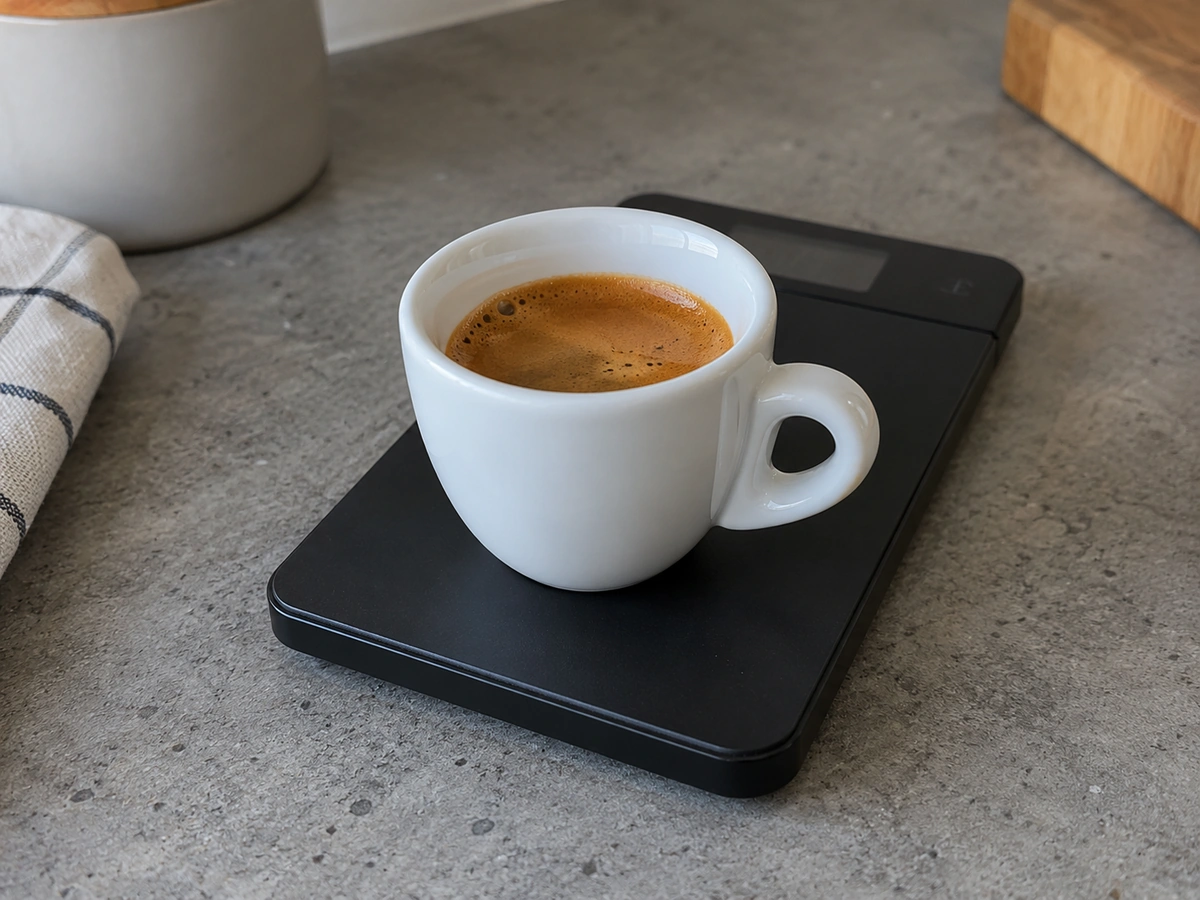
With less than 4 inches, you will need to remove the drip tray, which gets messy.
| Machine | Cup clearance |
|---|---|
| Bambino Plus | ~4.5" |
| Bambino | ~4.5" |
| Barista Touch Impress | ~4" |
| Philips 3200 | Up to ~6" |
Heating System: Less Important Than You Think
No single heating system is essential for a beginner.
- Thermoblock / thermocoil: heats water as it passes through a heated block
- ThermoJet: Breville's faster-heating on-demand system
- Single boiler: heats a tank of water inside the machine
- Dual boiler: separate boilers for brewing and steaming
| Heating | Heat-up | Brew to steam | Durability | Cost |
|---|---|---|---|---|
| Thermoblock / thermocoil | 10-30 s | 10-30 s | Lower | Affordable |
| ThermoJet | 3-5 s | 3-5 s | Lower | Mid |
| Single boiler | Minutes | Wait for steam temp | Higher | Varies |
| Dual boiler | Several minutes | Instant | Higher | Expensive |
The only one I would avoid as a beginner is a dual boiler, simply because they start at well over $1,000. A slightly faster switch from brewing to steaming does not matter much while you are learning both skills.
Pump Pressure: Mostly Marketing
Ignore "15-bar" and "19-bar" claims. That is the pump's maximum, not the brewing pressure. Espresso is ideally brewed around 9 bar; anywhere near 15 bar would wreck your shot.
What matters is the over-pressure valve setting, which manufacturers rarely publish. Brevilles are generally set sensibly from the factory. One reason the Rancilio Silvia did not make this list is that its stock pressure is set high, and many owners adjust it before getting consistent shots.
My Recommendation
The best espresso machine for beginners is the Breville Bambino Plus. Pair it with an entry-level espresso grinder for an easy, consistent setup for well under $1,000.
For more options, see the best Breville espresso machines, the best espresso machines under $500 and the best espresso machines with a grinder.
FAQs
What should I look for in a beginner espresso machine?
A PID for stable temperature, automatic shot volumes so you can repeat good shots, and at least 4 inches of cup clearance for a scale. Ideally, it should be affordable enough to pair with a decent grinder.
Can you make good espresso with a cheap machine?
Sometimes, but cheap machines rarely make good espresso consistently because their temperature drifts. You can keep everything the same and still get different-tasting shots. That is why I do not usually recommend machines below about $300 for beginners.
How much does a good espresso setup cost?
A good beginner machine starts around $300 to $350, and a capable espresso grinder starts around $150 to $200. So budget around $500 for a good home setup.
Written by · reviewed by the Cicada Coffee Bar team
Daniel Voss
Lead Equipment Reviewer, Cicada Coffee Bar
Daniel leads the equipment-testing side of Cicada Coffee Bar. Every super-automatic, semi-automatic, and grinder featured on this site is bought or sourced independently, set up on the test bench, and brewed with daily for at least two weeks before a single word is written — tracking espresso quality, milk texture, ease of cleaning, and long-term reliability. Reviews are updated whenever pricing or firmware changes.