If you have done any research into home espresso, you have probably seen people talking about pressurized and non-pressurized portafilter baskets.
Here I explain the difference, and which type suits which situation.
Quick Summary
| Basket type | Also called | How it works | Use it when |
|---|---|---|---|
| Pressurized | Dual-wall | Forces all the espresso through one tiny exit hole, which builds back-pressure and slows the flow | You use pre-ground coffee, a blade grinder, or you are still learning to tamp |
| Non-pressurized | Single-wall | Hundreds of tiny holes; the coffee puck itself controls the flow | You grind fresh coffee in a burr grinder |
What Is the Difference?
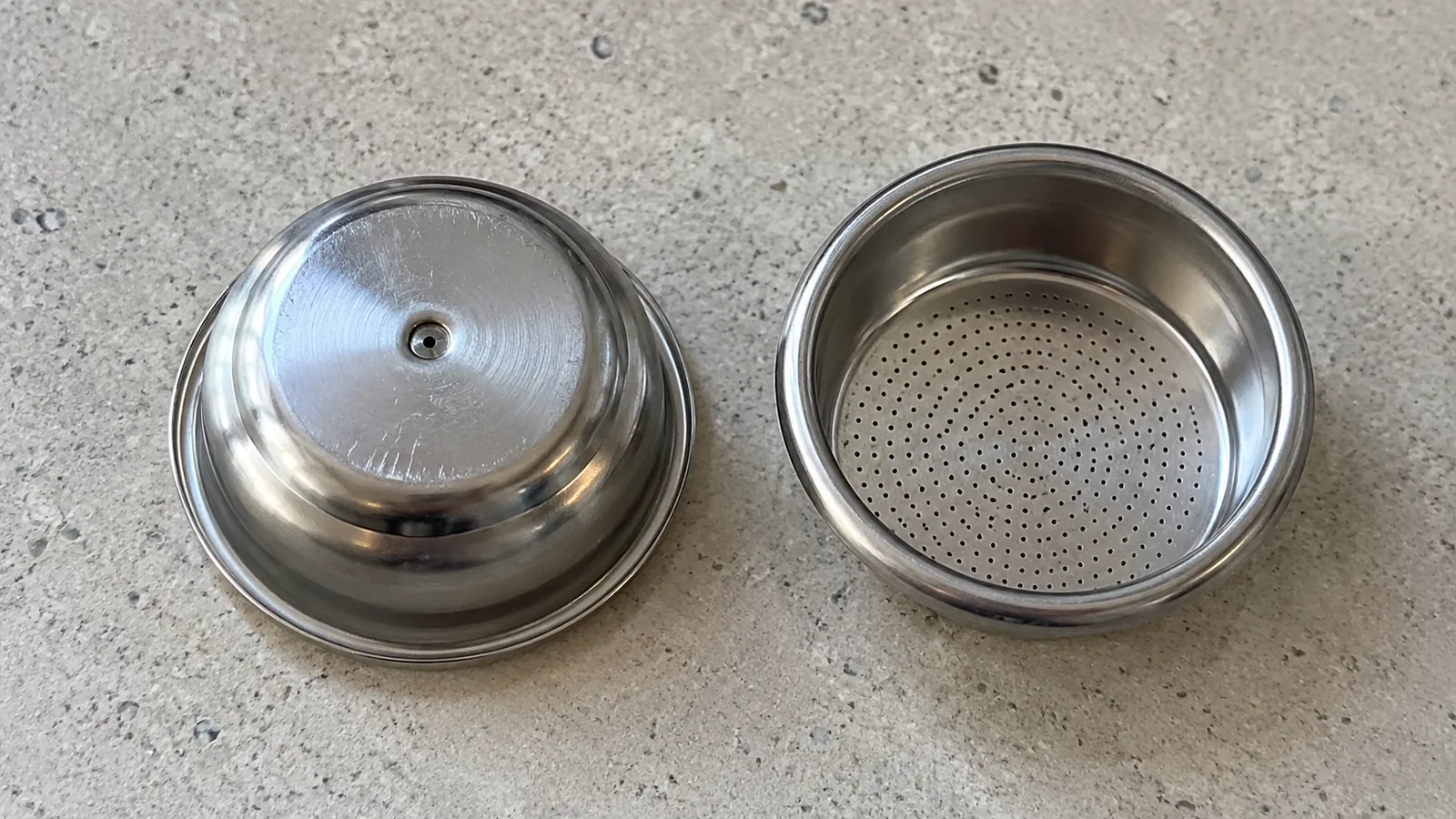
A pressurized basket forces espresso through a single tiny hole. A non-pressurized basket has hundreds of small holes.
You can tell which is which by turning the basket over and looking at the bottom.
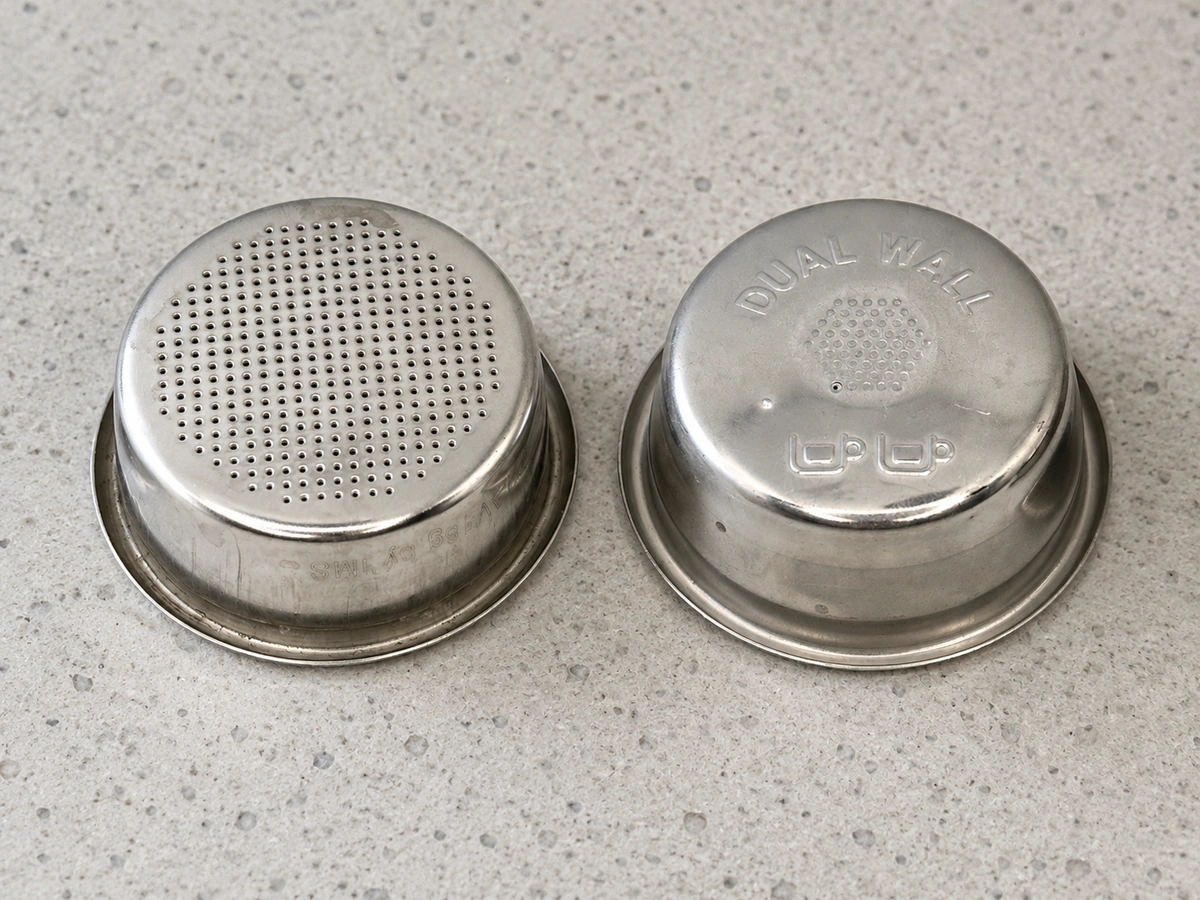
Pressurized baskets are also called dual-wall baskets, because they have an inner wall with holes and an outer wall with a single exit hole. Non-pressurized baskets are also called single-wall baskets.
How Each Type Affects Your Espresso
The difference is how much the basket itself restricts the flow of water through the coffee.
A pressurized basket's single hole creates a bottleneck, so water spends a minimum amount of time in contact with the coffee no matter how it was ground or tamped.
A non-pressurized basket barely restricts flow, so contact time depends on your grind and tamp. That gives you much more control, and much less forgiveness.
Which Should You Use?
Use a pressurized basket when:
- You brew with pre-ground coffee
- You grind with a blade grinder rather than a burr grinder
- You are not yet confident with your tamping
| Situation | The problem | How a pressurized basket helps |
|---|---|---|
| Pre-ground coffee | It is usually too coarse, so water rushes through and the shot tastes sour and thin | The single hole slows the water down |
| Blade-ground coffee | Uneven grounds mean water channels through the coarser parts, so the shot tastes harsh | Back-pressure makes water saturate the whole bed more evenly |
| Uneven tamp | Water takes the easy path through the thinner side of the puck | Back-pressure evens out the flow |
Use a non-pressurized basket if you grind fresh coffee in a decent burr grinder. With fine, even grounds, the puck provides the resistance you need. In a pressurized basket, the combination restricts flow too much, and shots can choke and taste over-extracted and bitter.
Can Pressurized Baskets Make Great Espresso From Pre-Ground Coffee?
They can make decent espresso from pre-ground coffee, but not great espresso, for two reasons:
- "Fake crema." Forcing coffee through one tiny hole whips air into it, creating a thick, bubbly foam that looks like crema but tastes bland.
- A lower ceiling. You cannot fine-tune the shot with grind and tamp, so you are stuck with a one-size-fits-all extraction.
So if you can, brew with fresh ground coffee in a non-pressurized basket. If you are just starting out, a pressurized basket and good pre-ground espresso coffee is a fine way to learn while you save for a grinder. See our pick of the best espresso grinders.
Which Machines Come With Pressurized Baskets Only?
Many budget machines only include pressurized baskets, for example:
- De'Longhi's Dedica range. See my De'Longhi Dedica EC680M review and the best De'Longhi espresso machines.
- The Calphalon Temp iQ.
- Some entry-level Gaggia models, such as the Carezza.
- Many very cheap no-name machines.
Some Breville models, like the Bambino, may ship with only pressurized baskets depending on where you buy them. Compatible non-pressurized baskets are inexpensive and easy to find, as long as you get the right diameter.
Which Machines Include Non-Pressurized Baskets?
Very few machines come with only non-pressurized baskets. Most mid-range machines include both, so you can use pre-ground coffee now and fresh ground coffee later. Examples:
- Most Breville machines with built-in grinders, like the Barista Pro. See the best Breville espresso machines and Bambino vs Bambino Plus.
- The Gaggia Classic Pro.
Does Basket Size Matter?
Baskets also vary in capacity and diameter.
Capacity
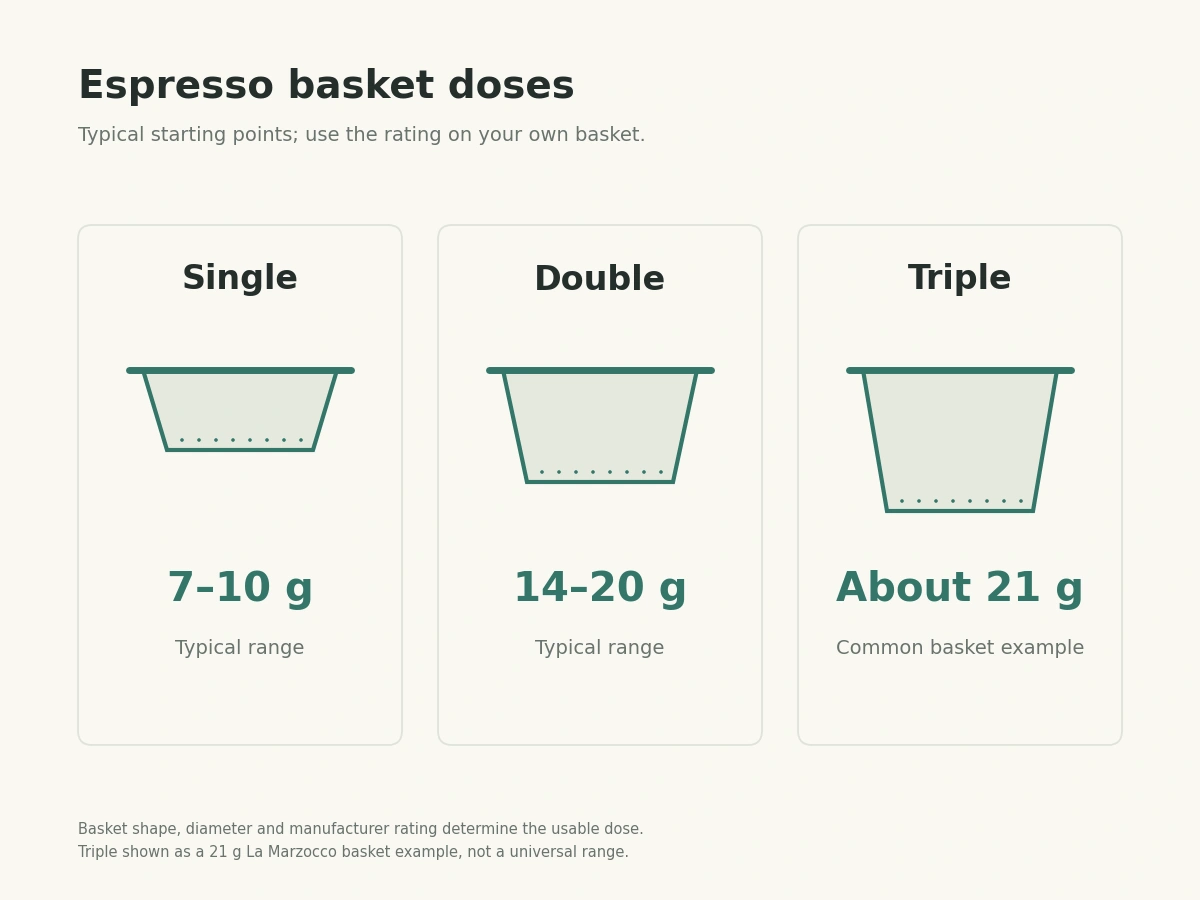
Baskets come in single and double sizes.
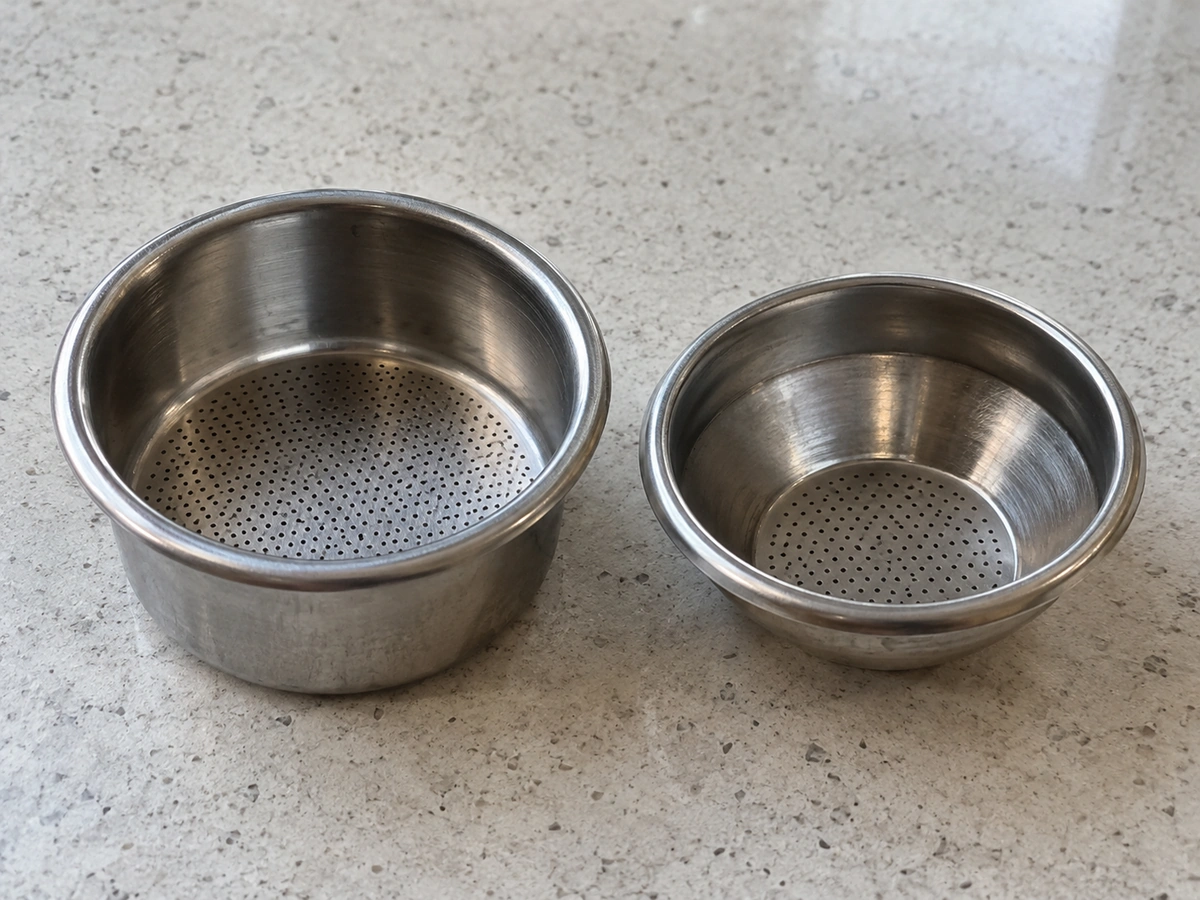
Single baskets typically hold 7 to 10 grams of coffee, and doubles 14 to 20 grams.
Every basket is designed around a maximum dose. Overfilling leaves too little headspace, which can lead to uneven extraction, and the puck may stick to the shower screen.
There is no real minimum, though. It is fine to brew a single shot in a double basket, and many enthusiasts actually prefer it, because double baskets often extract more evenly than singles.
Diameter
Basket diameters range from about 49 mm to 58 mm. Diameter does not make a huge difference to taste, but a common size makes it much easier to find replacement and upgraded baskets. 54 mm (many Brevilles) and 58 mm (the commercial standard, also used by the Gaggia Classic Pro and Rancilio Silvia) are the most common.
So, Which Should You Buy?
Pressurized baskets are training wheels: great for pre-ground coffee and beginners, but they cap how good your espresso can be. Once you are grinding fresh coffee with a burr grinder, switch to a non-pressurized basket.
To choose a machine, see the best espresso machines for beginners and the best espresso machines under $500.
FAQs
Can I use a non-pressurized basket with pre-ground coffee?
You can, but supermarket pre-ground coffee is usually too coarse, so the shot will run fast and taste sour. Ask a roaster for coffee ground specifically for espresso, or stick with a pressurized basket.
Is a dual-wall basket the same as a pressurized basket?
Yes. Dual-wall and pressurized mean the same thing, and single-wall means non-pressurized.
Why does my pressurized basket make so much crema?
Forcing the coffee through one tiny hole whips air into it. That foam looks like crema but is mostly air, so it tastes thinner than real crema.

Written by · reviewed by the Cicada Coffee Bar team
Daniel Voss
Lead Equipment Reviewer, Cicada Coffee Bar
Daniel leads the equipment-testing side of Cicada Coffee Bar. Every super-automatic, semi-automatic, and grinder featured on this site is bought or sourced independently, set up on the test bench, and brewed with daily for at least two weeks before a single word is written — tracking espresso quality, milk texture, ease of cleaning, and long-term reliability. Reviews are updated whenever pricing or firmware changes.