The best espresso machine under $1,000 is the Breville Barista Pro if you don't have a grinder, and the Rancilio Silvia if you already do.
With around $1,000 you can buy one of four things:
- A machine with a built-in grinder and a display screen
- A buy-it-for-life machine with a proper steam wand (but no grinder)
- A good, no-frills machine and a good grinder
- A super-automatic that makes a latte at the touch of a button
I cover the best option in each category, plus one popular machine at this price that I would avoid.
My Top Picks
 1
Breville Barista Pro
- Built-in conical burr grinder
- Shot timer and a clear display for easy dialing in
- Fast heat-up
 2
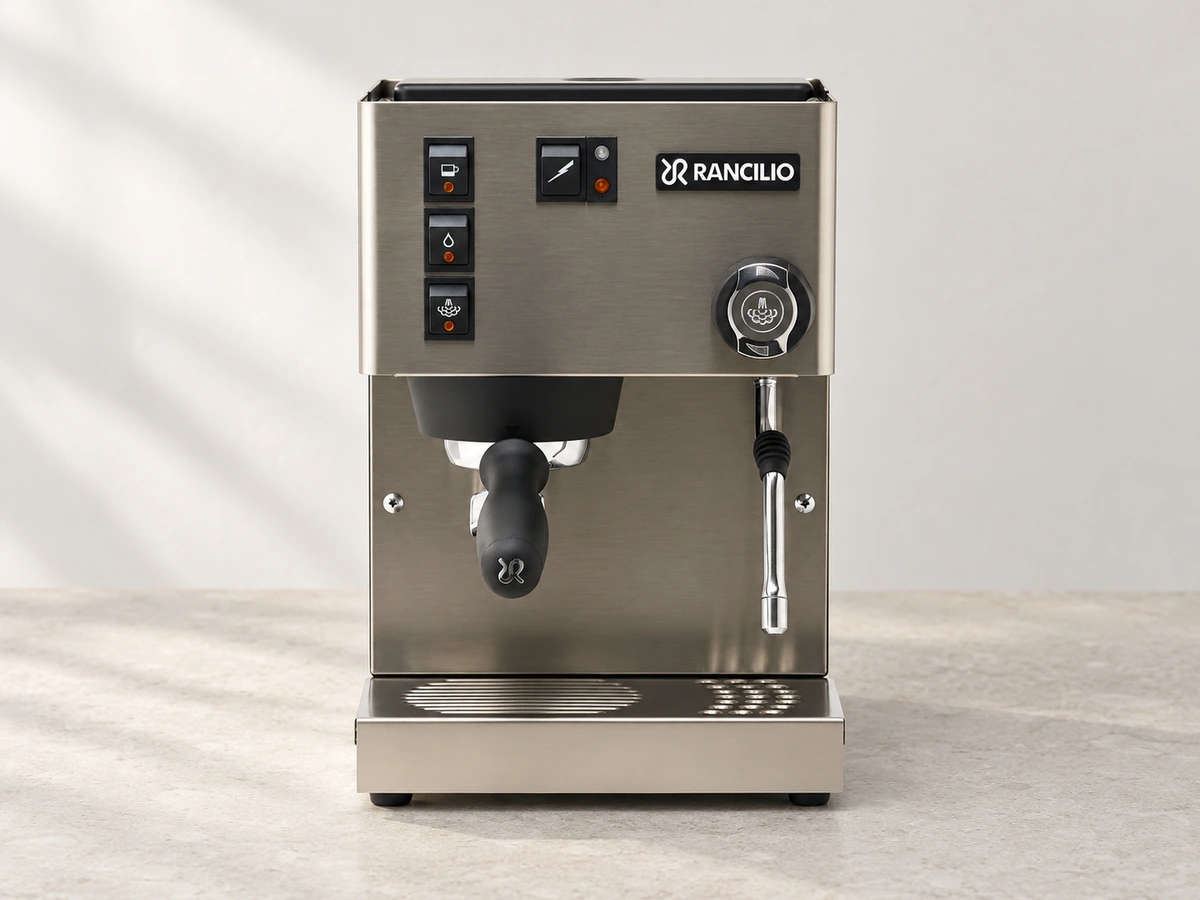
Rancilio Silvia
- Excellent espresso
- Heavy-duty, potentially buy-it-for-life
- Powerful steam wand, the fastest steaming here
 3
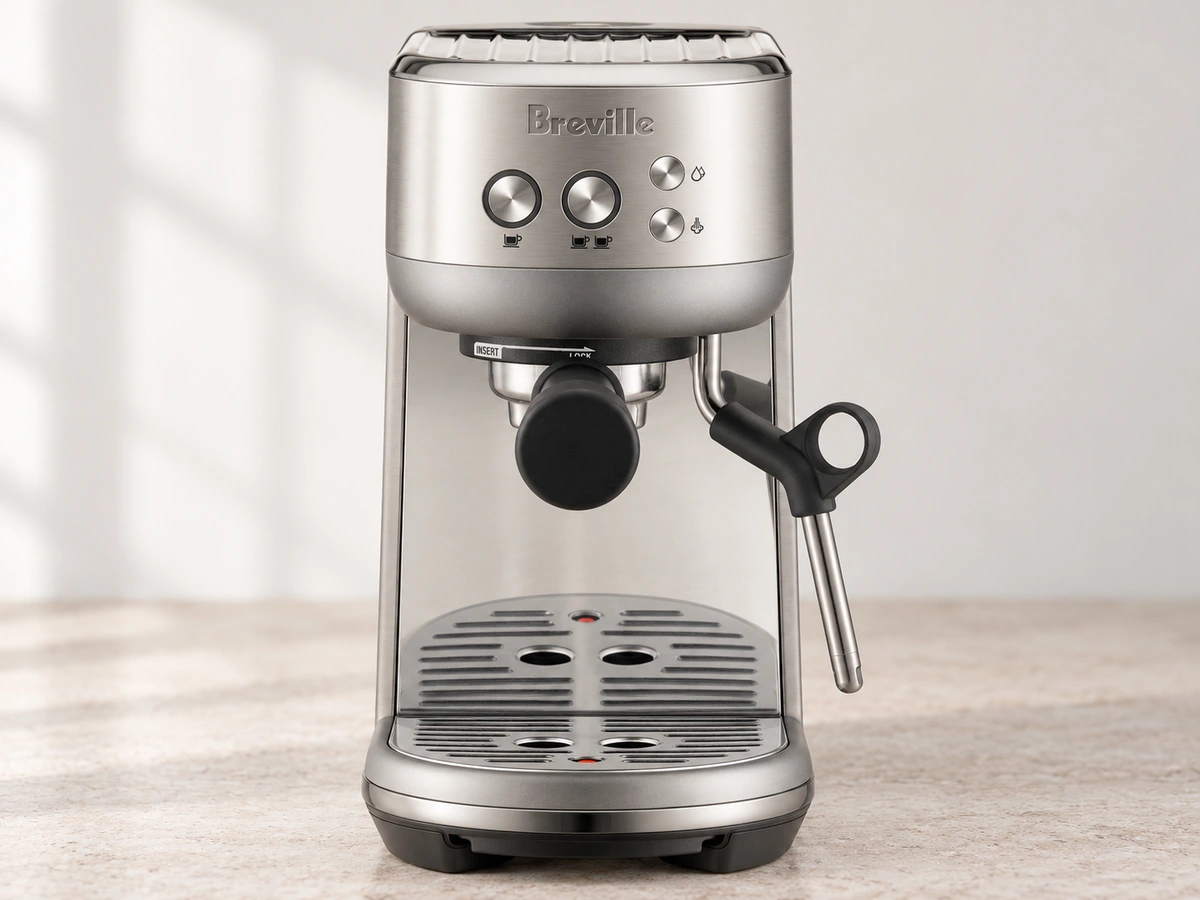
Breville Bambino + a Separate Grinder
- About 3 s heat-up
- Programmable shots and stable temperature
- Leaves plenty of budget for a proper grinder
 4
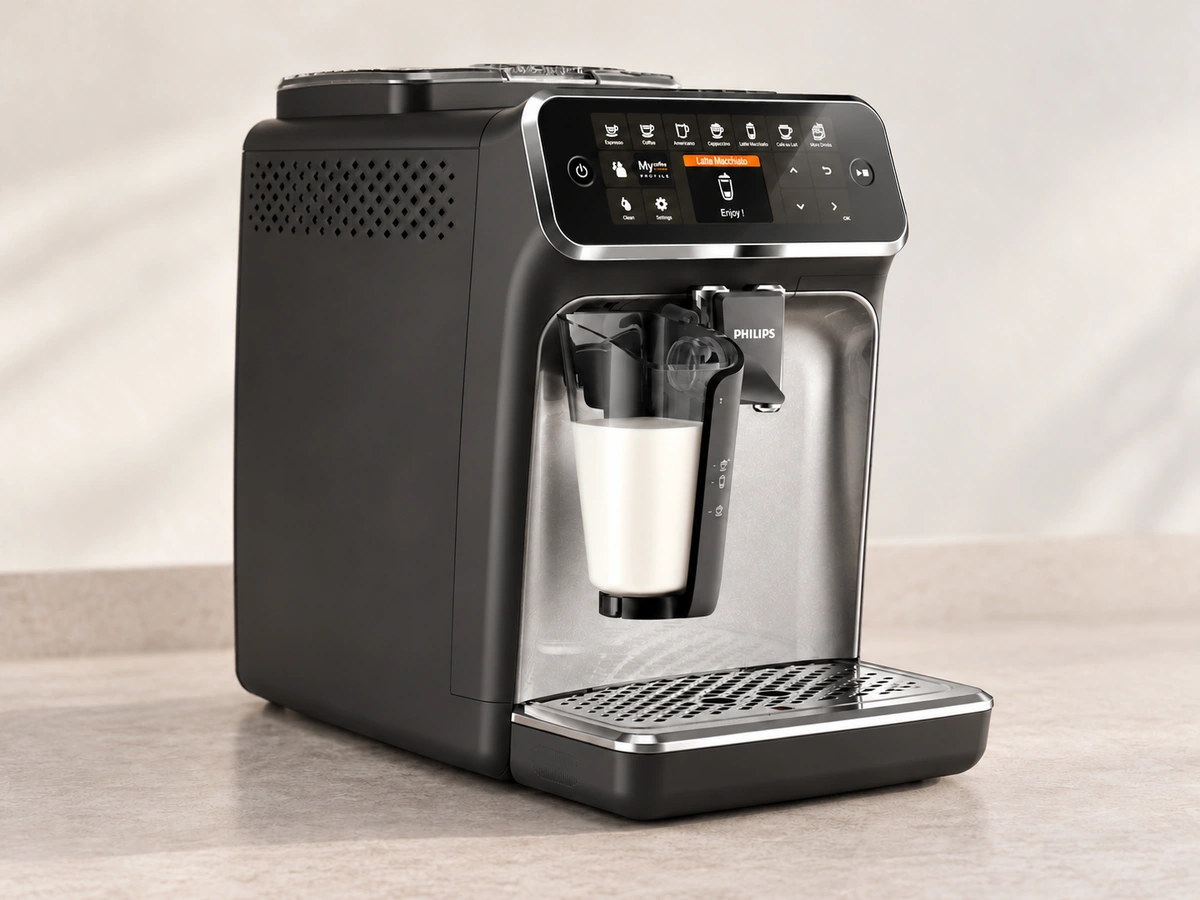
Philips 4300 LatteGo
- Lattes and cappuccinos at the touch of a button
- Every common espresso drink
- Very easy-to-clean milk system
 5
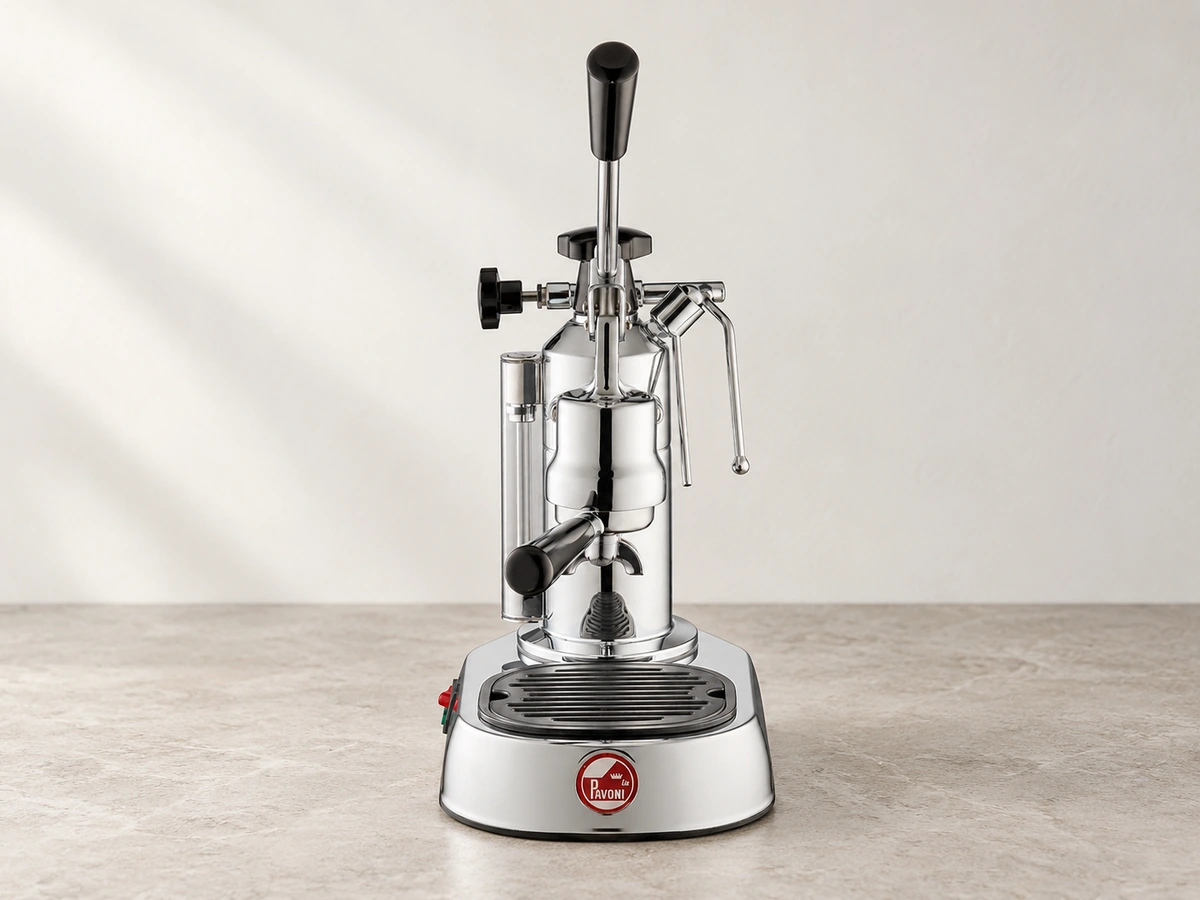
La Pavoni Europiccola
- Excellent espresso in skilled hands
- A design classic
- Can last decades if you learn it
Prices move a lot. The Silvia and Europiccola sometimes creep just over $1,000, so check current prices before you buy.
A Quick Note on Grinders
If you spend close to $1,000 on an espresso machine and feed it pre-ground coffee, you are wasting your money.
Ground coffee goes stale fast. As it loses CO2, it gives less resistance to the water, so shots run fast and taste flat. No machine can fix that.
If you plan to use pre-ground coffee, buy a cheaper espresso machine under $500 instead.
If your $1,000 has to cover a grinder too, get either the Barista Pro (grinder built in) or a Breville Bambino plus a separate espresso grinder. See my best espresso grinders for options.
Best if You Don't Have a Grinder: Breville Barista Pro
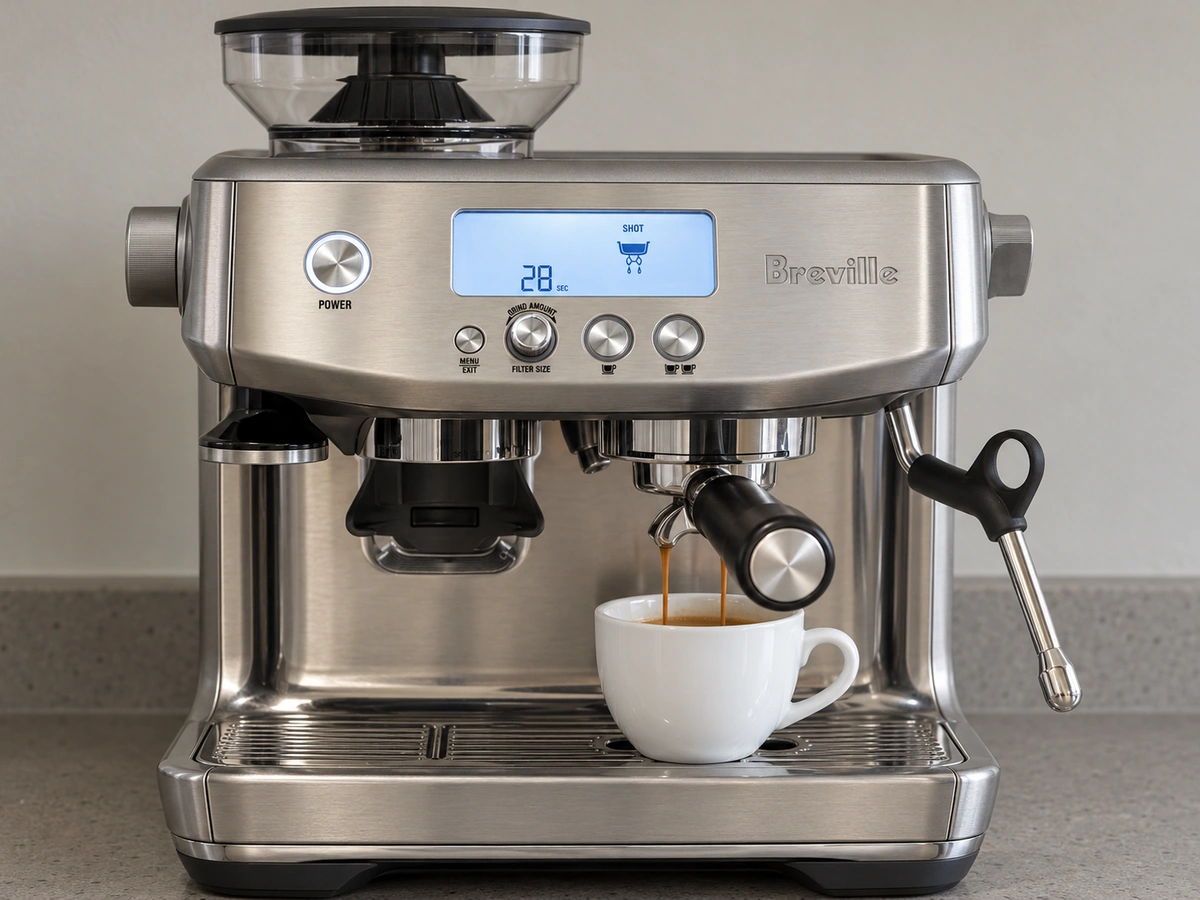
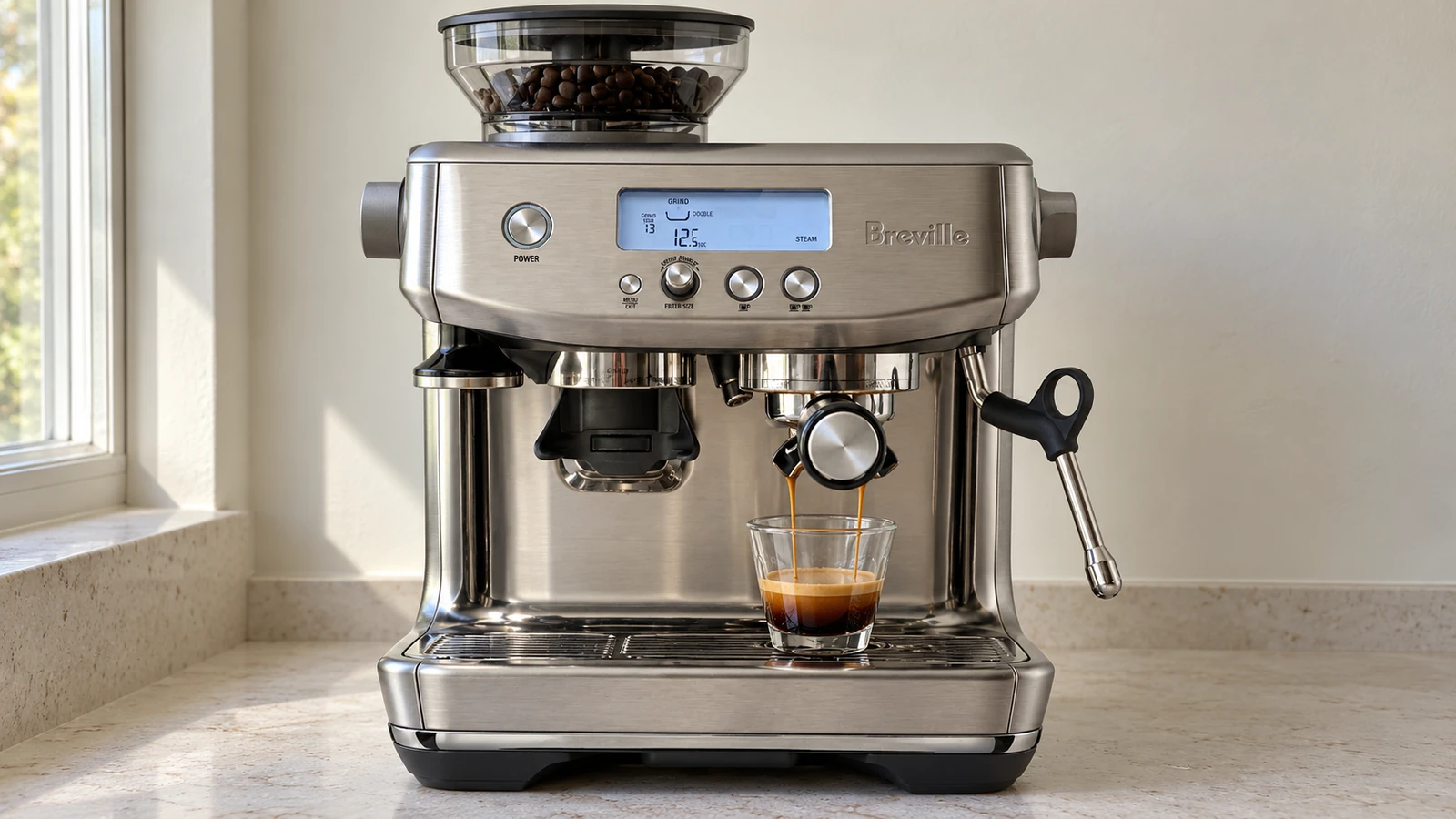
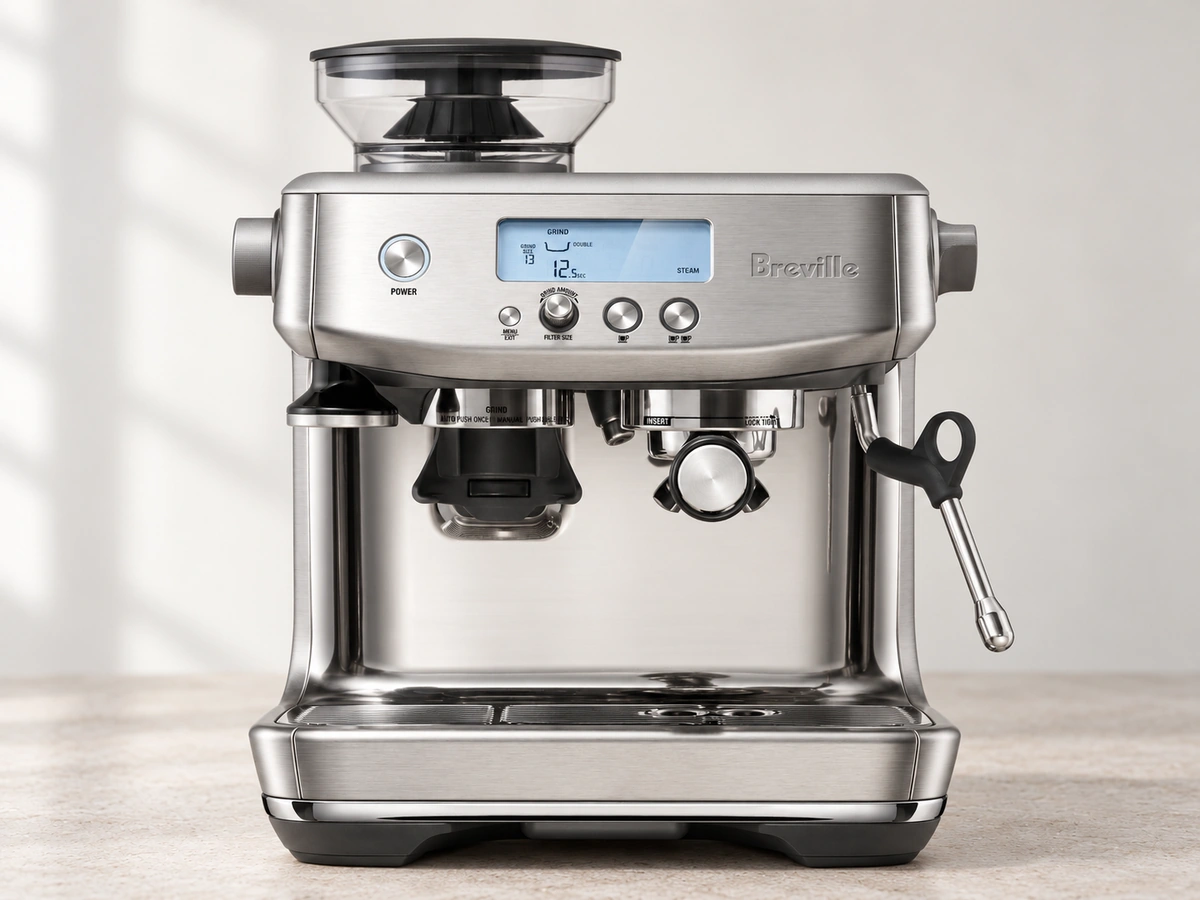
The Barista Pro's built-in grinder, shot timer and display make it a great choice for beginners, or anyone who wants to make espresso from whole beans with a single appliance. For a deeper look, see my full Breville Barista Pro review.
| Specification | Breville Barista Pro |
|---|---|
| Type | Semi-automatic with programmable shots |
| Built-in grinder | Yes (30 settings) |
| Interface | LCD display with shot timer |
| Heating | ThermoJet (ready in about 3 s) |
| PID | Yes |
| Portafilter | 54 mm |
| Dimensions (W x D x H) | 14" x 13.5" x 16" |
Espresso Quality: 7/10
Good, but not exceptional. Temperature control and shot volumes are excellent; the grinder holds it back. It doses by grind time rather than weight, which gets less accurate as you grind finer. The shots are good enough for most people, but a perfectionist will eventually want a better grinder.
Features: 9/10
It grinds, pulls programmable single and double shots, lets you adjust shot volume, temperature and pre-infusion, and has a manual steam wand. That is more than any other non-super-automatic at this price.
Ease of Use: 9/10
Dosing, shot volume and temperature are handled for you. You only need to find the right grind size and tamp well. The shot timer is the best feature for beginners: aim for roughly 25 to 30 seconds, and if the shot runs faster, grind finer.
Build Quality: 8/10
Well built, with a durable brew group, steam wand and display. The water tank and plastic tamper are the weakest parts. Expect well over five years with care, but not the decades a Silvia or Europiccola can manage.
Value: 7/10
Good value for what it does, but it ties you to its grinder. If you upgrade your grinder later, you have paid a premium for a grinder you no longer use.
Pros: easy to dial in thanks to the shot timer, fast heat-up, no separate grinder needed. Cons: the grinder limits espresso quality, not as long-lived as a boiler machine.
Why not the Barista Express? It is cheaper but uses an older thermocoil heater and lacks the shot timer. I only recommend it when it is heavily discounted. See Barista Pro vs Barista Express for more on this.
Best if You Have a Grinder: Rancilio Silvia
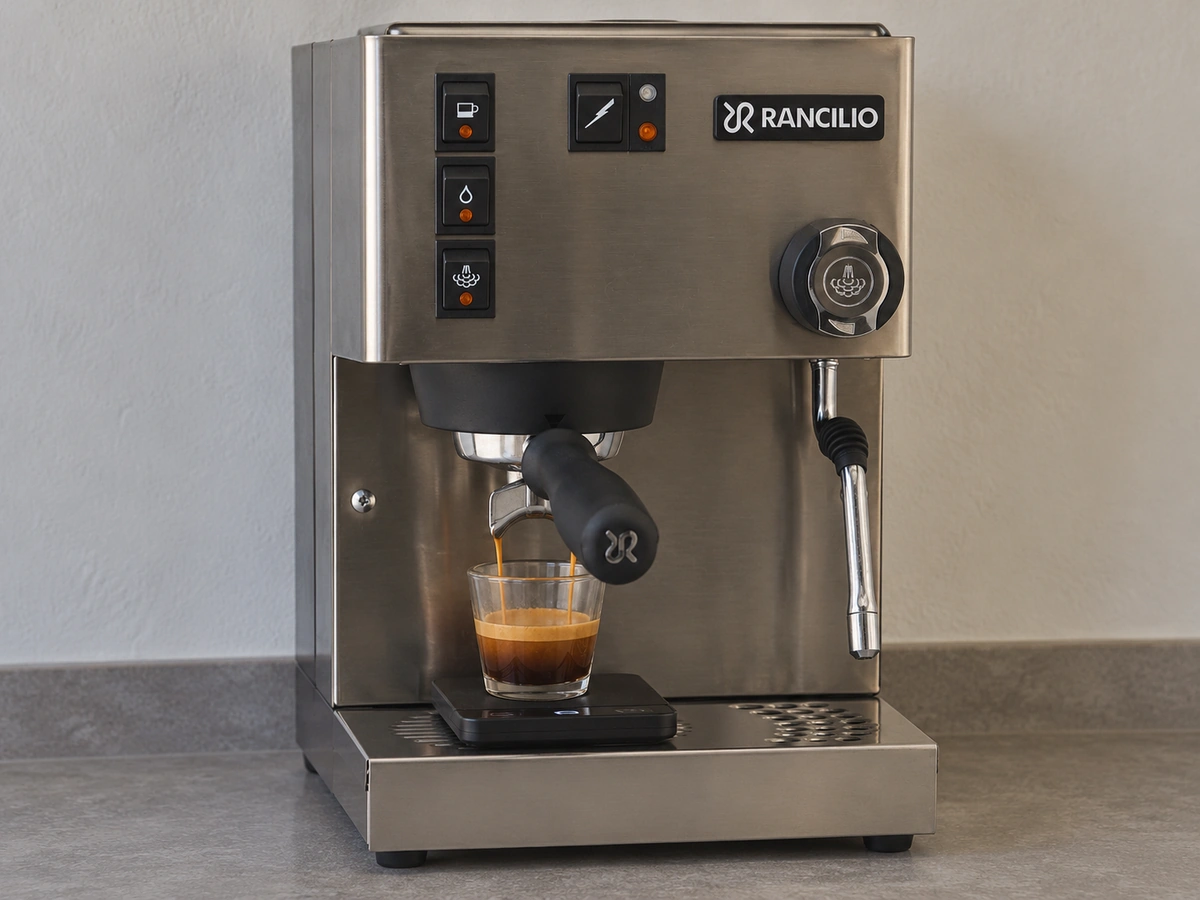
The Silvia works well with very fine grinds and is built to last, which makes it the best machine at this price if you already own a good grinder. My full Rancilio Silvia review goes into more detail.
| Specification | Rancilio Silvia |
|---|---|
| Type | Semi-automatic |
| Built-in grinder | No |
| Interface | Switches |
| Heating | Single brass boiler |
| PID | No (PID versions and kits available) |
| Portafilter | 58 mm (commercial standard) |
| Dimensions (W x D x H) | 9.2" x 11.4" x 13.4" |
Espresso Quality: 9/10
Very good out of the box, and excellent once you learn it. With its commercial-size 58 mm basket and a good grinder, it makes rich, full-bodied shots. Its main weakness is temperature consistency: the boiler can run hot, so you need a simple temperature surfing routine (or a PID).
Features: 5/10
It brews espresso, steams milk and dispenses hot water. It has no grinder, no programmable shots, no timer and no pressure gauge. That stripped-back design means fewer parts to break and more of your money spent on the core brewing hardware.
Ease of Use: 6/10
Three things make it harder than a Breville:
- No automatic shot volumes: put a scale under your cup for consistency
- No PID: you need to temperature surf
- A powerful steam wand: fast, but easy to overheat milk while you learn
Experienced users often see the manual control and fast steaming as advantages.
Build Quality: 9/10
Built like a tank. With regular descaling it can last well over ten years, and it is a regular on r/BuyItForLife. Parts like the stock portafilter and tank are basic but cheap and easy to replace.
Value: 8/10
A machine that can last for decades and be modded with PID kits and other upgrades is good value, even though you still need a separate grinder.
Pros: excellent espresso, potentially buy-it-for-life, the fastest steaming here. Cons: not beginner friendly, temperature needs managing.
Weighing it up against its cheaper rival? See Gaggia Classic Pro vs Rancilio Silvia.
Best Machine and Grinder Combo: Breville Bambino + a Separate Grinder
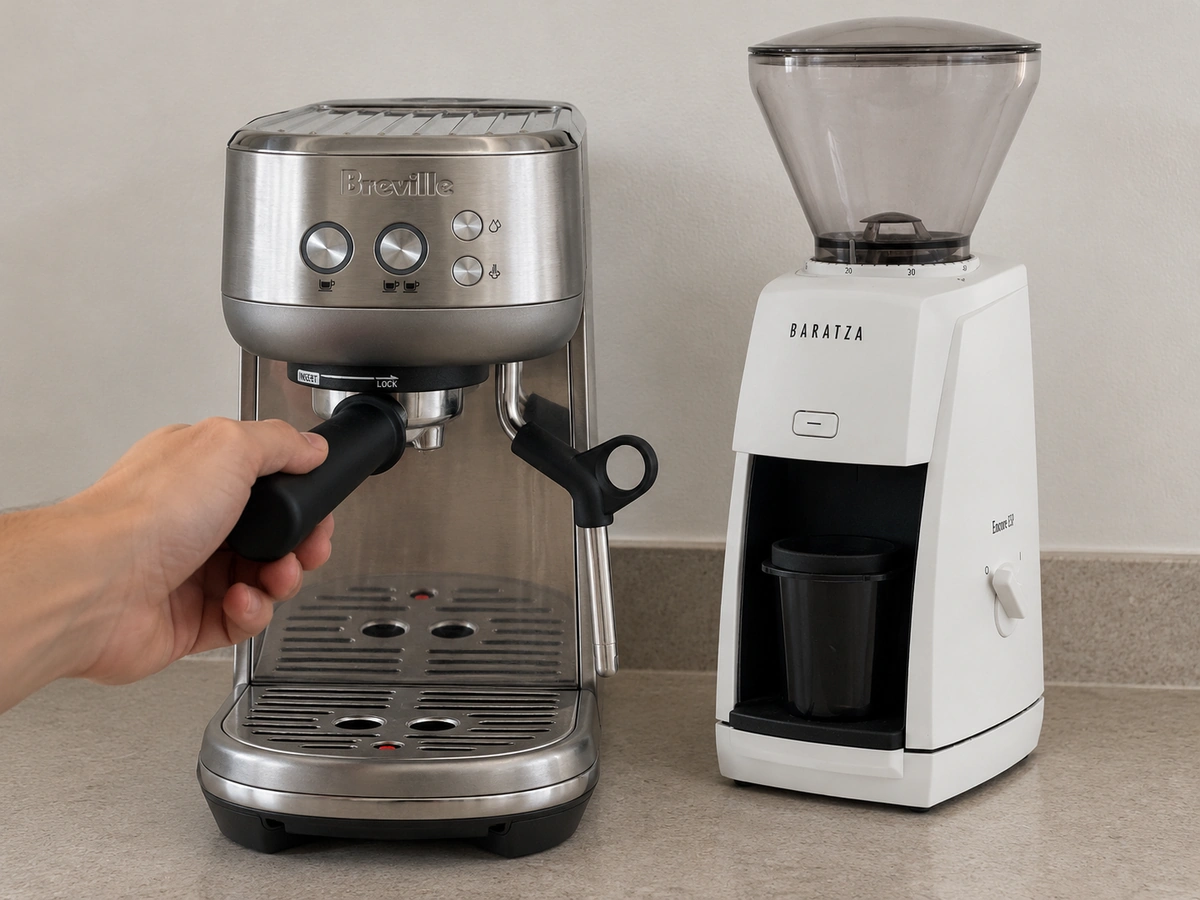
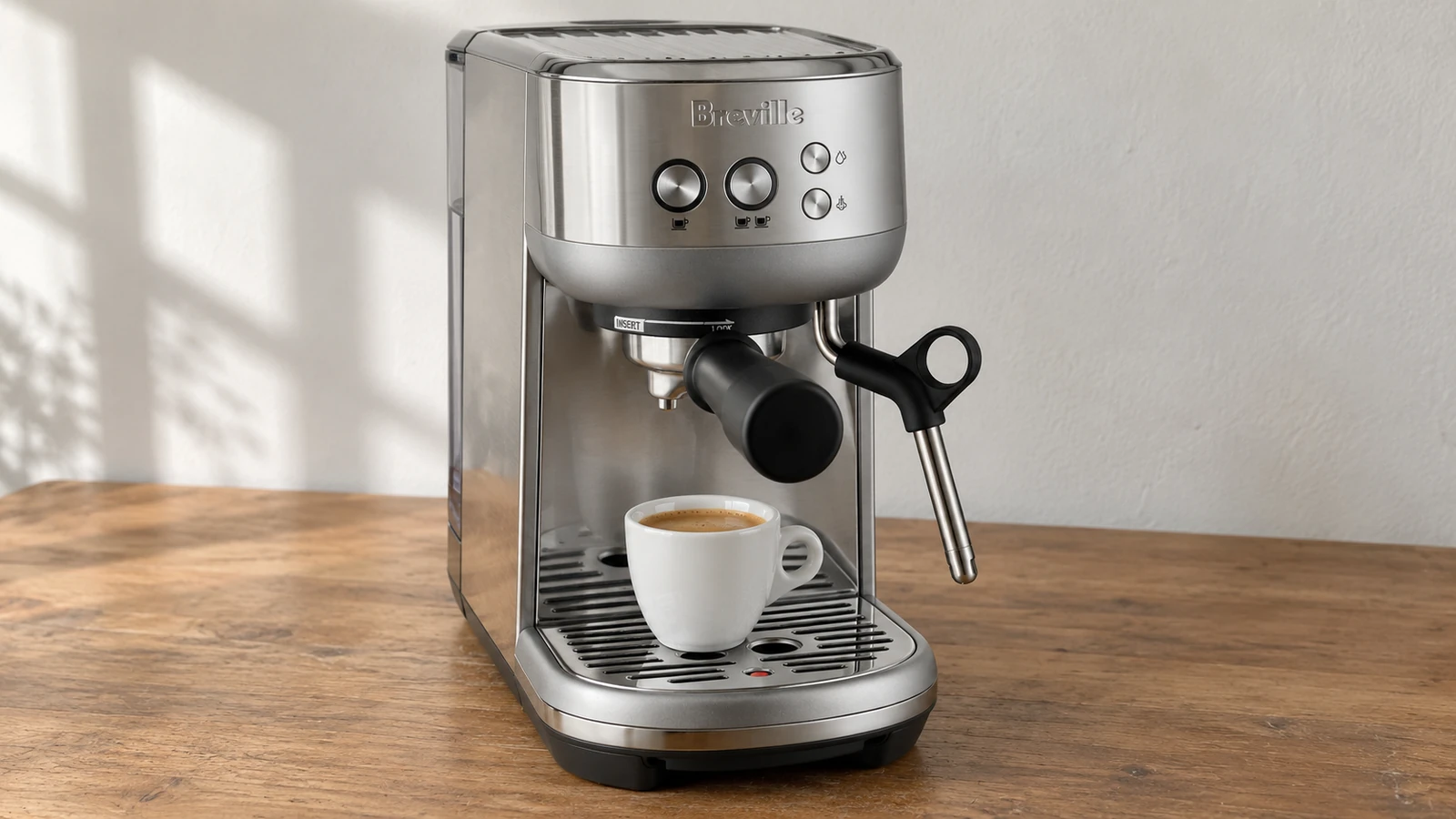
The Bambino is the cheapest machine I know of that can make café-quality espresso and latte-art milk at home, and its low price leaves room for a proper grinder. Read my full Breville Bambino review.
| Specification | Breville Bambino |
|---|---|
| Type | Semi-automatic with programmable shots |
| Built-in grinder | No |
| Interface | Buttons |
| Heating | ThermoJet (ready in about 3 s) |
| PID | Yes |
| Portafilter | 54 mm |
| Dimensions (W x D x H) | 7.7" x 12.6" x 12.2" |
Espresso Quality: 8/10
Accurate temperature and programmable shot volumes let it make excellent espresso with a good grinder. Its ceiling is a little lower than the Silvia's, but in skilled hands it can beat machines costing many times more.
Note that some Bambino bundles ship with pressurized baskets only. For real espresso with fresh-ground coffee, you want single-wall (non-pressurized) baskets; see pressurized vs non-pressurized baskets.
Features: 7/10
Programmable single and double shots plus a manual steam wand. With no display, adjusting settings takes button combinations. If you want automatic milk frothing, the Bambino Plus adds it for a bit more money.
Ease of Use: 7/10
Fast heat-up and automatic shot volumes make it far less fiddly than a Silvia or Gaggia Classic Pro, which is why it is one of my top espresso machines for beginners. I wish it had a shot timer.
Build Quality: 7/10
Nothing feels flimsy, but it is not a buy-it-for-life machine. Expect over five years of daily use; ten would be lucky.
Value: 9/10
Excellent. You get very good espresso without being locked into a built-in grinder, and you can upgrade either half later.
Which Grinder?
Spend at least as much on the grinder as on the machine if you can. Look for a grinder made for espresso, with fine stepless or micro-step adjustment and low retention. Popular choices around $200 to $500 include the Baratza Encore ESP, the DF54 and the Eureka Mignon range. The Baratza Encore ESP is the easy budget pick. I compare more options in my espresso grinder guide.
The old pick here, the Baratza Sette 270Wi, is now hard to find, so I no longer recommend building a setup around it.
Pros: about 3 s heat-up, automatic shot volumes, no grinder lock-in. Cons: less durable than a boiler machine, a weaker steam wand than the Silvia.
Best Super-Automatic: Philips 4300 LatteGo
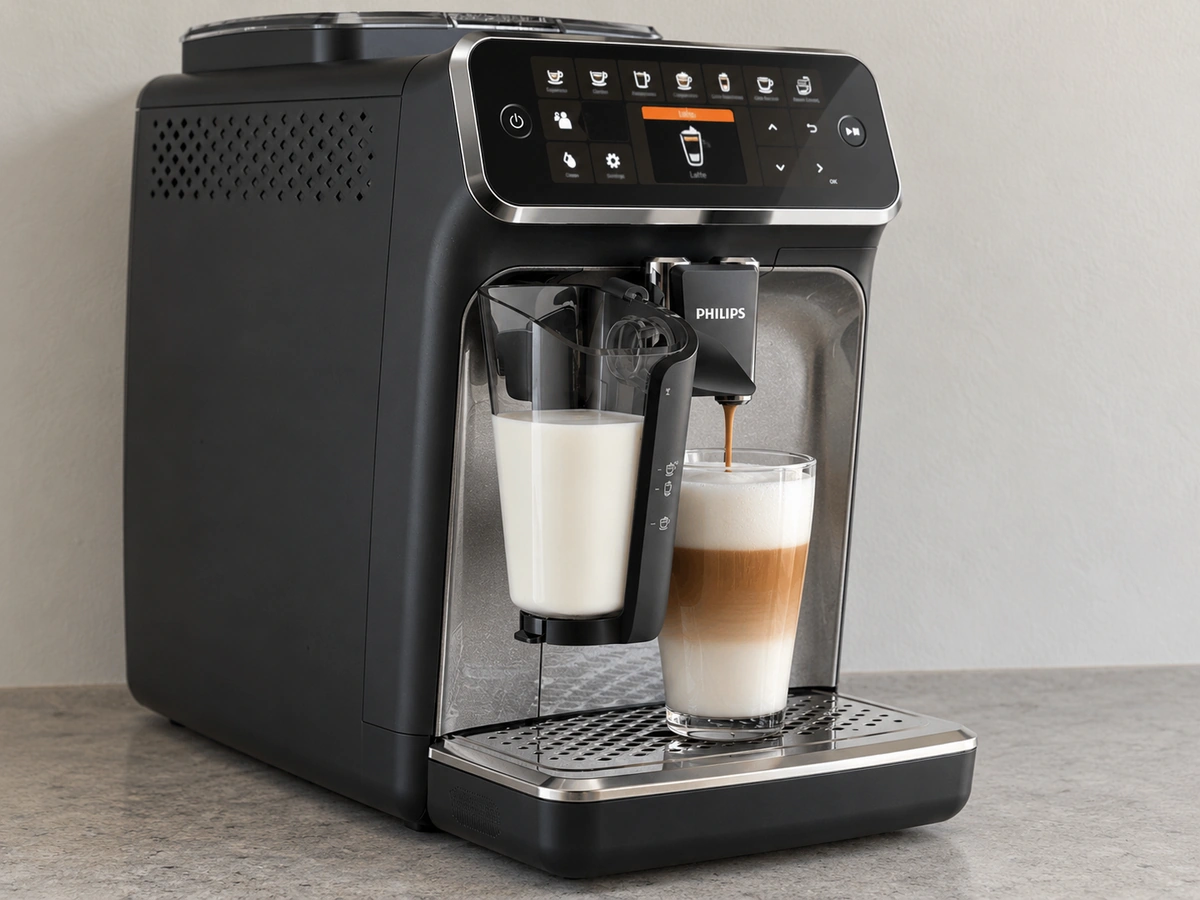
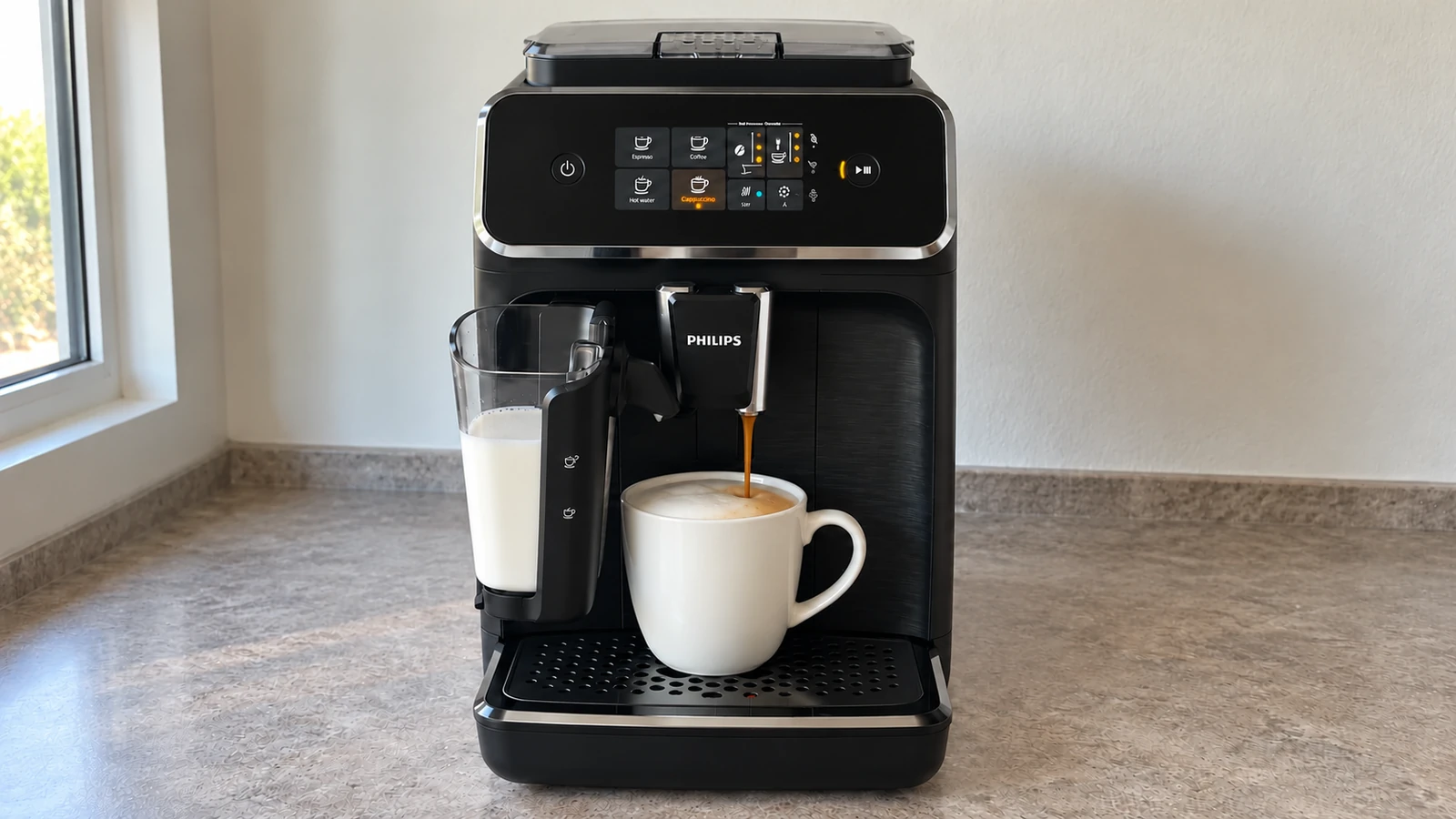
The Philips 4300 has more one-touch drinks and a better interface than any other super-automatic I'd recommend at this price. It is also my top pick for the best super-automatic under $1,000; see the full Philips 4300 LatteGo review.
| Specification | Philips 4300 LatteGo |
|---|---|
| Type | Super-automatic |
| Built-in grinder | Yes (ceramic) |
| Interface | Display with one-touch drinks |
| Milk | LatteGo automatic carafe |
| Dimensions (W x D x H) | 9.7" x 14.6" x 17" |
Espresso Quality: 5/10
Passable. No super-automatic matches the body and depth of a portafilter machine; that is the trade for not grinding, dosing and tamping yourself. The milk is foamy rather than silky, so latte art is off the table.
Features: 10/10
Around eight drinks, including espresso, coffee, cappuccino and latte macchiato, each with quick strength and size adjustments, plus two user profiles.
Ease of Use: 10/10
Easier than anything else here. Anyone can use it, which is why it is my pick for homes where nobody wants to learn espresso, and for small offices. The LatteGo carafe has no tubes and rinses clean in seconds.
Build Quality: 6/10
The least durable machine here, simply because super-automatics have more moving parts. On the plus side, the brew unit is removable, so you can rinse it yourself.
Value: 8/10
Good value if you specifically want one-touch milk drinks at this price.
Pros: every common espresso drink at one touch, automatic milk, very easy to clean. Cons: mediocre espresso, shorter lifespan than a manual machine.
Best Manual Machine: La Pavoni Europiccola
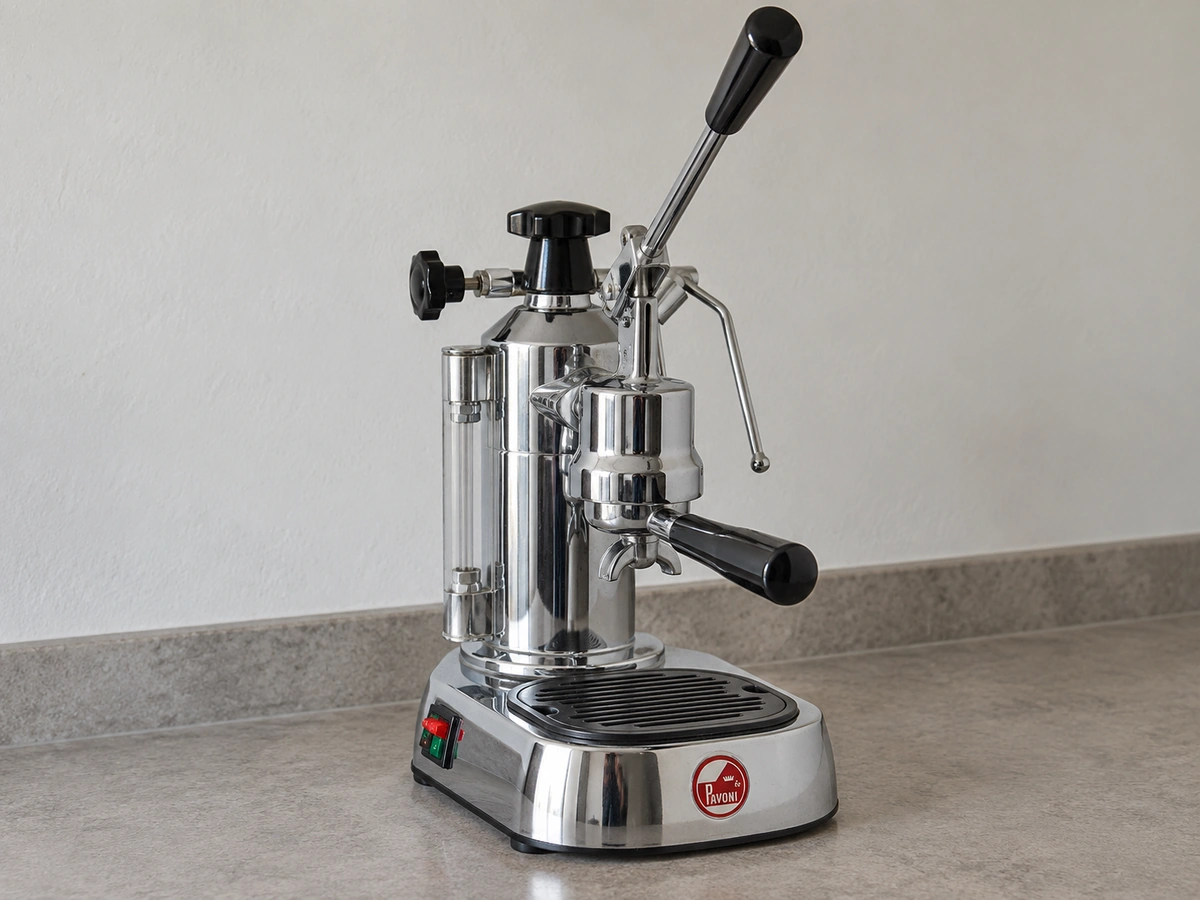
The Europiccola is stunning and has true buy-it-for-life potential. Plenty of units from the 1970s are still pulling shots.
| Specification | La Pavoni Europiccola |
|---|---|
| Type | Manual lever |
| Built-in grinder | No |
| Interface | Power switch and lever |
| Heating | Single boiler (with pressure gauge) |
| Dimensions (W x D x H) | ~7" x 11" x 12" (taller with the lever raised) |
Espresso Quality: 8/10
Its ceiling is about the same as the Silvia's. Because you control the pressure with the lever, consistency depends entirely on you.
Features: 4/10
It brews and steams. Everything else, from pressure to timing, is down to you.
Ease of Use: 4/10
The hardest machine here. On top of grinding, tamping and temperature, you also have to manage brewing pressure by hand. The group head also heats up during back-to-back shots, so it struggles with several drinks in a row. See my best manual espresso machines for easier options.
Build Quality: 10/10
A design classic that can run for decades. Parts are easy to find, and its simple design is easy to repair.
Value: 8/10
Around $1,000 for a machine that can last a lifetime is a fair deal.
Pros: excellent espresso in skilled hands, beautiful, potentially buy-it-for-life. Cons: steep learning curve, struggles with multiple shots in a row.
One to Avoid: De'Longhi La Specialista Prestigio
Its built-in grinder cannot grind fine enough for proper espresso.
The La Specialista range is De'Longhi's answer to the Barista Pro: a grinder, temperature control and a steam wand for under $1,000. The Prestigio's grinder is the problem. It cannot grind fine enough for unpressurized baskets, so it relies on pressurized baskets, which mask the problem rather than fix it. If you are using pressurized baskets anyway, a cheaper machine will do the same job. I compare them head to head in Breville Barista Pro vs De'Longhi La Specialista.
How to Choose an Espresso Machine Under $1,000
What Type of Machine Do You Want?
There are four main types. My semi-automatic vs automatic vs super-automatic guide covers them in depth.
Programmable (automatic) machines. You grind and tamp; the machine stops the shot at a set volume. This is the best default for most people: a good balance of control and ease, and once dialed in you get consistent shots with one press. Best picks: the Barista Pro, or the Bambino plus a grinder.
Semi-automatic machines. You start and stop every shot yourself. Good if you want to experiment with ratios, ristretto and lungo, but you will need a scale for consistency. Best pick: the Rancilio Silvia.
Super-automatic machines. They grind, dose, tamp and brew at one touch, and the best ones froth milk too. Good if you don't want to handle a portafilter at all, or for an office. Best pick: the Philips 4300 LatteGo.
Manual (lever) machines. You create the pressure yourself. Choose one if you want a statement piece that also makes great espresso. Best pick: the La Pavoni Europiccola.
Built-In or Separate Grinder?
I generally recommend a separate machine and grinder. It lets you upgrade one half at a time. I own a Barista Pro, and when I wanted a better grinder I was left with a built-in grinder I had paid extra for and no longer used.
A built-in grinder makes sense if counter space is tight, or if you want a super-automatic. For more options, see the best espresso machines with a grinder.
Boiler or ThermoJet/Thermoblock?
| ThermoJet / Thermoblock | Boiler | |
|---|---|---|
| How it works | Heats water on demand | Keeps a tank of water hot |
| Heat-up | Seconds | Several minutes or more |
| Temperature management | Automatic (PID) | Manual surfing unless it has a PID |
| Durability | Shorter | Longer |
| Steam power | Lower | Higher |
If temperature surfing sounds like a chore, choose a ThermoJet machine. If it doesn't put you off, a single boiler machine will usually last much longer.
| Machine | Heating | Where to buy |
|---|---|---|
| Breville Barista Pro | ThermoJet | Check price |
| Rancilio Silvia | Boiler | Check price |
| Breville Bambino | ThermoJet | Check price |
| Philips 4300 LatteGo | Thermoblock | Check price |
| La Pavoni Europiccola | Boiler | Check price |
Will You Want to Mod It?
If you might one day add a PID, swap the steam tip or tinker with internals, get the Rancilio Silvia. It is the easiest machine here to modify and has the most active modding community. The Gaggia Classic Pro is the cheaper alternative with a similar scene.
The Bottom Line
If your $1,000 has to cover the machine and a grinder:
- Breville Barista Pro for an all-in-one
- Breville Bambino plus a dedicated espresso grinder for better long-term value
If you already own a good grinder, get the Rancilio Silvia.
Want one-touch lattes instead? Get the Philips 4300 LatteGo. If your budget is smaller, start with my best espresso machines under $500.
Is a $1,000 espresso machine worth it?
Yes, if you drink espresso daily and use fresh-ground beans. At this price you get either a built-in grinder or a durable boiler machine that can last a decade or more. If you use pre-ground coffee, a cheaper machine makes just as much sense.
What is the best espresso machine under $1,000 for beginners?
The Breville Barista Pro. Its shot timer, PID and built-in grinder make dialing in much easier than on a Silvia or a lever machine.
Should I buy a Rancilio Silvia or a Breville Barista Pro?
Get the Silvia if you already own a good grinder and want a machine that lasts. Get the Barista Pro if you need a grinder and want an easier learning curve.
Written by · reviewed by the Cicada Coffee Bar team
Daniel Voss
Lead Equipment Reviewer, Cicada Coffee Bar
Daniel leads the equipment-testing side of Cicada Coffee Bar. Every super-automatic, semi-automatic, and grinder featured on this site is bought or sourced independently, set up on the test bench, and brewed with daily for at least two weeks before a single word is written — tracking espresso quality, milk texture, ease of cleaning, and long-term reliability. Reviews are updated whenever pricing or firmware changes.