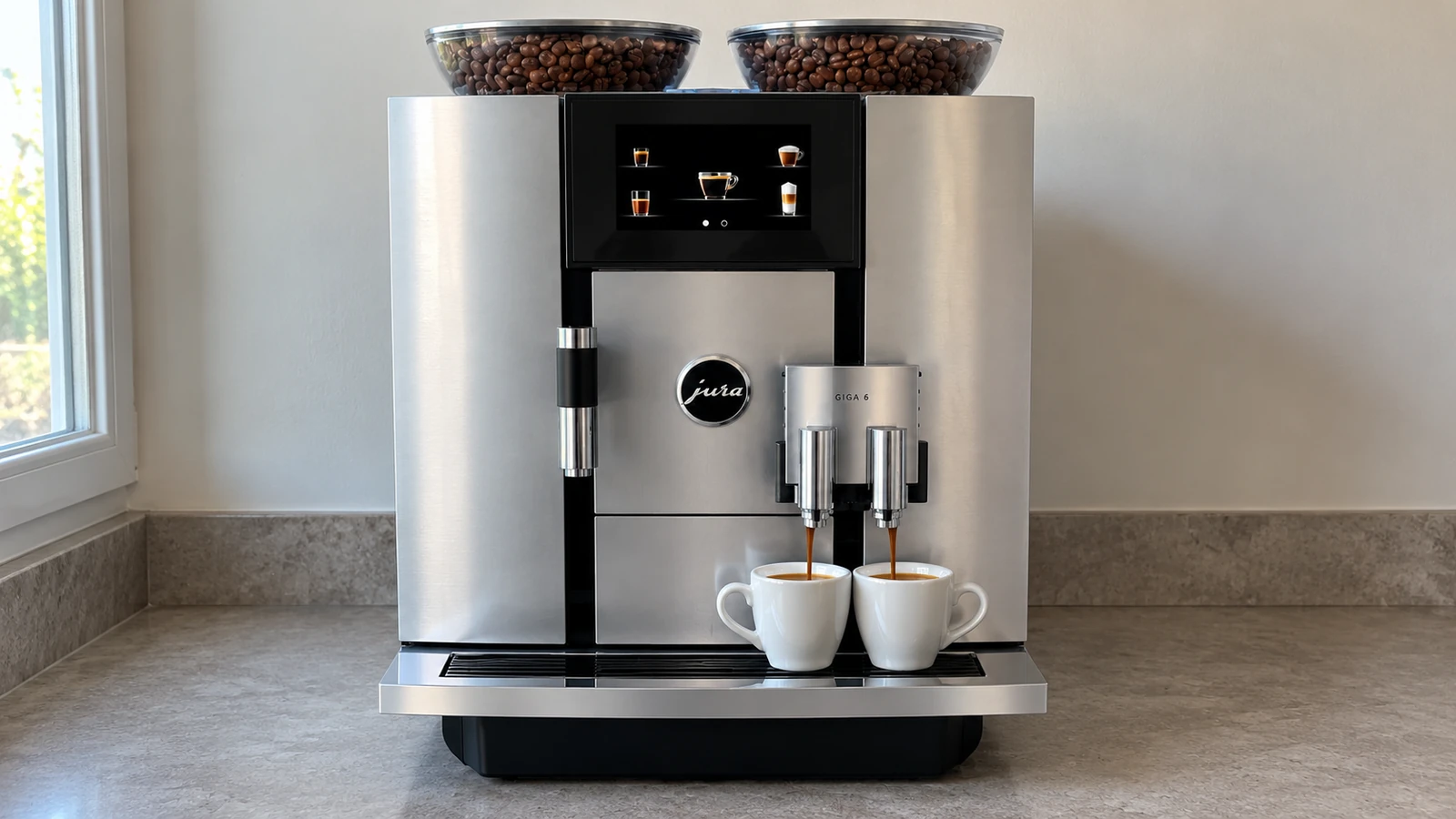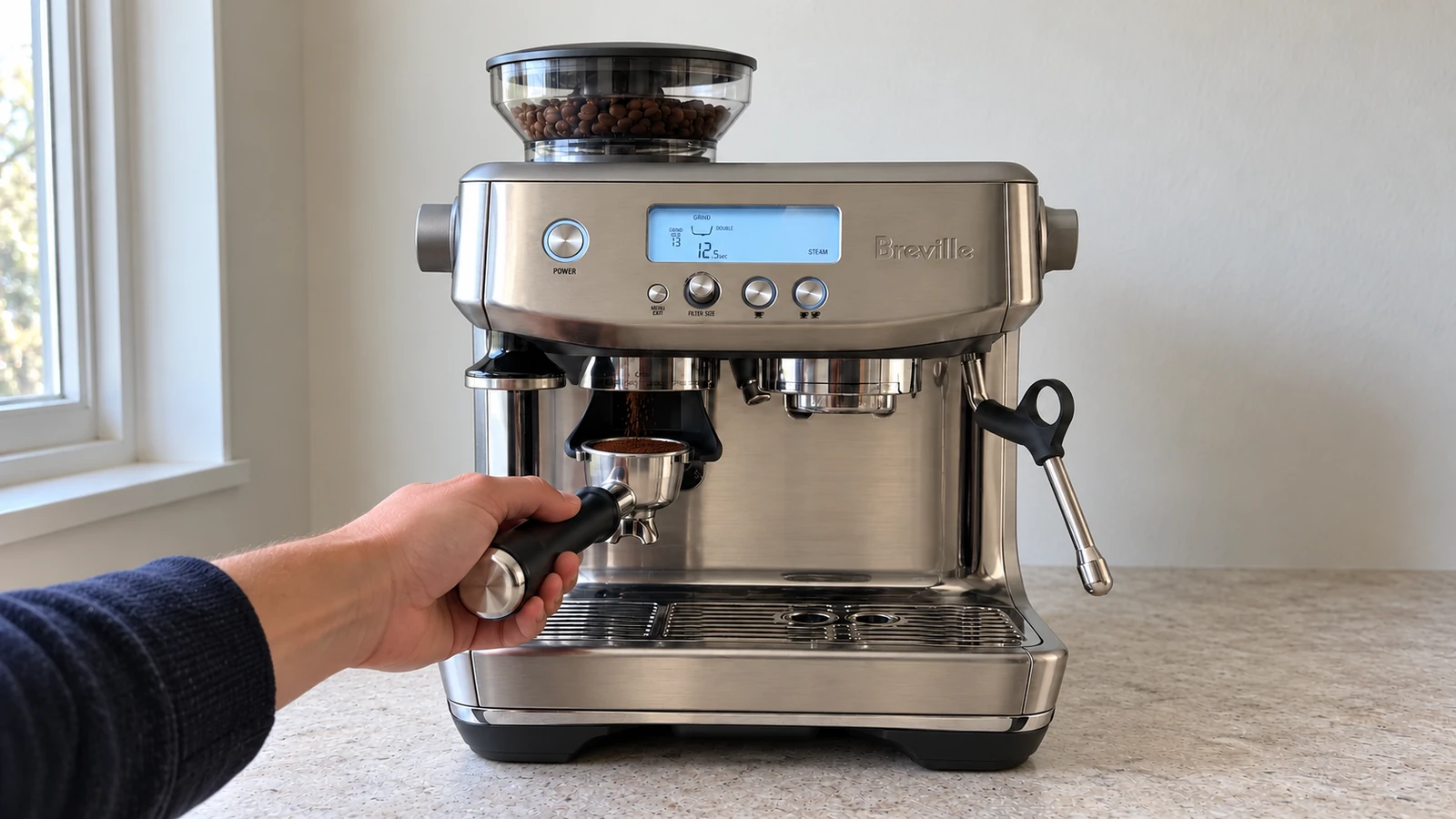
In short: the best espresso machine with a built-in grinder is the Breville Barista Pro. The best super-automatic (which grinds, tamps and brews for you) is the Jura E8.
I have owned three espresso machines with grinders, the Breville Barista Pro, the Jura E8 and a De'Longhi Magnifica, and spent a full day researching owner experiences for this guide.
Top Picks
- Best overall (portafilter): Breville Barista Pro
- Budget pick (portafilter): Breville Barista Express
- Best overall (super-automatic): Jura E8
- Budget pick (super-automatic): De'Longhi Dinamica with LatteCrema
For most people, I think a portafilter machine with a built-in grinder is the better choice, because it makes better espresso. So my top pick overall is the Barista Pro.
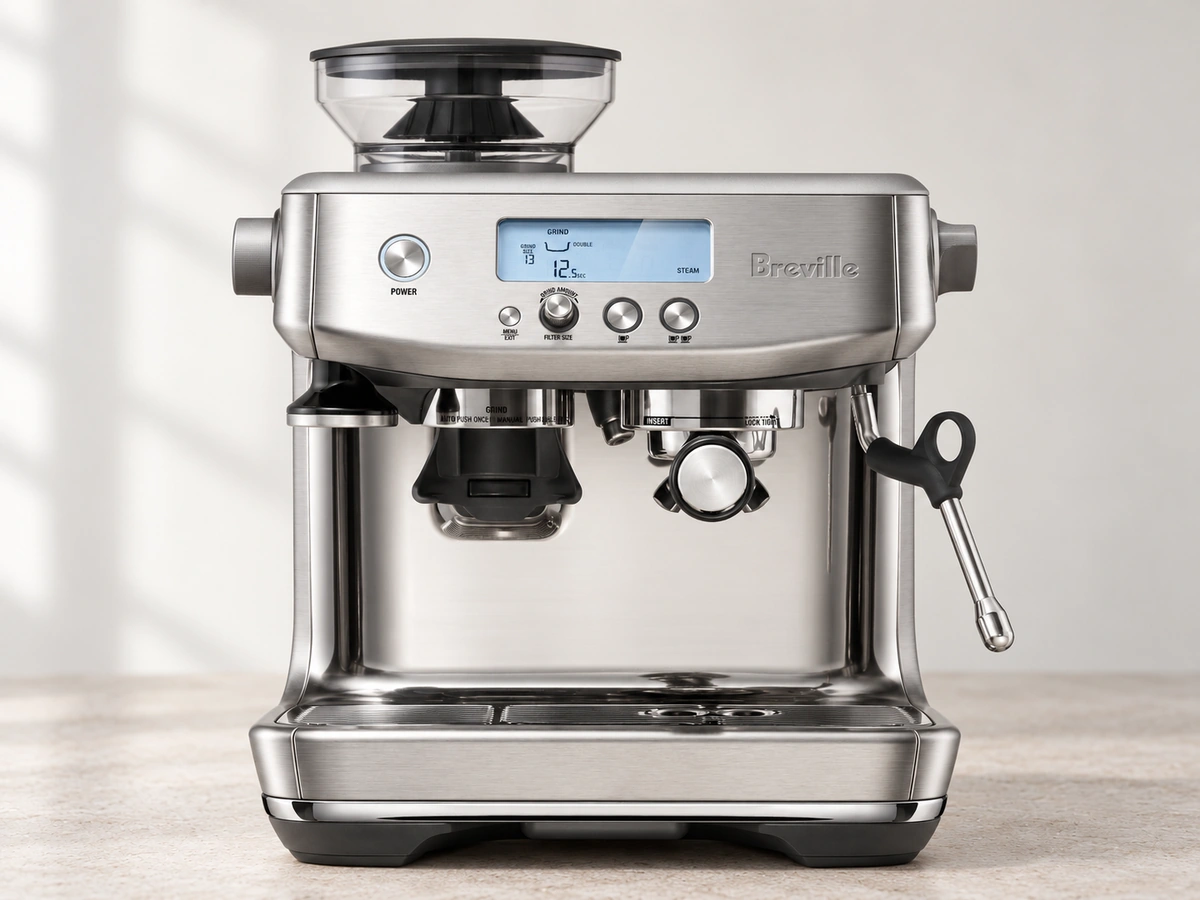
Breville Barista Pro
A display with a built-in shot timer and a three-second heat-up make it an ideal first espresso machine.
Best Overall: Breville Barista Pro
Espresso
Very good. Its grinder, pump and heater are good enough to brew at the right pressure and temperature consistently.
I especially like that it times every shot automatically.
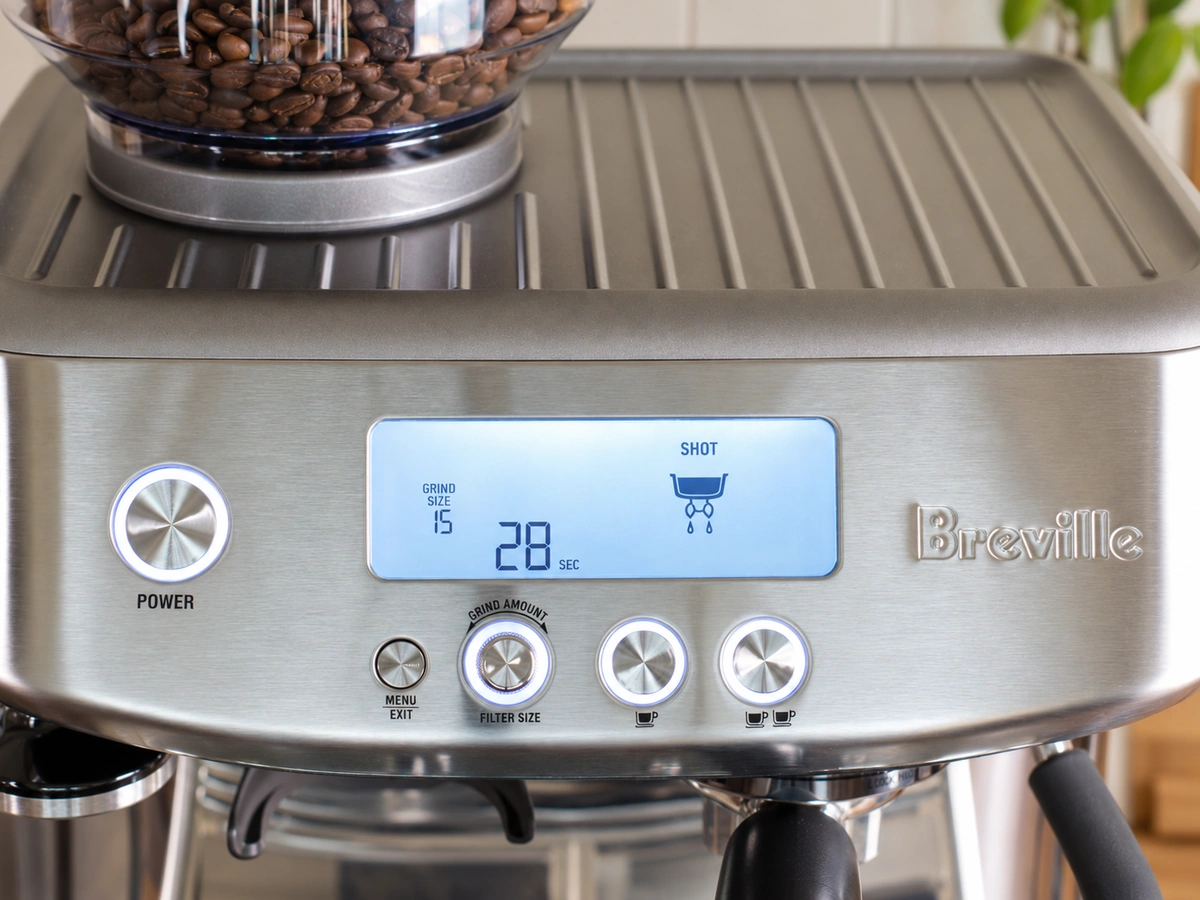
Shot time helps you troubleshoot. If a shot runs much longer than about 30 seconds, your grind is probably too fine (or your dose too high). Feedback like this is how you go from good espresso to great espresso.
My one gripe: it doses by grind time, not weight. Finer coffee grinds more slowly, so the same grind time can give slightly different doses when you change the grind. That makes perfectly consistent ratios harder, so I recommend weighing your dose on a scale.
Espresso: 9/10
Steam Wand
Its four-hole steam wand is about as good as you get on a home machine. It makes thick foam for cappuccinos and silky microfoam for lattes and latte art. It is ready in a few seconds and can steam for well over 90 seconds, enough for several lattes in one go.
Steam wand: 10/10
Ease of Use and Cleaning
Very easy, even for beginners. It comes with both pressurized and non-pressurized baskets. Pressurized baskets make a decent shot even if your tamping is off; switch to non-pressurized once you have the hang of it.
It controls shot volume, times your shots, reminds you to descale and walks you through it.
It also has a three-way solenoid valve, so used pucks come out firm and dry rather than as a soggy mess. Few home machines have one.
Ease of use: 9/10
Build Quality
Its internals are excellent. It goes from off to ready in about three seconds thanks to Breville's ThermoJet heater.
The exterior is lighter than I would like, with some flimsy plastic parts like the drip tray grate and water tank. The grinder can also clog if you grind very fine (roughly below setting 5). More on that in my full Breville Barista Pro review.
Build quality: 7/10
Value
Good value, even though it is not cheap. I do not know of a cheaper machine with its fast heat-up and built-in shot timer.
Value: 8/10
Good: excellent steam wand, built-in shot timer, ready in about three seconds, pressurized and non-pressurized baskets. Not so good: the grinder can clog at very fine settings, doses by time rather than weight.
Compare it in Barista Pro vs Barista Express and Breville Barista Pro vs De'Longhi La Specialista.
Budget Pick: Breville Barista Express
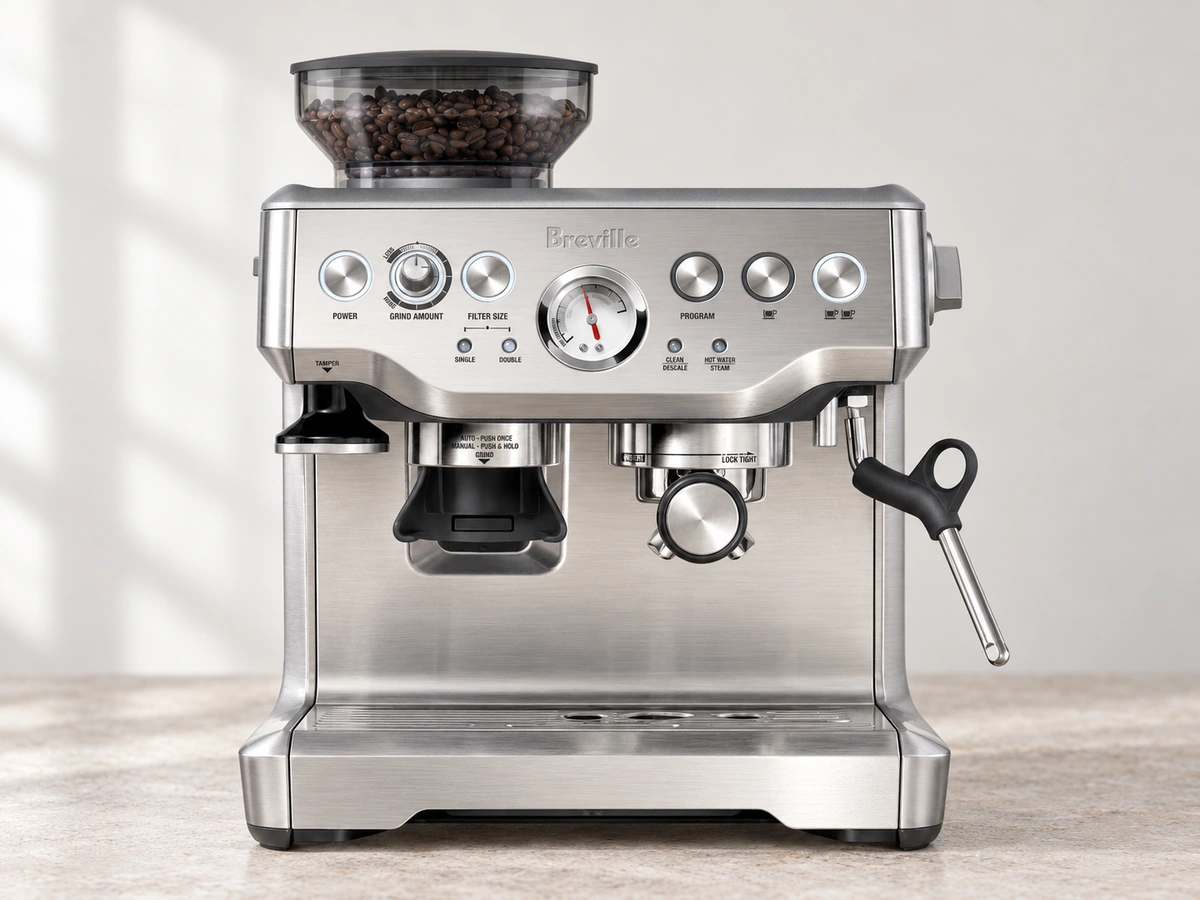
Breville Barista Express
The classic all-in-one: a built-in grinder, a pressure gauge and a capable steam wand.
The Barista Express has been one of the most popular home espresso machines for a decade. It uses an older thermocoil heater, which is slower and less stable than the Barista Pro's ThermoJet, so I would not pay full price for it. But it is regularly discounted, and at a good price it is the best-value all-in-one portafilter machine.
Espresso
Good, with a little more effort. Its grinder has 16 settings, enough to dial in for espresso, and its pressure gauge gives you useful feedback. It comes with both pressurized and non-pressurized baskets. Back-to-back shots are less consistent than on the Barista Pro because of its heater.
Espresso: 7/10
Steam Wand
A capable single-hole wand. It is slower than the Barista Pro's four-hole wand but can still make latte-art microfoam. Its gentler steaming is actually easier for beginners.
Steam wand: 8/10
Ease of Use
Easy once dialed in. It grinds by time like the Barista Pro, has programmable shot volumes and walks you through cleaning. It takes about 40 seconds to heat up and a bit longer to switch from brewing to steaming.
Ease of use: 7/10
Value
Excellent when on sale, but at full price the Barista Pro is worth the extra.
Value: 8/10 (on sale)
Why not the Calphalon Temp iQ with grinder? It is cheap, but its grinder has no way to grind a set dose, so you have to weigh every shot separately. I explain why I would skip it in my Calphalon Temp iQ review.
See also Gaggia Classic Pro vs Breville Barista Express and Bambino Plus vs Barista Express.
Best Super-Automatic: Jura E8
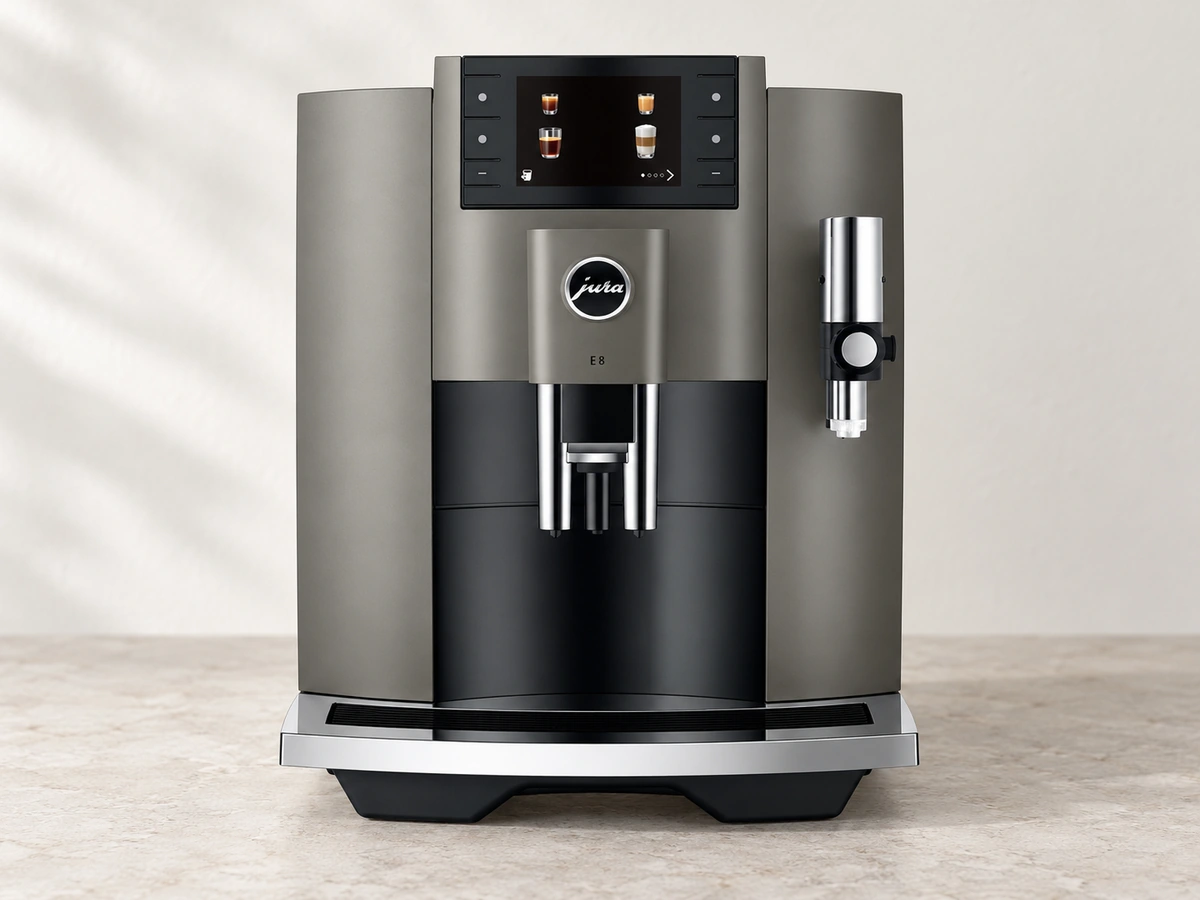
Jura E8
Some of the best espresso of any super-automatic, without paying for features you will not use.
Affiliate link — we may earn a commission at no cost to you.
Coffee
Among the best of any super-automatic. James Hoffmann's comparison of bean-to-cup machines put Jura on top for espresso. The reason is Jura's pulse extraction process, which pushes water through the coffee in short bursts for a more even, fuller-flavored shot. More in my Jura E8 review.
Coffee: 9/10
Milk
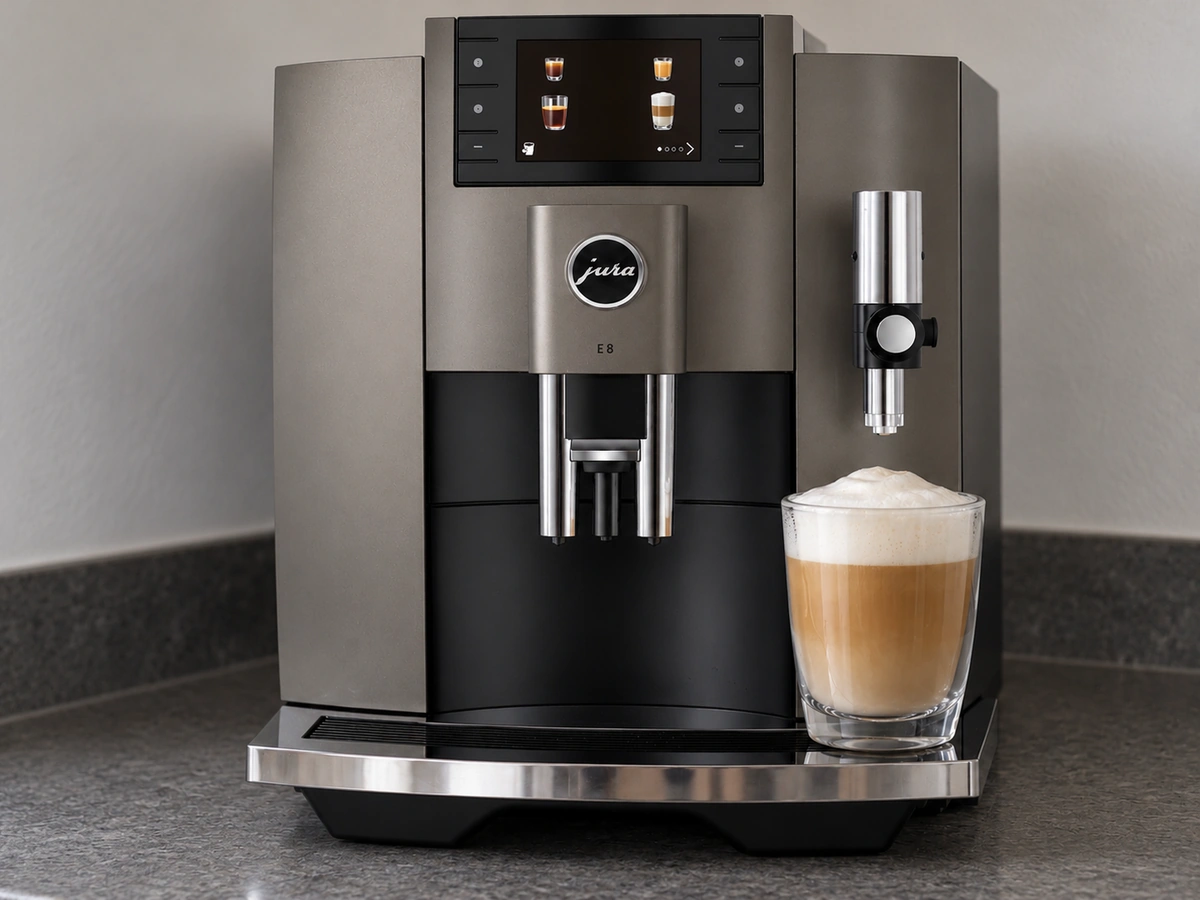
Great thick foam for cappuccinos. Its thinner milk for lattes is good, but a quality steam wand still does better.
Milk: 7/10
Features
It makes the main espresso and milk drinks, including cappuccino and flat white, with handy extra-shot options. You can adjust coffee strength, coffee volume and milk volume while each drink is brewing, which I love.
Features: 8/10
Ease of Use and Cleaning
A color screen with buttons guides you through drinks, cleaning and descaling.
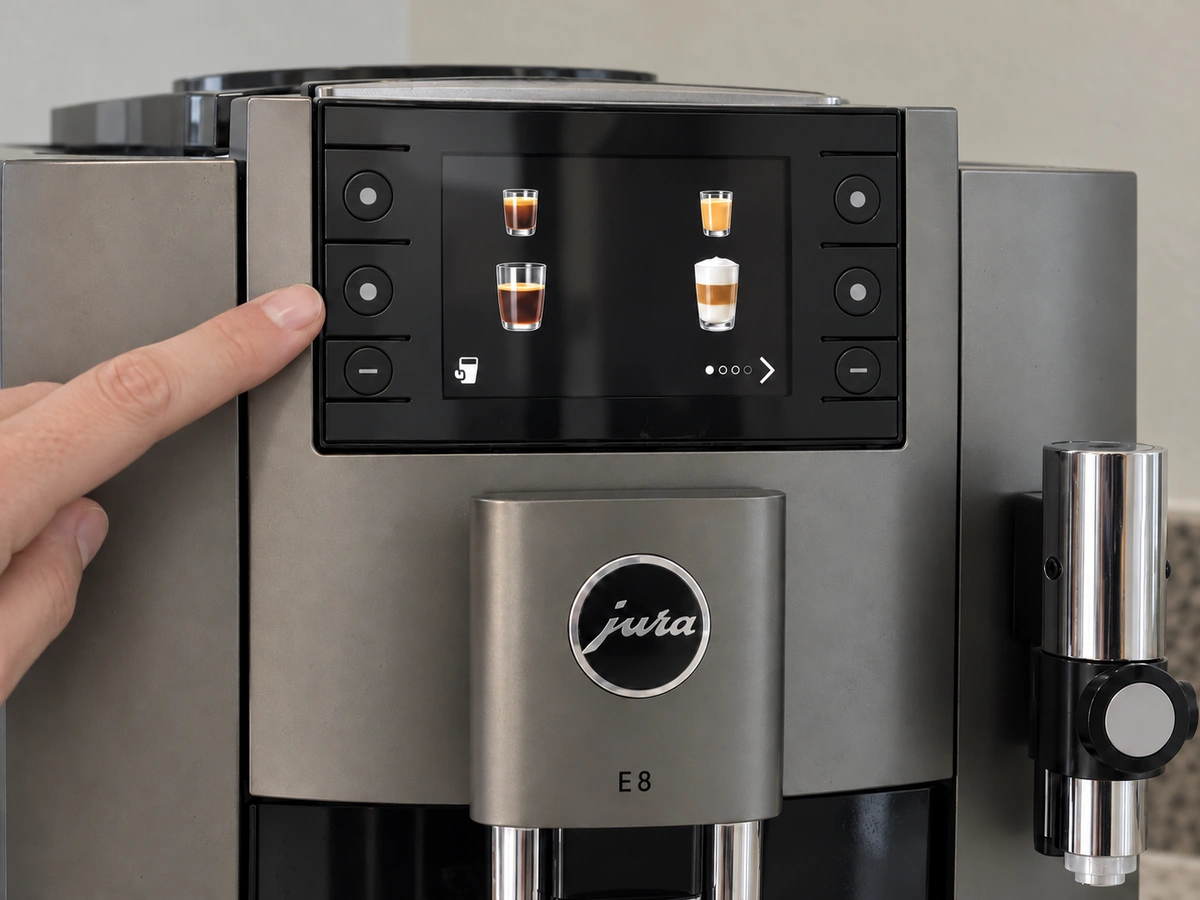
It cleans itself, so daily care is just emptying the drip tray and grounds bin when it tells you.
My main gripe is that you cannot remove the brew unit yourself. That makes some faults harder to fix at home, and Juras need professional servicing every few years.
Ease of use: 8/10
Value
Well worth the money. The E8 has everything that makes Juras great, without the extras that push prices up. For example, the S8 mostly adds a touchscreen and adjustable milk, and costs a lot more. See Jura E8 vs S8 and the best Jura coffee machines.
Value: 9/10
Good: among the best super-automatic coffee, customize drinks on the fly, easy to use. Not so good: the brew unit is not user-removable.
Budget Super-Automatic: De'Longhi Dinamica With LatteCrema
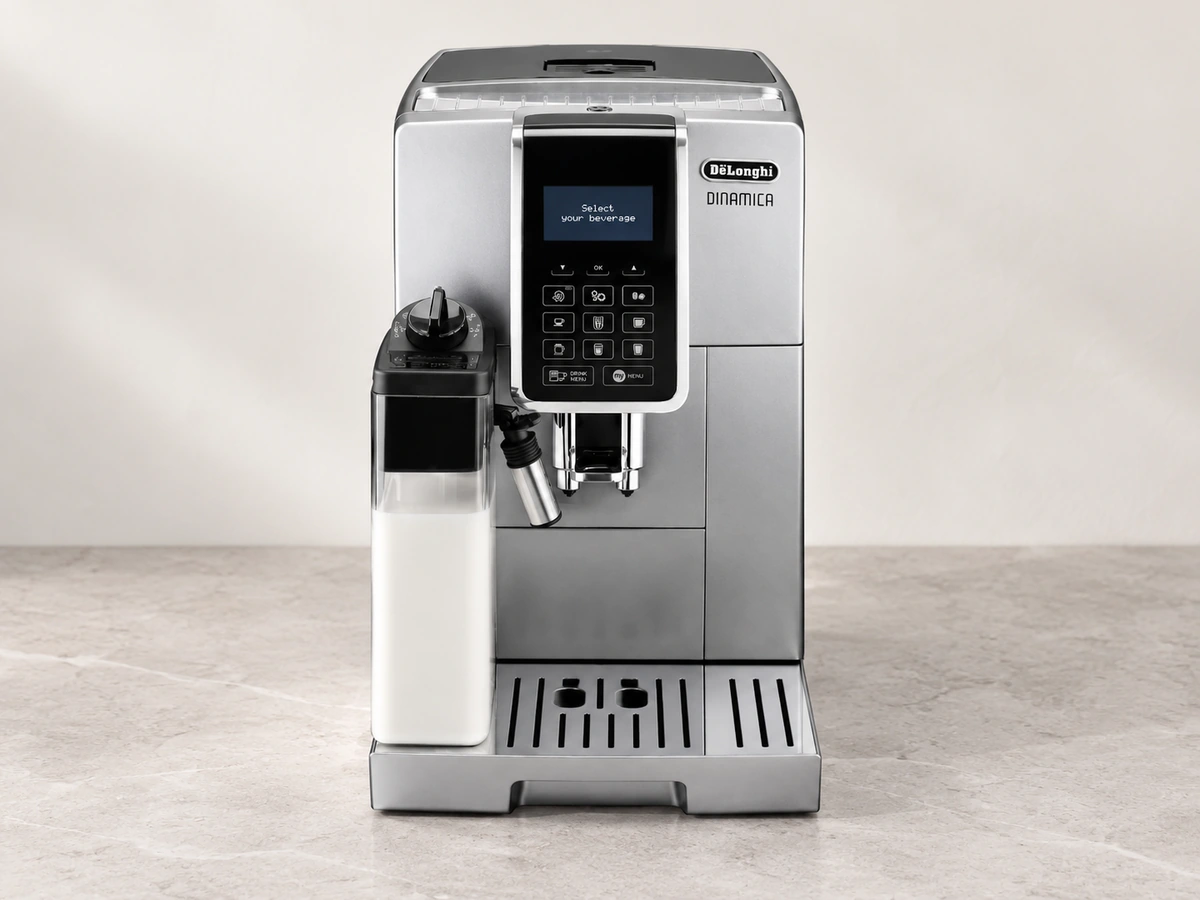
De'Longhi Dinamica with LatteCrema
Good espresso, easy to use, and one of the best-value super-automatics.
Affiliate link — we may earn a commission at no cost to you.
Coffee
Good. Hoffmann rated De'Longhi second only to Jura, and noted that De'Longhi's longer drinks, like a lungo, taste especially good because the longer brew extracts more. Even so, it does not quite match a Jura.
Coffee: 7/10
Milk
Decent, not great. The LatteCrema carafe makes fairly thick foam with larger bubbles. Fine for cappuccinos, less ideal for silky lattes.
Milk: 6/10
Features
It covers espresso, lungo and coffee, popular milk drinks like cappuccino and latte macchiato, and an Over Ice setting that Reddit owners love. It brews cooler and slower so it does not instantly melt your ice, though you still need plenty of ice.
You can customize strength and volume, but only by programming in advance, which is clunkier than on a Jura.
Features: 7/10
Ease of Use and Cleaning
A text display tells you the name of each drink, and the machine has automatic rinsing and a descale mode. It warns you when to empty the drip tray and grounds bin. The brew unit slides out for rinsing and greasing, which helps keep it running for years.
Ease of use: 9/10
Value
Good value. I would personally stretch to the Jura E8 for its better coffee, but the Dinamica is a great choice at its price. More in my De'Longhi Dinamica review.
Value: 7/10
Good: removable brew unit, easy display, great over-ice drinks, affordable. Not so good: average milk foam, no on-the-fly customization.
How to Choose an Espresso Machine With a Grinder
Portafilter or Super-Automatic?
Machines with built-in grinders come in two types:
- Portafilter machines (like the Barista Pro) grind into a portafilter that you tamp and lock in yourself.
- Super-automatics (like the Jura E8) grind, dose, tamp and brew internally at the touch of a button.
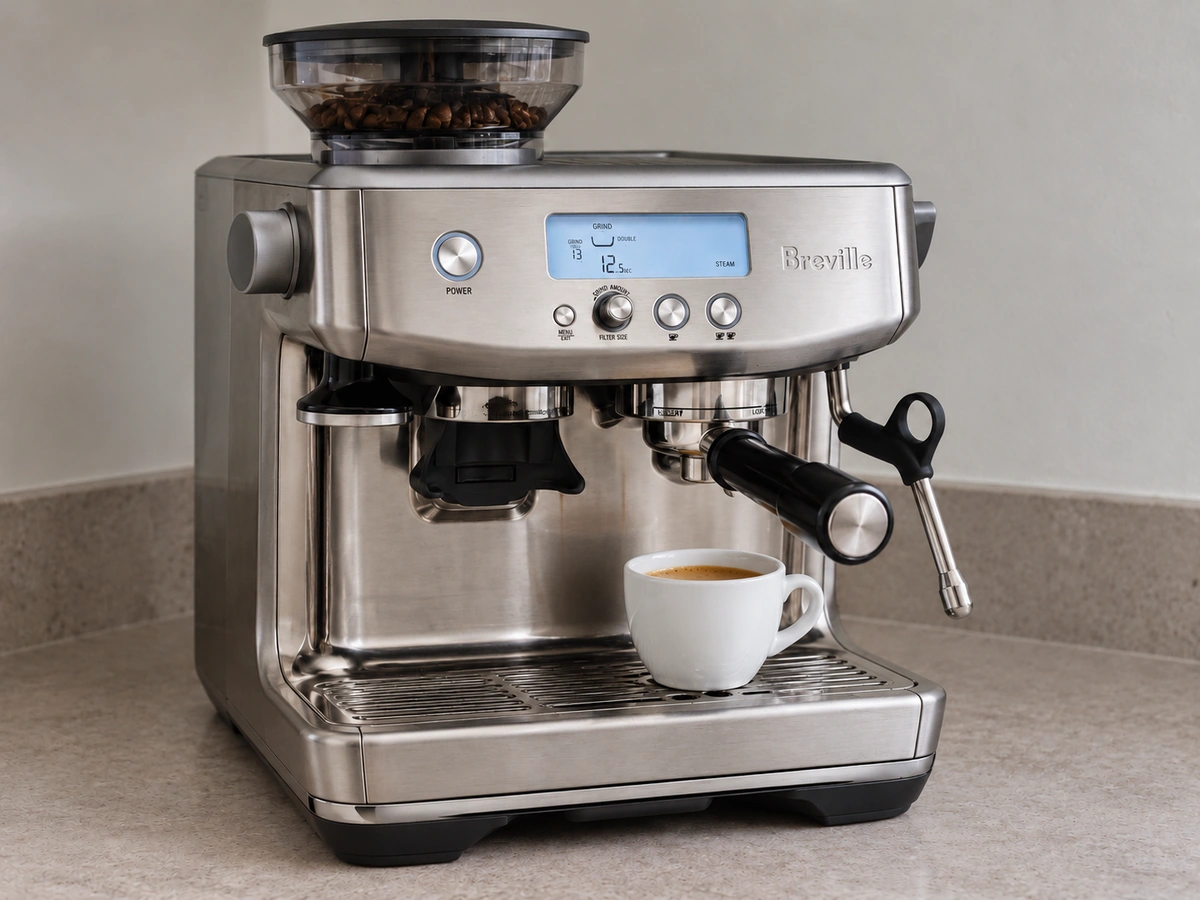
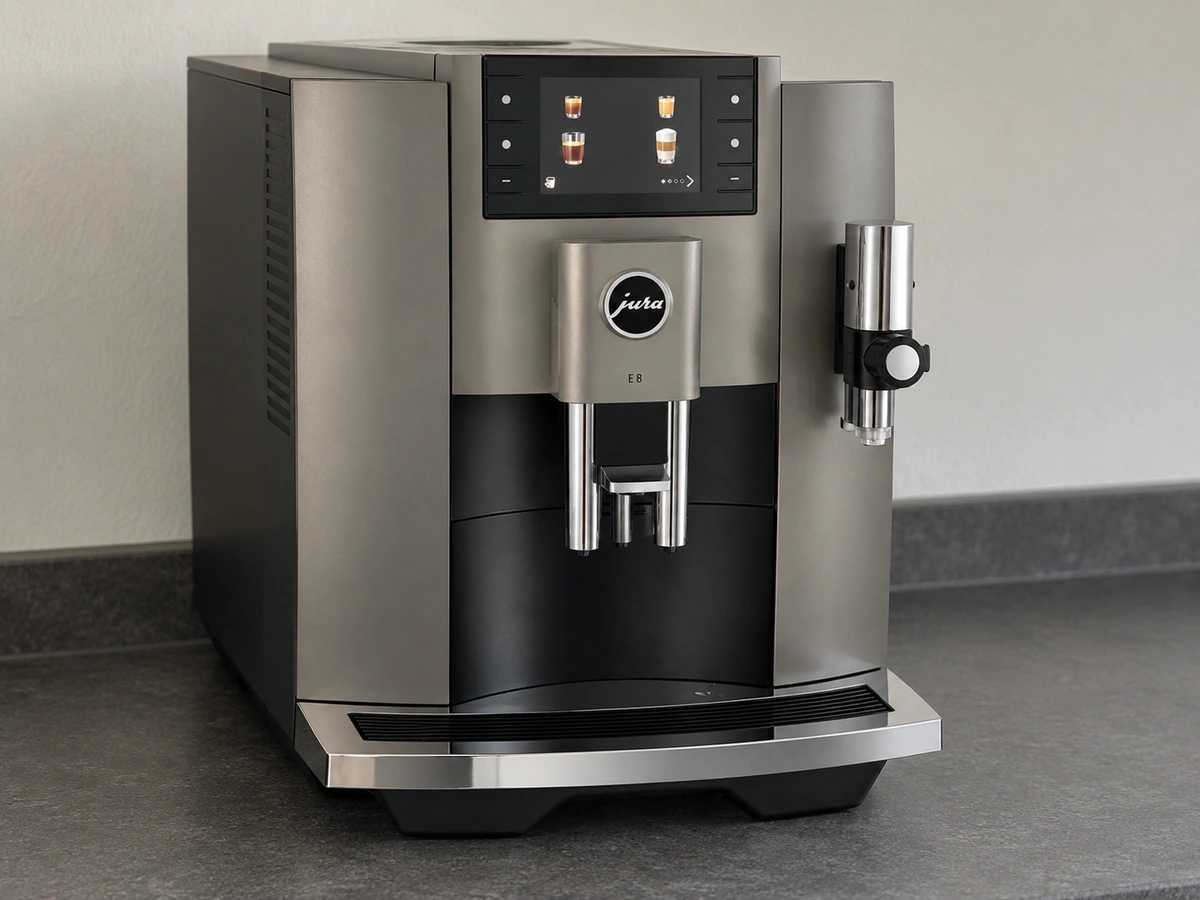
| Portafilter with grinder | Super-automatic | |
|---|---|---|
| Coffee quality | Generally higher | Generally lower |
| Ease of use | More hands-on | Push-button |
| Cleaning | Some cleanup after every shot | Largely self-cleaning |
| Price | ~$400-$2,500 | ~$400-$5,000+ |
| Best for | People who want the best espresso and enjoy the process | People who want good drinks with minimal effort |
- If espresso quality matters most, choose a portafilter machine.
- If convenience matters most, choose a super-automatic.
More in semi-automatic vs automatic vs super-automatic.
Buying a Portafilter Machine With a Grinder
Should You Get a Built-In Grinder at All?
Pros of a built-in grinder:
- Saves counter space
- Less mess, since you do not move the portafilter between two machines
Not so good:
- If the grinder clogs or fails, the whole machine may be out of action
- You usually get better quality for your money with a separate machine and grinder
- You cannot upgrade the grinder later
If space and convenience are not your priorities, consider a separate machine and grinder. See the best espresso machines for beginners and best espresso grinders.
If you have your heart set on an all-in-one, here is what to look for.
Grinder Type
Always choose a burr grinder. Blade grinders cannot grind evenly enough for espresso. Flat and conical burrs both work well on these machines.
| Grinder type | Verdict |
|---|---|
| Blade | Avoid |
| Conical burr | Ideal |
| Flat burr | Ideal |
Grind Settings
More settings is generally better, because the steps between settings are smaller, so you can fine-tune your shots more precisely.
| Grind settings | Verdict |
|---|---|
| Under 10 | Avoid |
| 10-30 | Acceptable |
| 30+ | Ideal |
| Machine | Grinder | Settings |
|---|---|---|
| Breville Barista Pro | Conical burr | 30 |
| Breville Barista Express | Conical burr | 16 |
Dosing Help
Getting your coffee dose right is one of the most important parts of espresso. Machines handle dosing in one of three ways:
- No help: you dose by eye
- By grind time: the machine grinds for a set number of seconds
- By weight: the machine weighs the dose (usually only on expensive machines)
Time-based dosing is fine, but because finer grinds take longer, the dose can drift when you change the grind. Weigh your dose on a scale to be sure.
| Dosing | Verdict |
|---|---|
| None | Avoid |
| By time | Acceptable |
| By weight | Ideal |
Both Breville picks dose by time.
Basket Type
There are two kinds of portafilter basket:
- Pressurized (dual-wall) baskets have a single exit hole that creates back-pressure. They make decent shots even with uneven grinding or tamping, but limit how good your espresso can get.
- Non-pressurized (single-wall) baskets have hundreds of tiny holes. They make much better espresso with fresh, well-ground, well-tamped coffee, but are less forgiving.
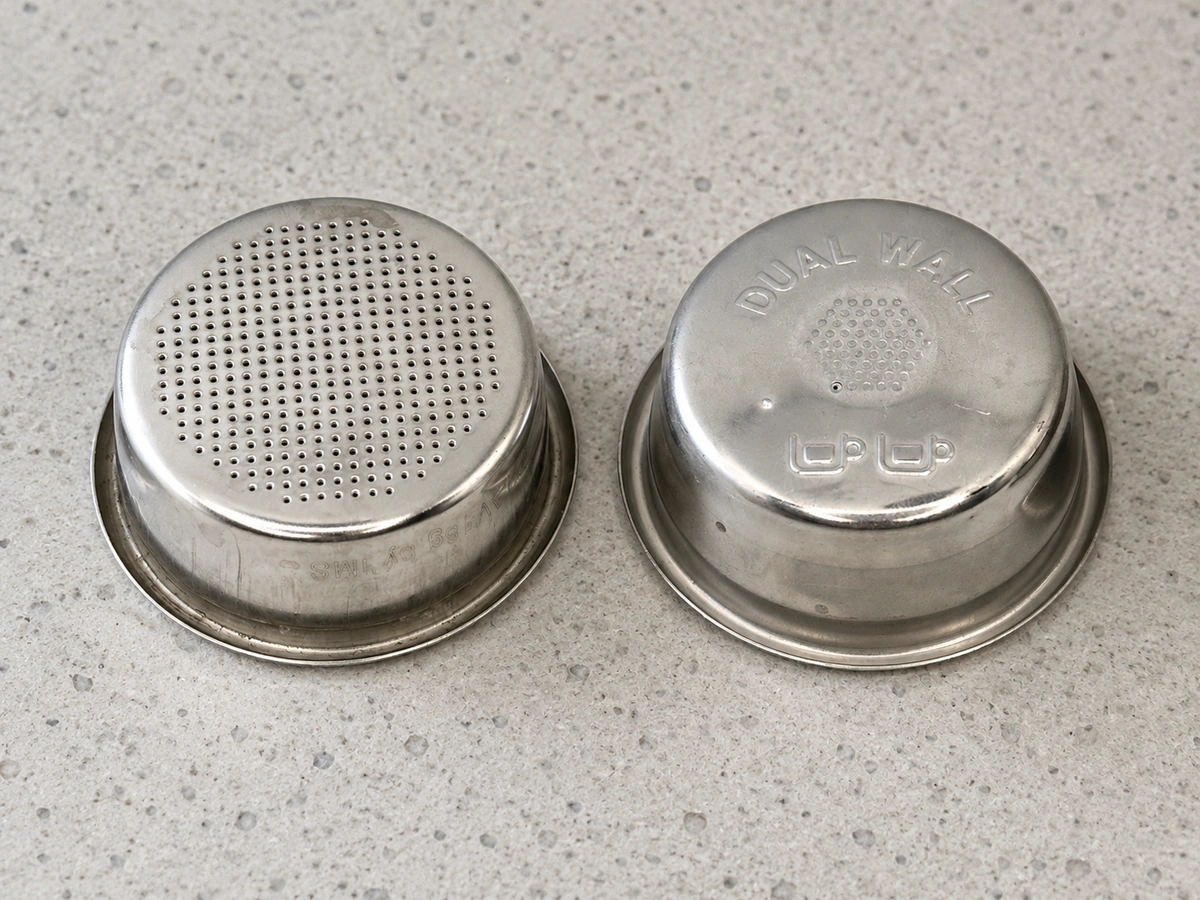
| Basket | Also called | Best for |
|---|---|---|
| Pressurized | Dual-wall | Pre-ground coffee and beginners |
| Non-pressurized | Single-wall | Freshly ground coffee |
Ideally, the machine comes with both. If only one, it should be non-pressurized, since a built-in burr grinder is wasted on pressurized baskets. Both Breville picks come with both types. More in pressurized vs non-pressurized portafilter baskets.
Steam Wand
- Panarello: a sleeve adds air for you. Easy, but only makes thick foam.
- Single or multi-hole (pin-hole): no sleeve. You control the texture, from thick foam to silky microfoam, with a short learning curve.
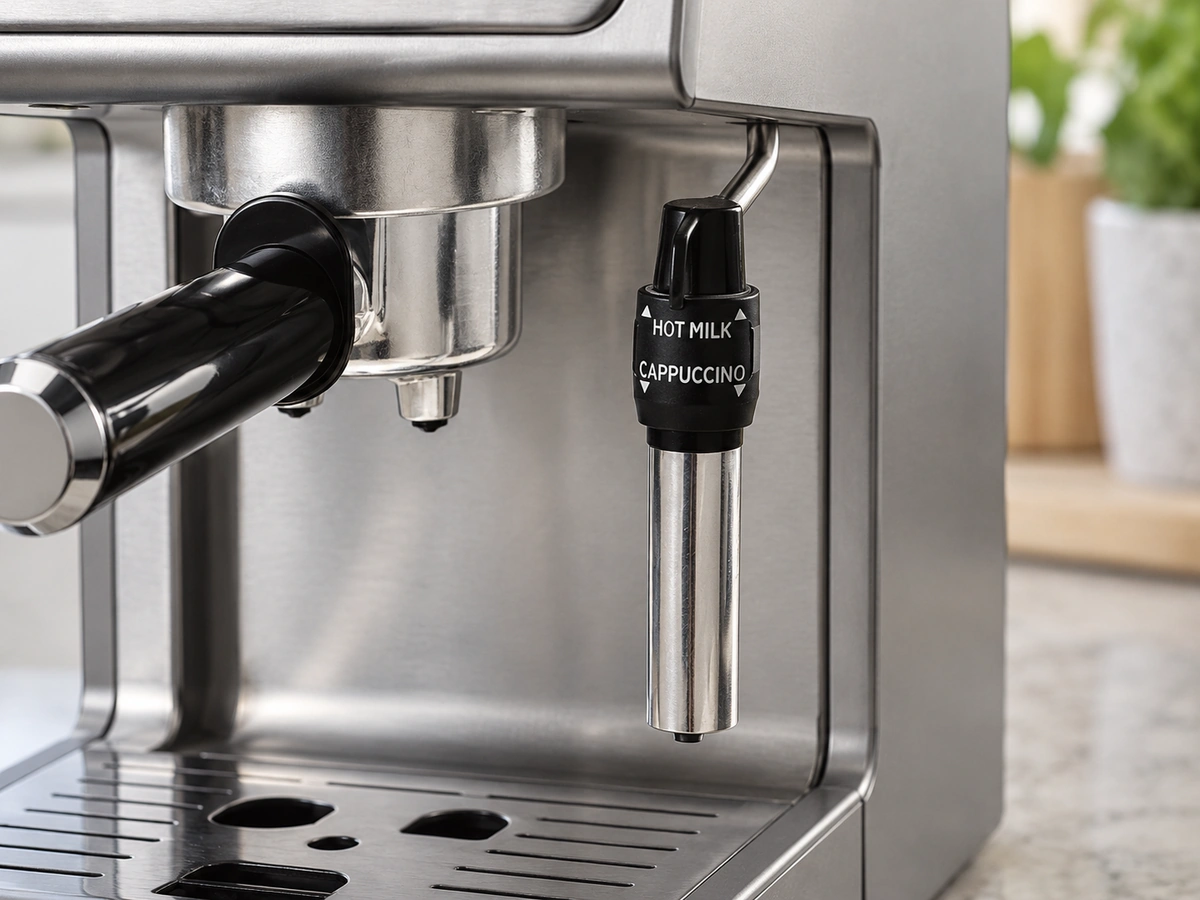
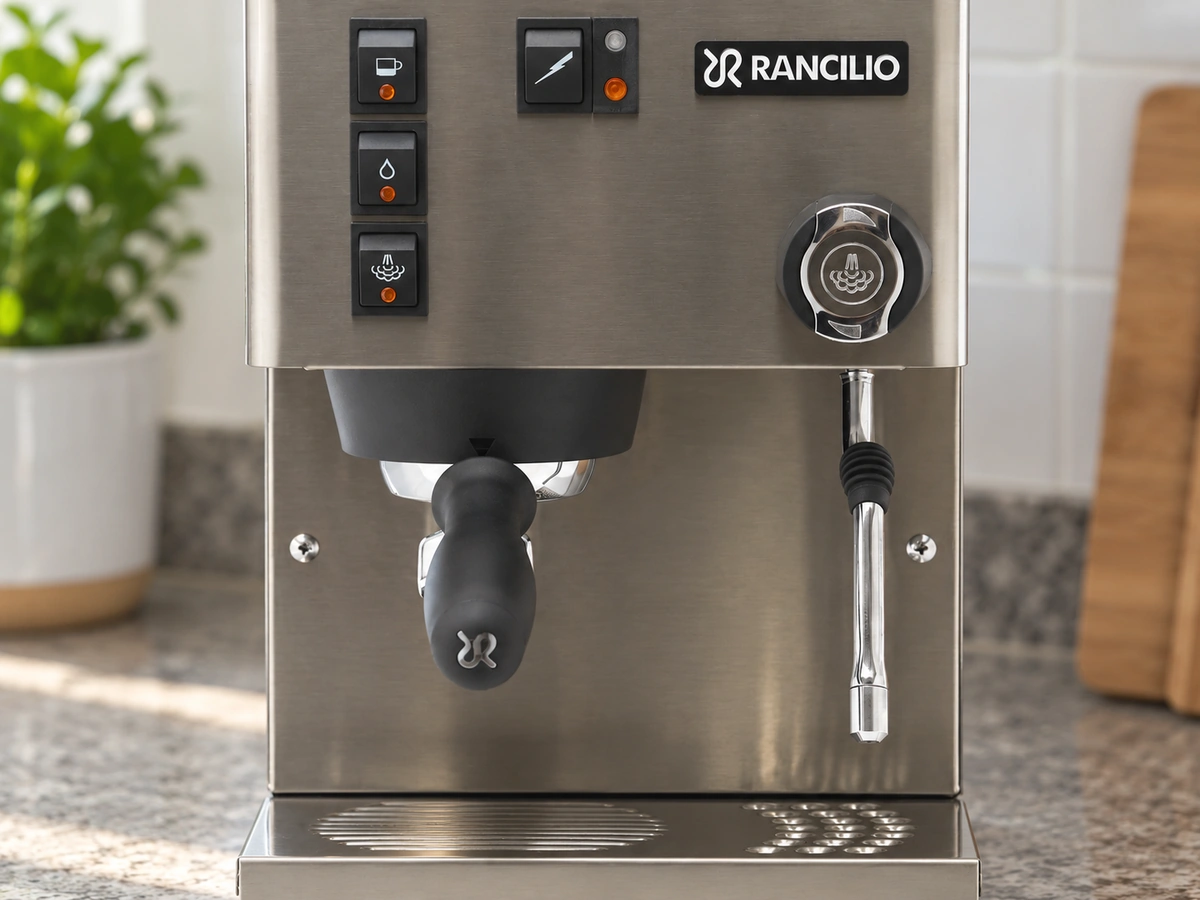
I would always choose a pin-hole wand. After about five attempts, most people make better milk with it than with a panarello. More holes spread steam more evenly and work faster.
| Steam wand | Verdict |
|---|---|
| Multi-hole | Ideal |
| Single-hole | Acceptable |
| Panarello | Avoid |
Descaling Alerts
You want a machine that tells you when to descale, ideally with a guided descale mode. Brewing with a scaled-up machine can damage the pump and heater, and how often you need to descale depends on your water. Both Breville picks have both.
Heating System
From best to worst for temperature stability:
| Heating | How it works | Pros | Cons |
|---|---|---|---|
| Dual boiler | Separate boilers for brewing and steam | Brew and steam at once; most stable | Expensive, slow to heat |
| Single boiler | One boiler heats the water | Stable; durable | Must wait to switch to steam |
| ThermoJet (Breville) | Fast on-demand heater | Ready in seconds; stable for its price | Less durable long term |
| Thermocoil / thermoblock | Heats water as it flows through a heated block | Cheap, fairly quick | Less stable, especially back to back |
For a beginner with a grinder machine, ThermoJet is the sweet spot of speed and stability. Dual boilers are amazing but expensive, and are best for enthusiasts.
| Machine | Heating |
|---|---|
| Breville Barista Pro | ThermoJet |
| Breville Barista Express | Thermocoil |
Weight and Stability
You want a machine heavy and stable enough that it does not slide when you lock in or remove the portafilter. All-in-one machines are usually fine here, but lighter models benefit from a non-slip mat.
Price
Portafilter machines with grinders range from about $400 to $2,500. I think the best value is roughly $500 to $1,000. Below that, quality drops off; above it, you are often paying for extras like touchscreens.
Pump Pressure
Nearly every machine boasts a "15-bar pump," which is close to meaningless. That is the pump's maximum, not the brewing pressure. What matters more is pump reliability, which you can only judge from owner reviews. I found no recurring pressure-loss complaints for either Breville pick.
Buying a Super-Automatic
For a deeper dive, see the best super-automatic espresso machines.
Price
Super-automatics range from about $400 to well over $4,000. The best value is roughly $700 to $2,000. Very cheap models can be unreliable, and above $2,000 you are usually paying for extras like huge menus. Only go higher if you need a specific feature.
Controls
- Buttons only: often cryptic symbols; expect to read the manual
- Buttons with a screen: clear guidance in plain English
- Touchscreen: easy, but adds a lot to the price
I recommend buttons with a screen. For example, the Jura S8 is largely an E8 with a touchscreen and adjustable milk, yet costs much more. Both of my super-automatic picks use buttons with a screen.
Milk System
Super-automatic milk systems differ in:
- Design: some attach a milk carafe to the machine; others draw milk through a tube from a separate container, which needs more counter space
- Textures: some make several textures; cheaper ones make one
- Temperature control: a few high-end machines let you adjust milk temperature
Good steamed milk sits at about 140 to 160°F; much hotter scalds it, much cooler tastes flat. So adjustable milk temperature is mostly useful for one thing: cold foam for iced drinks, found on models like the Jura Z10 and De'Longhi Eletta Explore.
| Machine | Milk design | Textures | Temperature control |
|---|---|---|---|
| Jura E8 | Separate container with tube | Several | No |
| De'Longhi Dinamica with LatteCrema | Attached carafe | Several (set on carafe) | No |
Brand Matters More Than Model
Each brand uses its own brewing system across its range, so espresso quality differs more between brands than between models.
In James Hoffmann's comparison, the brands ranked like this for espresso, best to worst:
- 1Jura
- 2De'Longhi
- 3Gaggia
- 4Melitta
- 5Siemens
- 6Miele
Drink Menus
Extra menu items can add a lot to the price, and manufacturers often "upgrade" a model mainly by adding drinks.
- Check the menu against what you actually drink.
- Be wary of non-espresso drinks like "filter coffee" or "cold brew." Super-automatics are not built for them and rarely do them well.
Removable Brew Unit
Most super-automatics let you slide out the brew unit for rinsing and greasing.
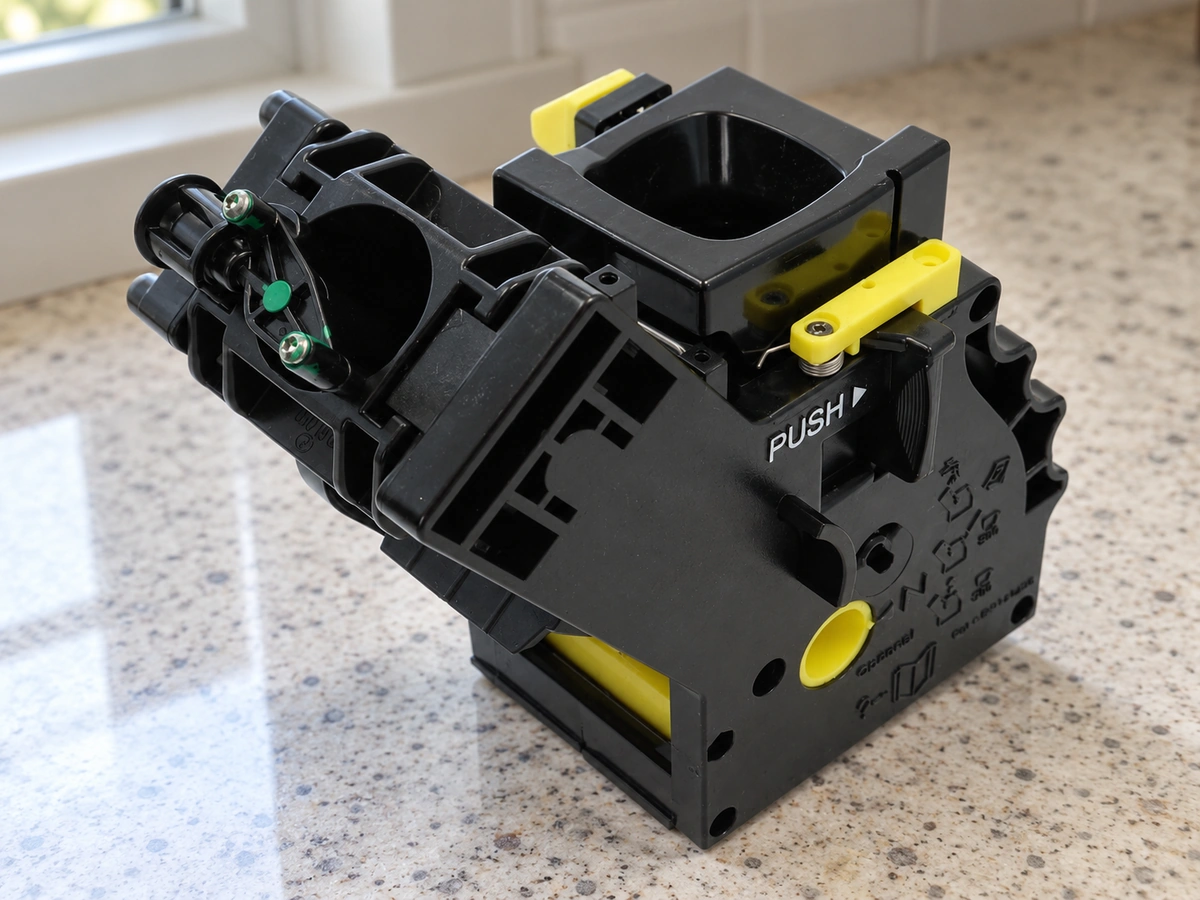
That keeps the coffee tasting fresh and lets you fix many faults yourself. Jura is the main exception. It uses rinse cycles and cleaning tablets instead. Those work well, but I still prefer being able to clean and grease the unit by hand.
| Machine | Removable brew unit |
|---|---|
| Jura E8 | No |
| De'Longhi Dinamica | Yes |
Grinder Settings Matter Less Than You Think
A super-automatic cannot tamp precisely, so it can only use medium-fine coffee. A machine with 50+ grind settings is not much better than one with 10 to 20.
Which Should You Get?
The best espresso machine with a built-in grinder is the Breville Barista Pro.
If you want a super-automatic, get the Jura E8.
FAQs
Is an espresso machine with a built-in grinder worth it?
Yes, if you value saving space and less mess. If you care most about espresso quality and upgrading later, a separate machine and grinder is better value.
What is the best espresso machine with a grinder for beginners?
The Breville Barista Pro. Its shot timer, fast heat-up and both basket types make learning easy.
Do super-automatic espresso machines have grinders?
Yes. Every super-automatic has a built-in grinder, since it grinds fresh beans for every drink.
Written by · reviewed by the Cicada Coffee Bar team
Daniel Voss
Lead Equipment Reviewer, Cicada Coffee Bar
Daniel leads the equipment-testing side of Cicada Coffee Bar. Every super-automatic, semi-automatic, and grinder featured on this site is bought or sourced independently, set up on the test bench, and brewed with daily for at least two weeks before a single word is written — tracking espresso quality, milk texture, ease of cleaning, and long-term reliability. Reviews are updated whenever pricing or firmware changes.