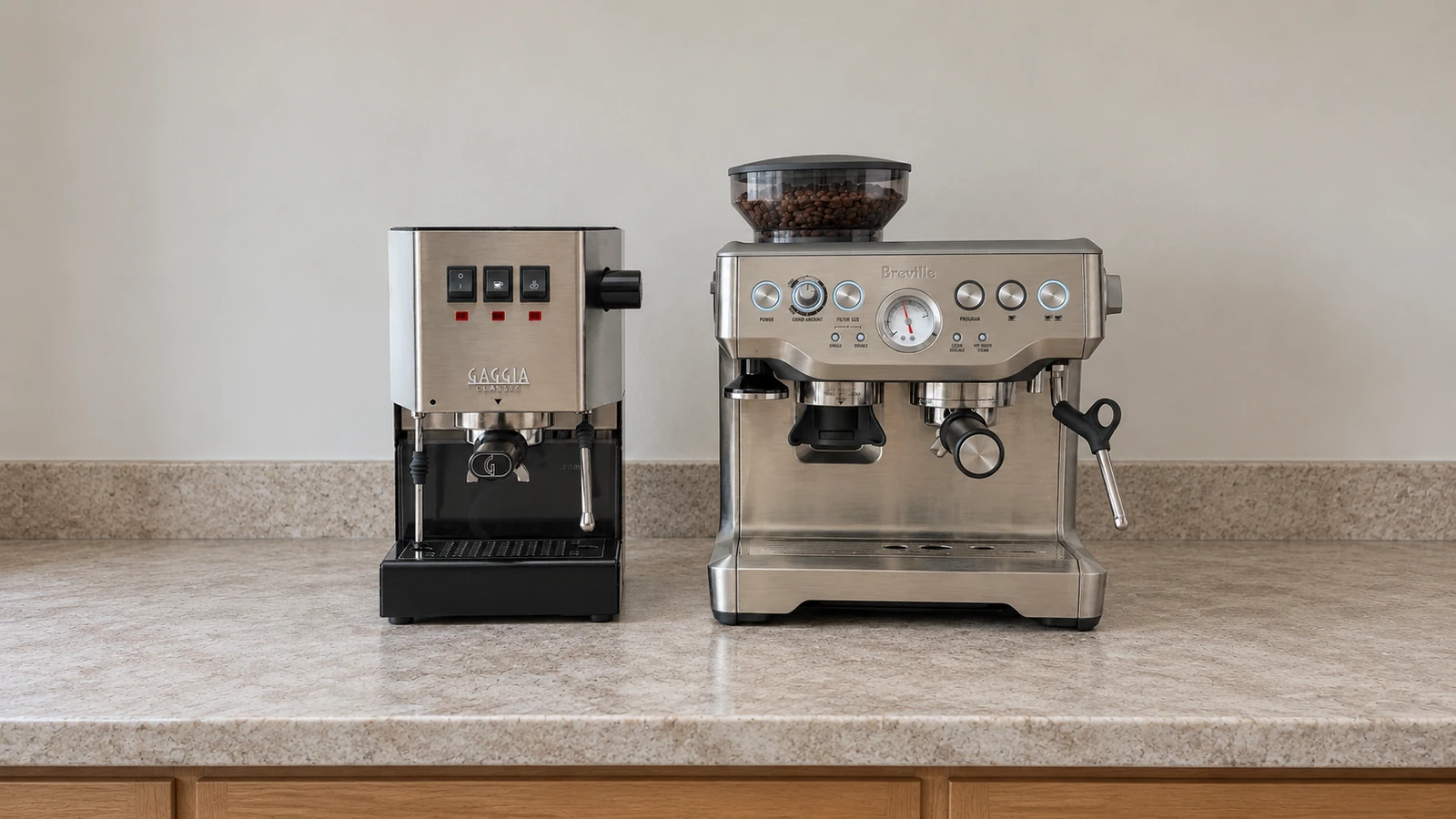
Get the Breville Barista Express if you want good espresso with as little effort as possible. Get the Gaggia Classic Pro if you want the best possible espresso and do not mind some trial and error.
These two machines are built for different kinds of coffee drinkers, so rather than crown one outright, I explain who each one suits.
Which Should You Buy?
Choose the Gaggia Classic Pro if you see espresso as a craft, a hobby as much as a drink.
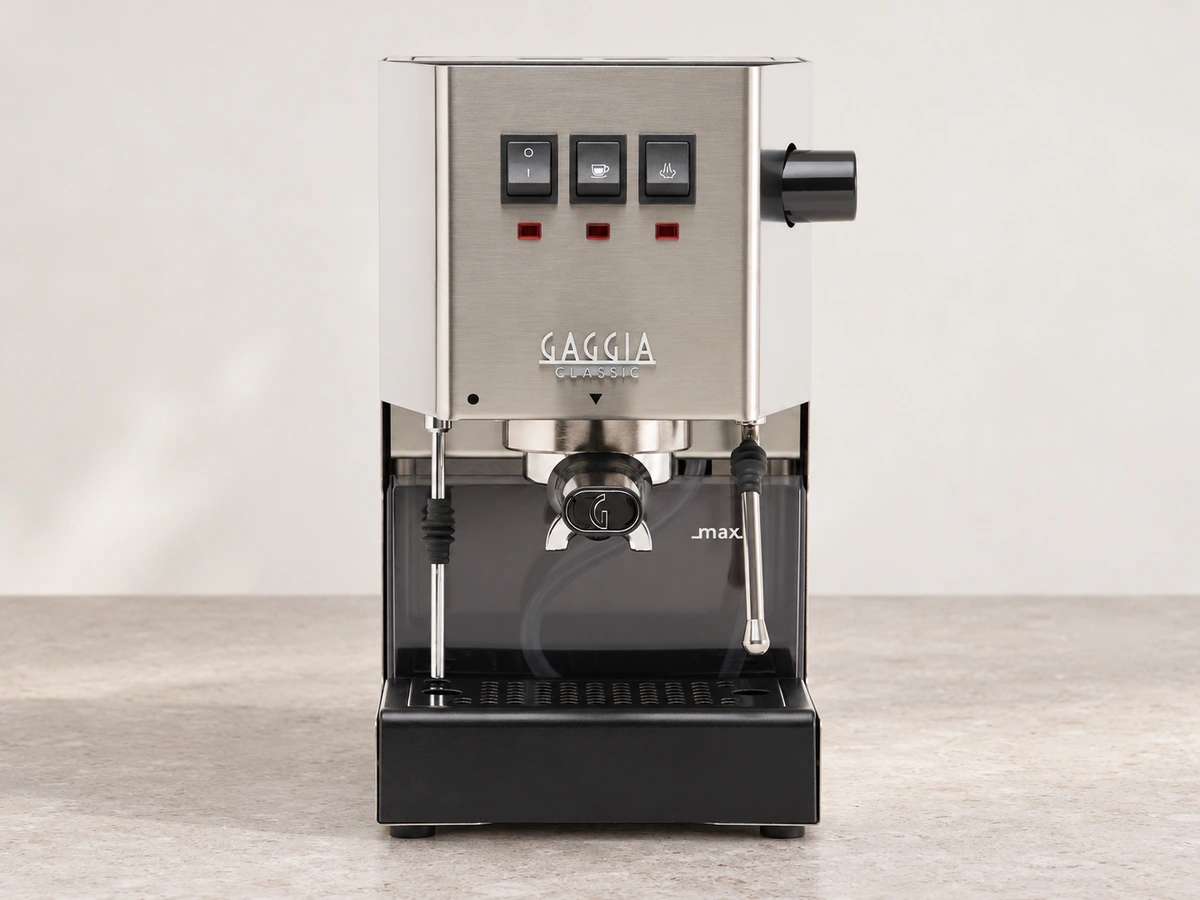
Gaggia Classic Pro
Durable, easy to upgrade, and backed by a huge modding community.
It brews well and is built to last. Pair it with a good grinder and you can pull excellent shots. It is also easy to open up and modify, with a large online community sharing guides and advice. Most machines, Brevilles included, have nothing like it.
What I like: potentially lasts a lifetime, easy to modify, huge community. What I don't: no PID in stock form, limited cup clearance.
Choose the Barista Express if you want good shots with minimal fuss and are not looking for a new hobby.
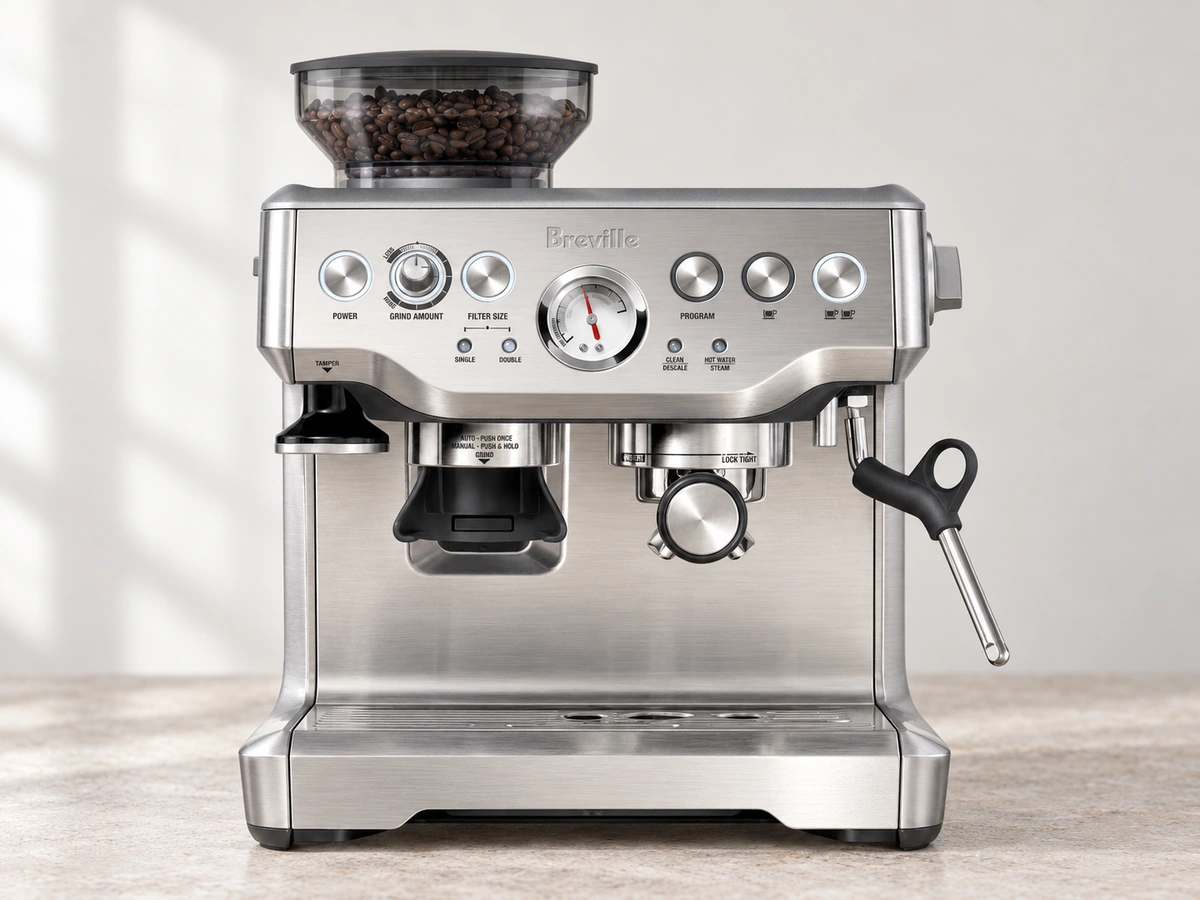
Breville Barista Express
Consistently good shots without much tinkering.
Its built-in grinder, automatic shot volumes and PID make good espresso easier than on the Gaggia. Its ceiling is lower, mostly because of its grinder, and you cannot really modify it, so you live with its limits until you buy a new machine.
What I like: stable temperature thanks to a PID, automatic shot volumes, takes less space than a Gaggia plus a grinder. What I don't: the grinder is entry-level for espresso, hard to modify.
For more on the Barista Express, see De'Longhi La Specialista vs Breville Barista Express and Barista Express vs Barista Touch.
A Quick Look at Gaggia Classic Pro vs Breville Barista Express
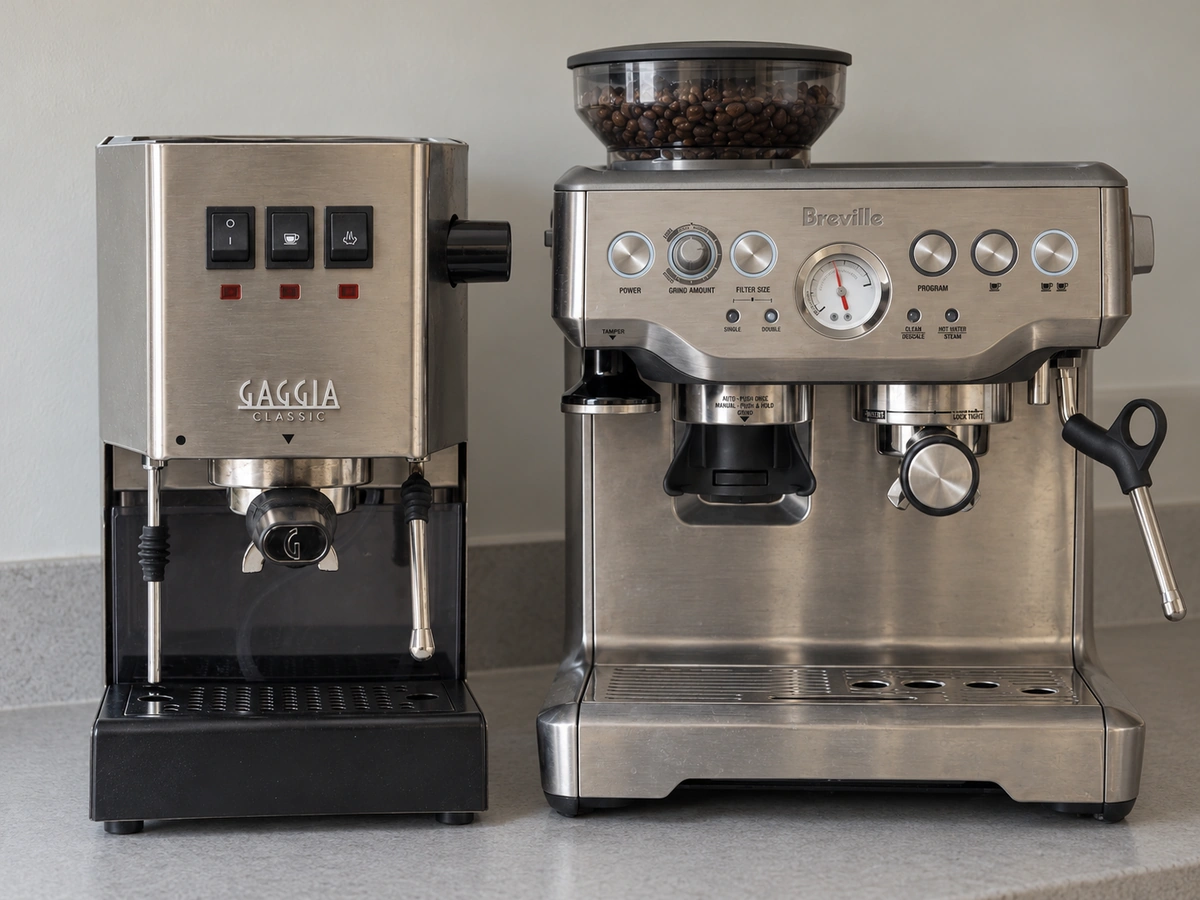
The Gaggia Classic Pro is a semi-automatic: you flick a switch to start and stop each shot. It has a commercial-style steam wand but no grinder.
The Barista Express stops each shot automatically at a programmable volume. It has a steam wand and a built-in grinder.
| Gaggia Classic Pro | Breville Barista Express | |
|---|---|---|
| Type | Semi-automatic | Semi-automatic with programmable shots and grinder |
| Controls | Switches | Buttons |
| Presets | None | Single and double shots, hot water |
| Built-in grinder | No | Yes |
| Heating | Single boiler | Thermocoil |
| PID | No | Yes |
| Steam wand | Commercial-style (2 holes) | Single-hole |
| Time to steam 5 oz of milk | ~40 s | ~30 s |
| Descale alert | No | Yes |
| Dimensions (W x D x H) | 9.5" x 8" x 14.2" | 12.5" x 13.8" x 15.9" |
| Water tank | ~71 oz | ~67 oz |
The Differences
Built-In Grinder
The Barista Express has a grinder; the Gaggia does not. The grinder largely accounts for the price difference, and a standalone grinder of similar quality costs about the same as that difference.
I almost always prefer a separate machine and grinder:
- Upgrading the grinder often improves espresso more than upgrading the machine, and many baristas say the grinder matters most
- A built-in grinder locks you in. You pay a premium for it, and adding a better grinder later makes the whole setup expensive
- The Barista Express's grinder is entry-level. Many owners on Reddit say it is the first thing they would upgrade
- Separate grinders are easier to clean and less wasteful when switching beans
The only time I would choose a built-in grinder is when counter space is very tight.
Winner: Gaggia Classic Pro
Shot Control
The Barista Express stops shots automatically; on the Gaggia, you do it. Press a button on the Breville and it dispenses a set amount of water, by default about 1 oz for a single and 2 oz for a double, and adjustable. Around 9 grams of coffee for a single and 18 for a double is a good starting point.
On the Gaggia, you flick the switch on and off. That gives you more control but less consistency, unless you weigh or time every shot, and it has no built-in timer.
Winner: Barista Express
Modding
The Gaggia is made for modding; the Barista Express is not. Popular Gaggia mods include:
- Adding a PID (the Barista Express has one out of the box)
- Adjusting the over-pressure valve (newer Classic Evo Pro models already ship at 9 bar)
- Upgrading the steam wand
Mods may void your warranty. The Barista Express was not designed to be modified, there are few guides, and it is not built to last as long, so mods make less sense anyway.
Winner: Gaggia Classic Pro
Temperature Control
The Barista Express has a PID; the Gaggia does not.
The Barista Express holds a set brewing temperature, adjustable in small steps. After steaming, it automatically flushes to bring itself back down to brewing temperature.
The Gaggia's temperature is less precise. Many owners use "temperature surfing": flicking on the steam switch briefly to heat the boiler, or flushing water to cool it, then pulling the shot at a consistent point. It works, but it is fiddly, which is why a PID is one of the most popular Gaggia mods.
Winner: Barista Express
Cup Clearance
The Barista Express has much more room under the portafilter. The Gaggia only fits short espresso cups, and you cannot fit a scale under the cup without removing the drip tray. That is a real flaw, since manual shots really call for weighing your espresso. The Barista Express fits a regular cup and a scale.
Winner: Barista Express
Pressure Gauge
The Barista Express has one; the Gaggia does not. It gives rough feedback on your shot and whether the pump is working. Honestly, timing your shot is more useful, which is why pricier Brevilles swap the gauge for a shot timer. Still, gauge kits are a popular Gaggia mod, so plenty of people like having one.
Winner: Barista Express
Portafilter Size
The Gaggia uses the commercial-standard 58 mm; the Barista Express uses 54 mm. People can be snobby about 58 mm, but I think the difference is overstated. Each machine is designed around its own size. 58 mm accessories are easier to find, though 54 mm options are now common too.
Winner: Gaggia Classic Pro, just
Size
The Barista Express is about 3 inches wider, 6 inches deeper and 1.7 inches taller, but it is still more compact than a Gaggia plus a separate grinder.
The Gaggia is better under low cabinets: it is shorter, and you can lift its water tank out without reaching over the top. See our guide to under-cabinet coffee makers.
Winner: tie, depending on your space
Espresso
The brewing is close, but the Gaggia has the higher ceiling when paired with a good grinder.
The Barista Express is more consistent thanks to its PID. Its limit is its grinder: the steps between settings are big, so one setting can taste bitter and the next sour, and the sweet spot is hard to find.
Pair the Gaggia with a quality grinder and it will make better espresso, though as much because of the grinder as the machine. See the best espresso grinders.
Winner: Gaggia Classic Pro, narrowly
Milk
Very similar: good, but on the slow side. Both can make thick foam and silky microfoam. Neither is powerful, which makes them easy for beginners but slow for larger jugs.
Winner: tie
Features and Settings
The Barista Express does more. It grinds beans and has a dedicated hot water spout. The Gaggia can only dispense hot water through its steam wand.
Winner: Barista Express
Ease of Use and Cleaning
The Barista Express is much easier. Automatic shot volumes and a PID make consistent espresso far easier, and you do not need a separate grinder to get started. That makes it a better espresso machine for beginners. Daily cleaning is the same, but its descale alert and descale mode make maintenance easier.
Winner: Barista Express
Build Quality
Despite some design flaws, the Gaggia is built to last much longer. It is a regular recommendation on r/BuyItForLife, with owners reporting machines still going after 20 years. The Barista Express is built for features rather than longevity. You can expect five or more years, but not a lifetime.
Winner: Gaggia Classic Pro
Value
The Gaggia is better value in the long run. A Gaggia plus a good grinder costs a bit more than a Barista Express, but makes noticeably better espresso, lasts longer and can grow with you. The Barista Express locks you into its mediocre grinder.
Winner: Gaggia Classic Pro
Final Verdict
The Gaggia Classic Pro suits you if you want to get properly into espresso, experiment with beans and techniques, and maybe mod your machine.
The Breville Barista Express suits you if you want good espresso with as little effort and thought as possible.
If you want Breville convenience with better heating, also consider the Barista Pro. And if the Gaggia appeals, compare it with its closest rival in Gaggia Classic Pro vs Rancilio Silvia.
Your Questions Answered
Is the Gaggia Classic Pro better than the Breville Barista Express?
For espresso quality and durability, especially with a good grinder, yes. For ease of use, the Barista Express is better.
Does the Gaggia Classic Pro have a grinder?
No. You need a separate grinder or pre-ground coffee.
Which is better for beginners?
The Barista Express, because its PID and automatic shot volumes make consistent espresso much easier.

Written by · reviewed by the Cicada Coffee Bar team
Daniel Voss
Lead Equipment Reviewer, Cicada Coffee Bar
Daniel leads the equipment-testing side of Cicada Coffee Bar. Every super-automatic, semi-automatic, and grinder featured on this site is bought or sourced independently, set up on the test bench, and brewed with daily for at least two weeks before a single word is written — tracking espresso quality, milk texture, ease of cleaning, and long-term reliability. Reviews are updated whenever pricing or firmware changes.