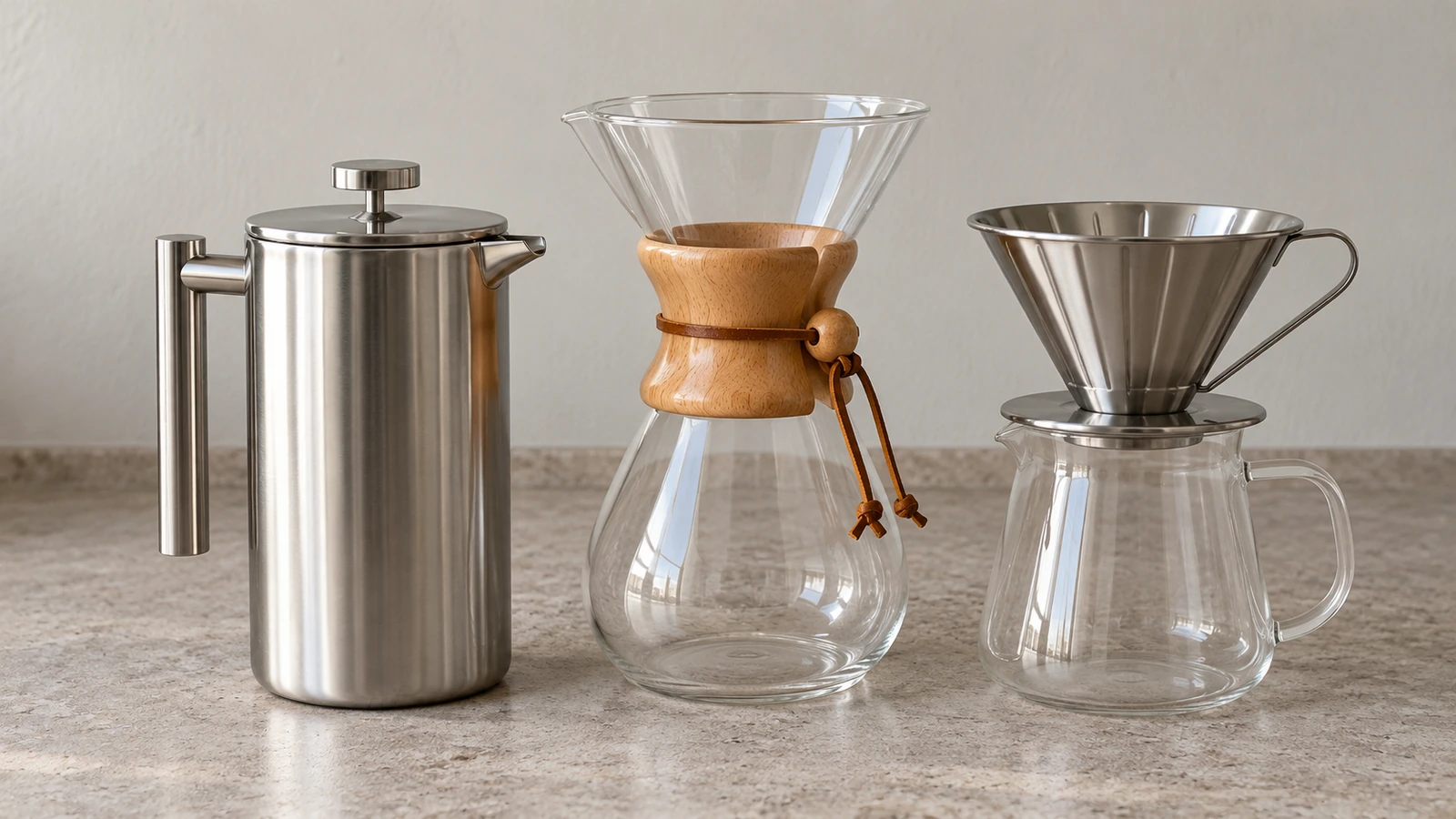
Quick answer: the closest thing to a plastic-free automatic coffee maker is the Bunn VP17-1SS, fitted with a stainless steel brew basket. For a truly plastic-free brewer, go manual: the Sterling Pro stainless steel French press or a Hario V60 ceramic.
I don't own the machines in this roundup. Instead, I dug through manufacturer specs, parts diagrams and owner reports to find which ones are actually low-plastic, and actually good. I'll also call out two machines often described as plastic-free that aren't.
- Best automatic: Bunn VP17-1SS + stainless steel basket
- Best French press: Sterling Pro stainless steel
- Best pour-over: Hario V60 ceramic
- Often called plastic-free, but isn't: Technivorm Moccamaster and Ratio Eight
No automatic coffee maker is 100% plastic-free. Even the Bunn has some plastic parts, such as seals and fittings. What matters most for many people is whether plastic touches the hot water and coffee, and that's what I focus on.
Best Automatic: Bunn VP17-1SS
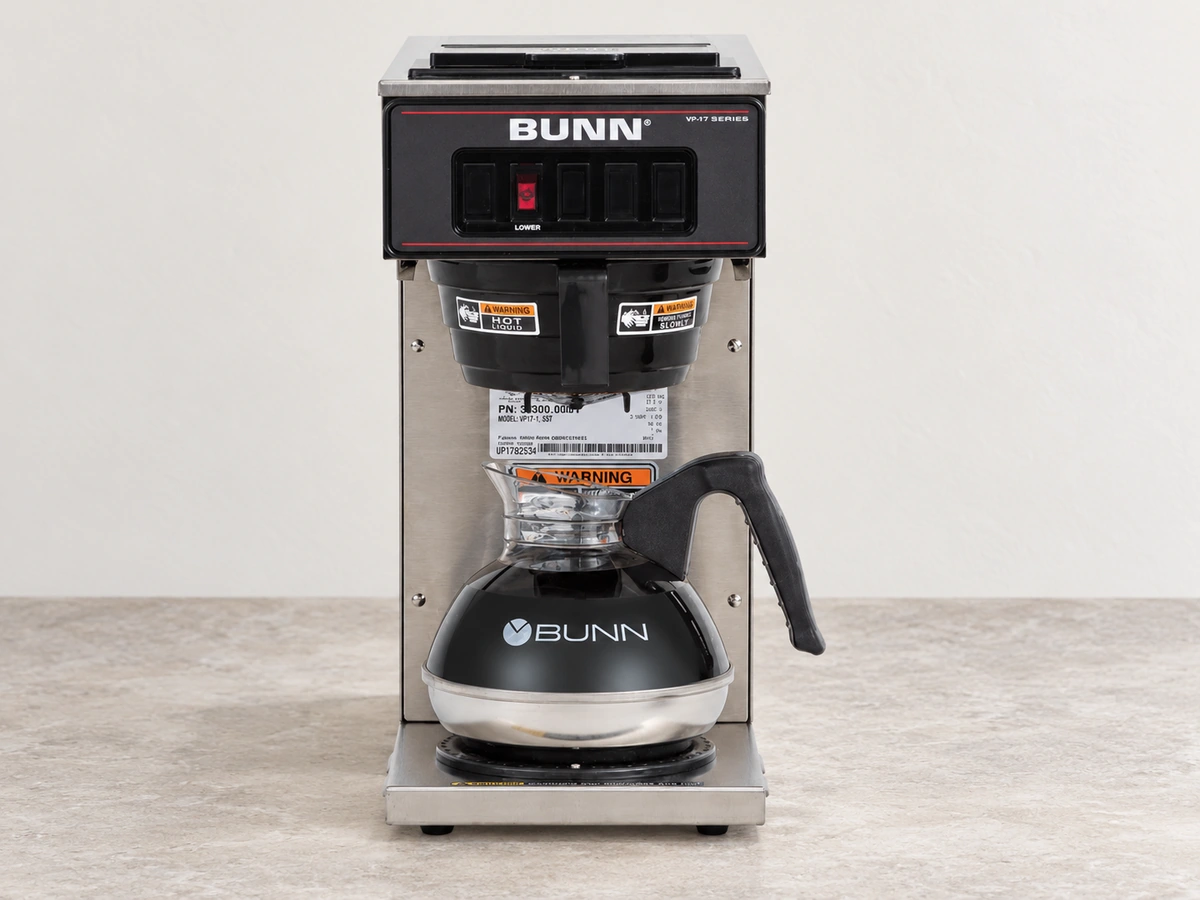
Bunn VP17-1SS
A commercial-grade pour-over brewer that's built to last. Swap in a steel basket to keep plastic away from the brew.
Affiliate link — we may earn a commission at no cost to you.
Coffee Quality: 8/10
Very good drip coffee. Its basket holds enough coffee for a proper 1:17 ratio, which many machines can't manage, and it brews at a consistent temperature. A full pot takes about four minutes, at the faster end of the ideal range, so the cup is slightly less complex than from slower brewers. But it gets the two biggest factors, temperature and ratio, right.
It's a "pour-over" brewer in the commercial sense: you pour cold water in the top for each pot, and it pushes out hot water from an internal tank that stays hot.
Design and Build Quality: 7/10
Built like a tank, and looks like one. It was designed for diners and offices, so it can run all day and last decades. But it's big and very commercial-looking, and it keeps its tank hot all the time unless you switch it off at the back. It also uses a glass decanter on a warming plate, so pour your coffee promptly, before the hot plate starts to stew it.
Value: 8/10
Good value if you don't mind the looks. It costs about the same as many home brewers that make worse coffee and won't last as long.
Good: keeps plastic away from the brew with a steel basket, extremely durable, very good coffee. Not so good: bulky and ugly, the steel basket is an extra purchase, the warming plate can stew coffee.
Best French Press: Sterling Pro Stainless Steel
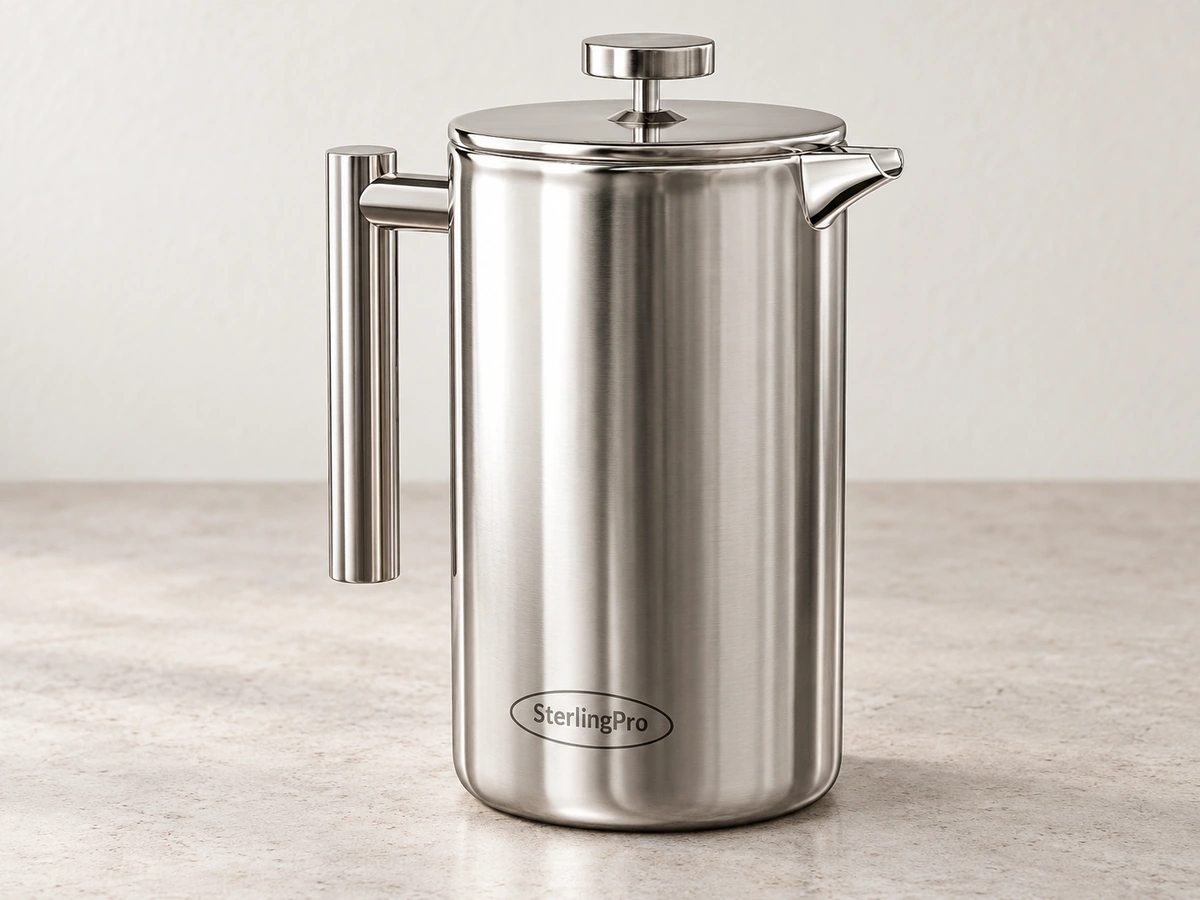
Sterling Pro Stainless Steel French Press
Double-walled steel for heat retention, and a two-layer metal filter for less sludge.
Affiliate link — we may earn a commission at no cost to you.
Coffee Quality: 9/10
Excellent French press coffee. Its double-walled steel body loses very little heat over a typical four- to six-minute steep, so extraction stays even. Use water just off the boil. Its double-layer steel filter also lets less sediment through than a typical single-screen press. My French press guide shows exactly how to brew with it.
Design and Build Quality: 8/10
Very durable. The body and plunger are stainless steel, so it won't break if you drop it. The one flaw: the measurement markings are inside the dark steel body and hard to see, so measure coffee and water before adding them.
Value: 10/10
Excellent value. It's one of the most affordable well-made plastic-free presses. Honestly, French presses differ less than people think; what matters is how you use them.
Good: very durable, holds heat well, less sediment, inexpensive. Not so good: markings are hard to see.
Best Pour-Over: Hario V60 Ceramic
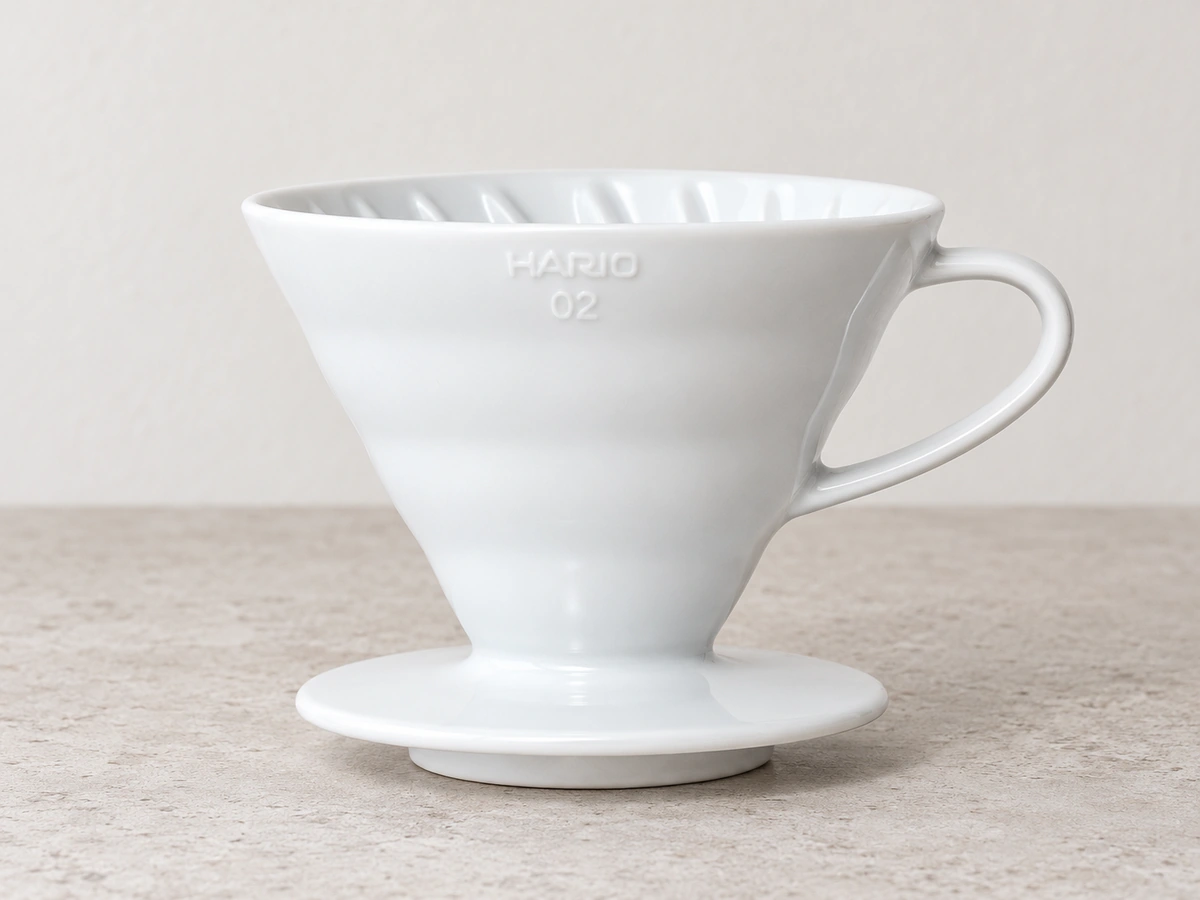
Hario V60 Ceramic
The classic cone that almost every pour-over recipe is written for.
Affiliate link — we may earn a commission at no cost to you.
Coffee Quality: 9/10
Excellent pour-over coffee, with a good technique. Ceramic is heavy and holds heat well once warm. Preheat it thoroughly with hot water, or it will soak heat from your brew. Because the V60 is the most popular cone, most online recipes are written for it, which makes learning easier.
Design and Build Quality: 8/10
A design classic, the template for most cones since. It's ceramic, so it will shatter if you drop it. If that worries you, the glass or metal versions are also plastic-free.
Value: 7/10
Fair value. It's cheap, but manual pour-over takes time and attention, so for many people it becomes a weekend brewer rather than the daily one.
Good: endless recipes, iconic look, top-quality cone. Not so good: you need to focus throughout the brew, it shatters if dropped.
A Chemex is another excellent plastic-free option if you like a cleaner, lighter cup and brew for two or more. Its wooden collar is tied with a leather cord, with no plastic involved.
Often Called Plastic-Free, but Isn't: Technivorm Moccamaster
The Moccamaster appears on lots of "plastic-free" lists, but its brew basket is plastic (BPA-free), and so is its water tank. The basket touches both your coffee and near-boiling water. Whether that bothers you depends on your reasons for avoiding plastic, but it isn't plastic-free. (It's still an excellent machine; see my Moccamaster review.)
Often Called Plastic-Free, but Isn't: Ratio Eight
The Ratio Eight is often recommended on Reddit as the plastic-free coffee maker, and it does use very little plastic. But Ratio itself says it uses a few small plastic parts to prevent leaks. I read that to mean some plastic sits in the hot-water path. Far less than the Moccamaster, but not zero.
How to Choose
Why Are You Avoiding Plastic?
Your reason changes how strict you need to be:
- Environmental concerns: you probably want as little plastic as possible in the whole product.
- Health concerns: you mainly care about plastic that touches hot water or coffee.
For Environmental Reasons
Look for the least plastic overall. Among automatic machines, the Bunn is the closest. Otherwise, go manual:
- Pour-overs come in glass, ceramic, stainless steel and plastic. Anything but plastic is plastic-free.
- French presses are trickier, because many glass or steel presses have plastic handles, lids or plunger knobs. If the handle looks like a different material from the body, assume it's plastic, unless it's clearly wood.
For Health Reasons
Look at the parts that touch hot water and coffee. In most automatic machines, those are:
- The water tank. Usually polypropylene, sometimes another plastic. Most are now labeled BPA-free. The tank holds cold water, and the water is heated after it leaves the tank, so it isn't the hottest contact point.
- The brew basket and showerhead. Usually plastic, and these touch near-boiling water and your coffee. If you're concerned about plastic contact, this is the part to watch.
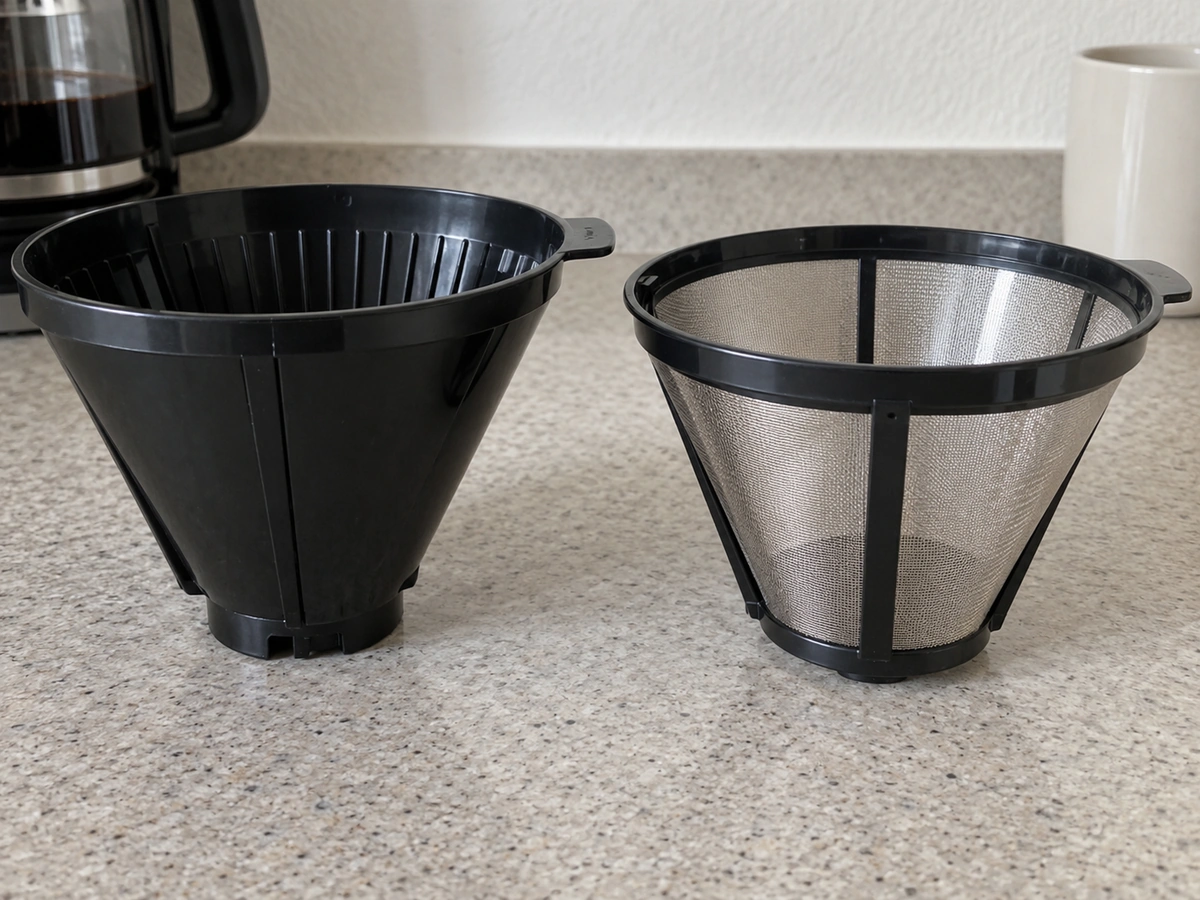
The Bunn's plastic basket can be swapped for a stainless steel basket, which keeps the brew itself away from plastic. With manual brewers, just avoid plastic cones. French press bodies are almost always glass or steel; check the plunger and lid too.
Budget
A plastic-free French press or pour-over costs well under $100. A low-plastic automatic machine costs a lot more. Plastic is cheap, which is why it's everywhere. Plastic-free versions of even simple brewers can cost two to five times as much as plastic ones, and the lowest-plastic automatic machines are some of the priciest drip brewers.
From cheapest to most expensive:
- 1Hario V60 ceramic
- 2Sterling Pro French press
- 3Bunn VP17-1SS with a steel basket
Which Brew Style Do You Like?
- Pour-over and drip (percolation): water flows through the coffee, giving a lighter, cleaner cup.
- French press (immersion): coffee steeps in the water, giving a heavier, richer cup.
Neither is better; it's personal taste. For more on how different brews compare, see my guide to types of coffee drinks.
How Much Effort Will You Put In?
- Manual pour-over: the most effort. It takes practice, and every cup needs your attention.
- French press: easy. Measure, pour, wait, plunge.
- Automatic: easiest. Measure coffee and water and press a button.
Most people I know use pour-over as a weekend brewer, not their daily one.
Are There Plastic-Free Espresso Machines?
The closest are fully manual lever machines, where you make the pressure yourself by pulling a lever. They have a steep learning curve. I cover the best options, including largely metal designs, in my best manual espresso machines.
My Recommendation
For a plastic-free manual brewer, get the Sterling Pro stainless steel French press. For an automatic machine that keeps plastic away from the brew, get the Bunn VP17-1SS with its stainless steel basket.
FAQs
Is there a 100% plastic-free coffee maker?
Not among automatic machines; all have some plastic seals or parts. Manual brewers can be fully plastic-free: a ceramic or glass pour-over, a Chemex, or an all-steel French press.
Is the Moccamaster plastic-free?
No. Its brew basket and water tank are BPA-free plastic.
Are stainless steel French presses safe?
Yes. Stainless steel is stable, durable and doesn't leach plastic. Just check that the lid and plunger knob aren't plastic if you want to avoid it entirely.

Written by · reviewed by the Cicada Coffee Bar team
Daniel Voss
Lead Equipment Reviewer, Cicada Coffee Bar
Daniel leads the equipment-testing side of Cicada Coffee Bar. Every super-automatic, semi-automatic, and grinder featured on this site is bought or sourced independently, set up on the test bench, and brewed with daily for at least two weeks before a single word is written — tracking espresso quality, milk texture, ease of cleaning, and long-term reliability. Reviews are updated whenever pricing or firmware changes.